Article
Source control following traumatic gastric perforation : not so easy
Bernard, C., Gessen, S., Gregory, J. et al
Intensive Care Med (2026). https://doi.org/10.1007/s00134-026-08446-x
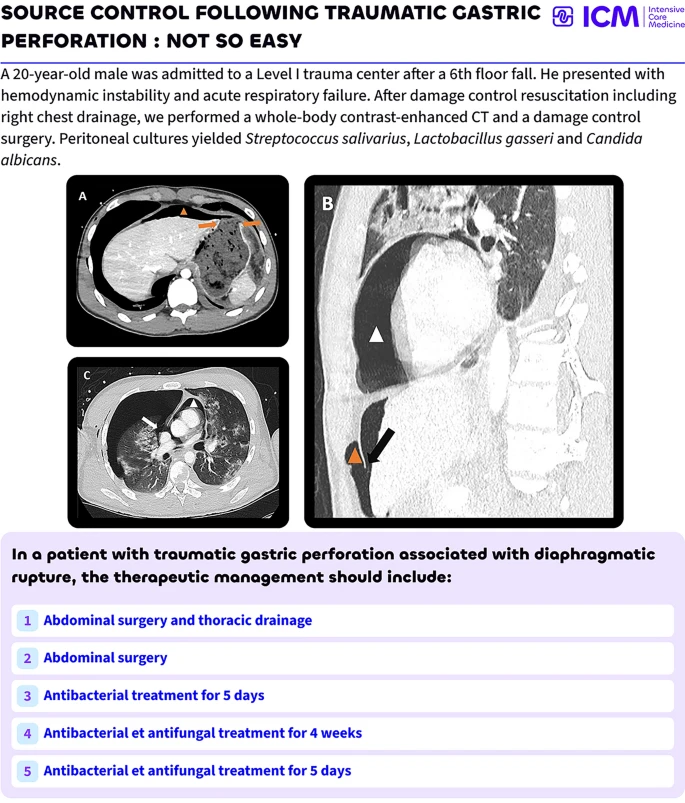
Management of the gastric perforation and diaphragmatic rupture (Figure 1. Panels A-C) consisted in:
- surgical repair
- left chest drainage without mediastinal drainage due to communication between the mediastinum and the right pleura, which was drained prior to surgery.
- Antimicrobial therapy adapted to peritoneal culture by piperacillin/tazobactam, amikacin and caspofungin for 5 days
However, after a few days without antimicrobial treatment, a 13 cm multi-loculated mediastinal collection was shown on control CT scan (Figure 1, panel D), requiring radiological drainage (yielding Candida albicans and Bacillus licheniformis) and antimicrobial therapy with caspofungin and piperacillin/tazobactam to improve the patient’s condition.
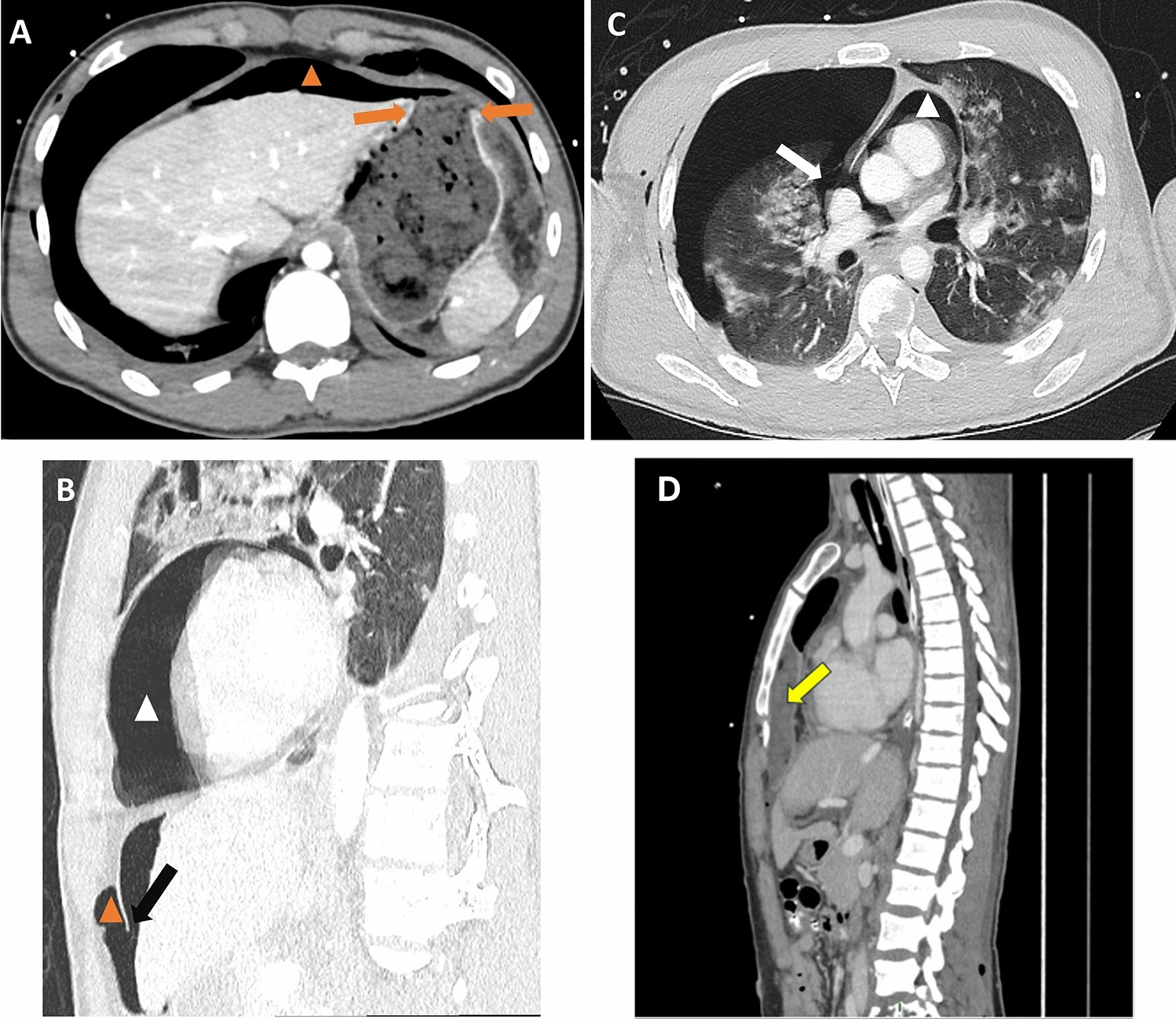
Contrast-enhanced CT revealed multiple traumatic injuries at admission (Panel A-C) and a mediastinal collection after few days (Panel D) Panels A and B. Large anterior fundic gastric perforation (orange arrows) and moderate pneumoperitoneum (orange arrowhead); left prehepatic diaphragmatic rupture with gas tracking within the anterior preperitoneal fat space (black arrow) Panel C. massive pneumopericardium (white arrowhead) and mediastinal rupture with the right pleura (white arrow); Panel D. 13 cm multiloculated mediastinal collection (yellow arrow)
Traumatic gastric perforation with diaphragmatic rupture exposes the mediastinum to polymicrobial, including fungal, contamination. An initial treatment combining abdominal surgery, chest drainage and antimicrobial therapy for 5 days could be insufficient, leading to inadequate treatment of mediastinitis. Early multidisciplinary management combining thoracic and abdominal lavage, adequate drainage of all compartments, and prolonged antimicrobial therapy could achieve faster infection control.
