JOURNAL ARTICLE
Impact of Vancomycin-Resistant Enterococci (VRE)–Active Perioperative Prophylaxis in Liver Transplant Patients Colonized by VRE
Giulia Jole Burastero, Emmanuel Q Wey, Veronica Guidetti, et al
Clinical Infectious Diseases, Volume 82, Issue 5, 15 May 2026, Pages 878–887, https://doi.org/10.1093/cid/ciaf121
Abstract
Background
Data regarding the effectiveness of vancomycin-resistant Enterococci (VRE)–active prophylaxis for preventing early post–liver transplantation (LT) VRE infections in VRE-colonized patients are scarce.
Methods
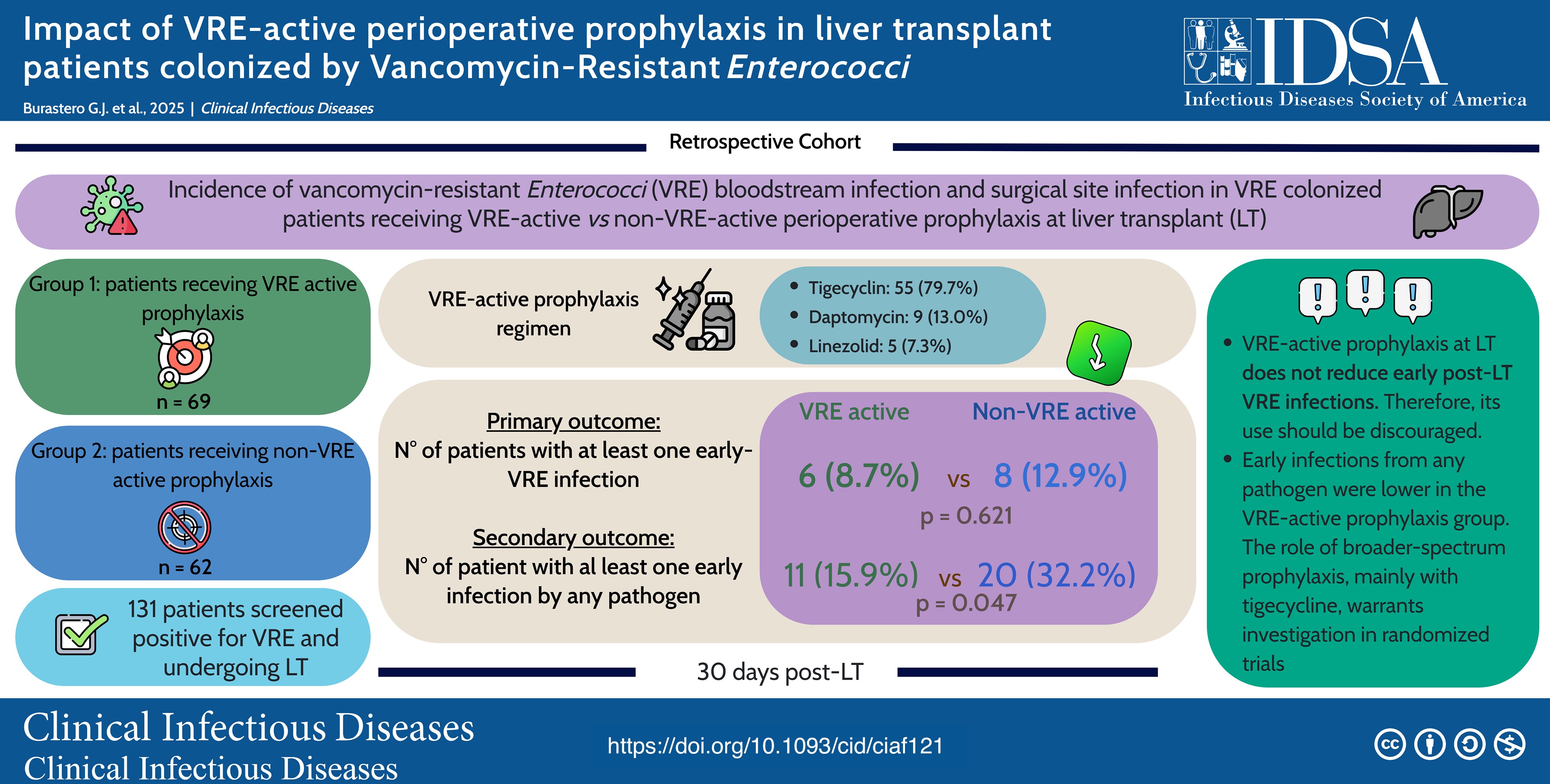
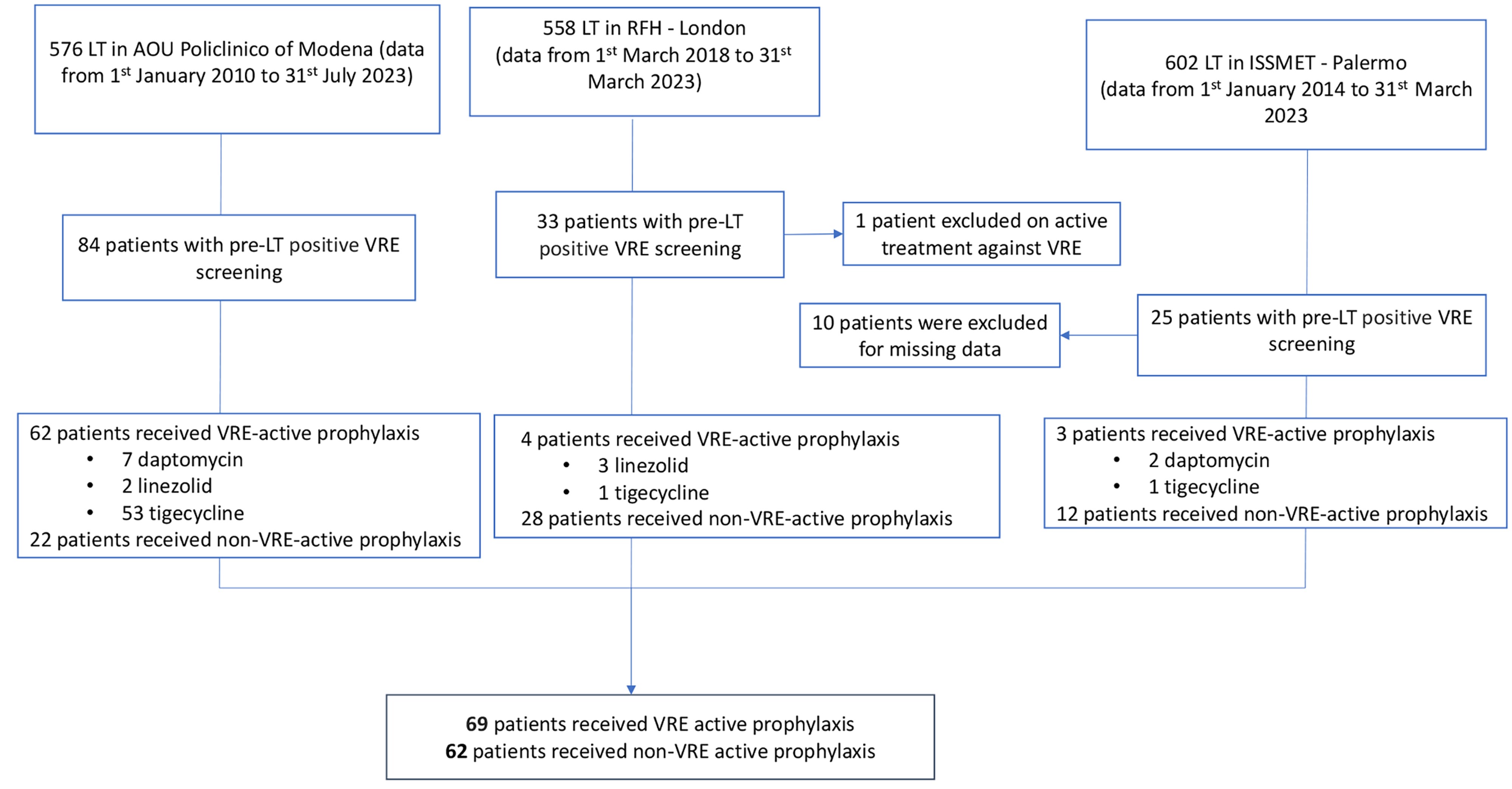
131 pre-LT VRE-colonized patients who underwent LT were enrolled in a retrospective, observational, multicenter study. The incidence of early-onset VRE infections was compared between patients who received active prophylaxis for VRE and those who did not.
Results
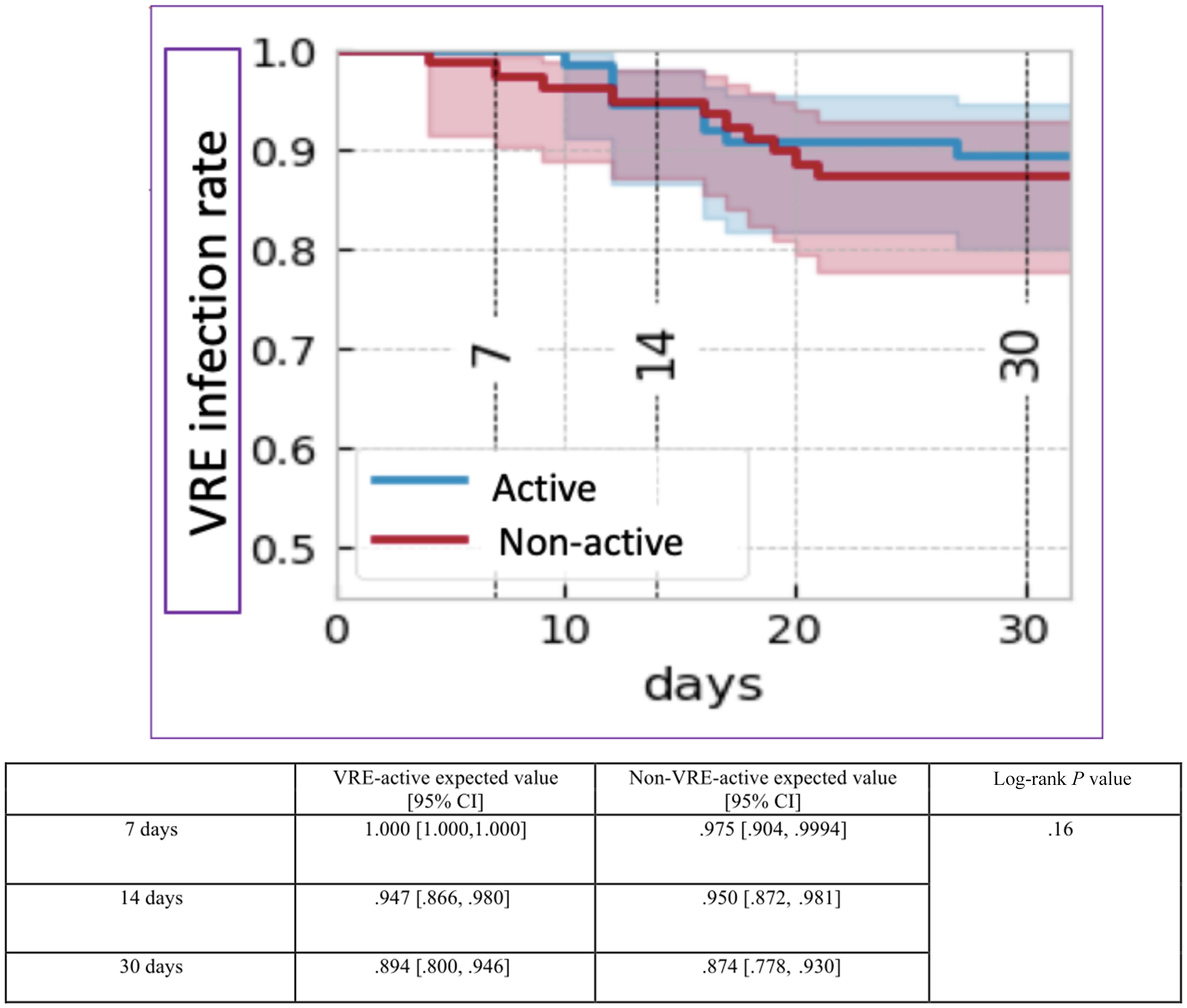
Sixty-nine (52.7%) and 62 (47.3%) patients were enrolled in the VRE-active and non–VRE-active prophylaxis group. Tigecycline was the most common drug prescribed as VRE-active for prophylaxis (55/69; 79.7%). There was no significant difference in the number of patients who developed early-onset VRE infections in the VRE-active versus non–VRE-active groups at 7 (0 [0.0%] vs 2 [3.2%]; P = .222), 14 (4 [5.7%] vs 4 [6.4%]; P = 1.000), and 30 (6 [8.7%] vs 8 [12.9%]; P = .621) days post-LT, respectively. Risk of early-onset VRE infection within 30 days was not lower in the VRE-active group (log-rank P = .16 with Kaplan-Meier analysis; odds ratio [OR]: .643; 95% CI: .210–1.969; P = .439 with univariate analysis). Conversely, early infections caused by any pathogen were significantly lower in the VRE-active prophylaxis group compared with the control group (11 [15.9%] vs 20 [32.2%]; P = .047). Tigecycline prophylaxis was associated with a lower risk of early-onset infections with multivariate analysis (OR: .106; 95% CI: .015–.745; P = .024) and after adjusting for propensity score (adjusted OR: .146; 95% CI: .031–.708; P = .017).
Conclusions
VRE-active prophylaxis at LT did not reduce the incidence of early post-LT VRE infections and should not be recommended.
