JOURNAL ARTICLE
Metagenomic Next-generation Sequencing of Cerebrospinal Fluid: First-year Experience at a Tertiary Referral Hospital
Sergio Alvarez Mulett, Sofia Molina Garcia, Omar Abu Saleh, et al
Clinical Infectious Diseases, Volume 82, Issue 5, 15 May 2026, Pages 808–814, https://doi.org/10.1093/cid/ciaf390
Abstract
Background
Central nervous system (CNS) infections are significant causes of morbidity and mortality, especially when diagnosis is delayed. Traditional cerebrospinal fluid diagnostic methods for CNS infections have limited sensitivity. Metagenomic next-generation sequencing of cerebrospinal fluid (MSCSF) is a newer diagnostic tool capable of detecting a broad range of pathogens in a single assay.
Methods
This retrospective cohort study evaluated the first-year experience with MSCSF at Mayo Clinic. A total of 422 tests performed during calendar year 2024 on adult patients at Mayo Clinic facilities and those tested through Mayo Clinic Laboratories were analyzed, with a subcohort analysis of the 210 Mayo Clinic patients performed to define patient characteristics associated with positive results and clinical outcomes.
Results
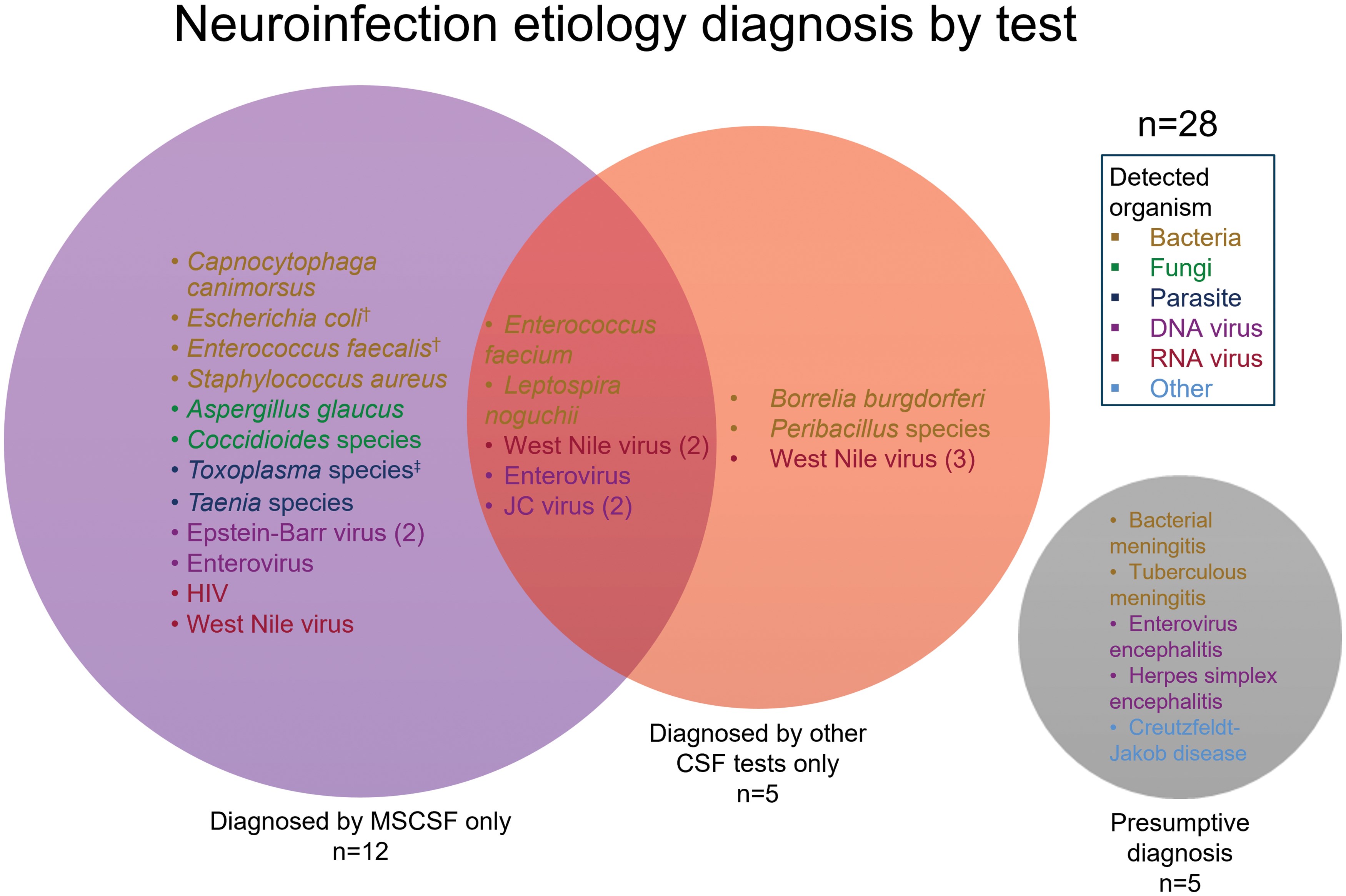
The sensitivity of MSCSF for detecting neuroinfection in the subcohort was 64%, with 43% of confirmed neuroinfections diagnosed by MSCSF only. Subjects who were immunosuppressed (odds ratio [OR]: 3.5, P = .008) and those with a high pretest probability of CNS infection (OR: 20.1, P < .001) were more likely to have positive results. Also, those who tested positive were more likely to die within the ensuing 30 days than those who tested negative (OR: 5.2, P = .001).
Conclusions
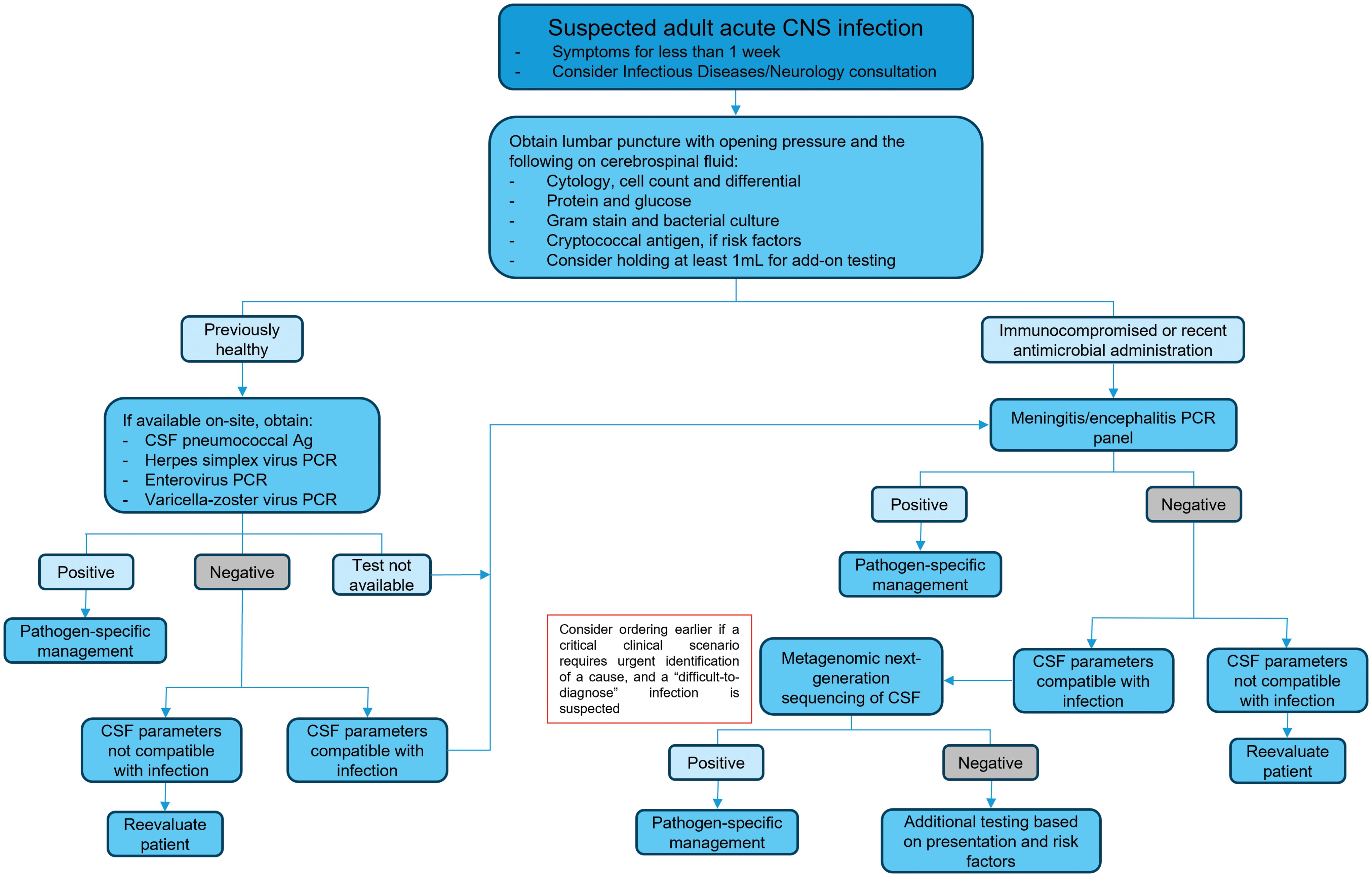
MSCSF can be a valuable tool for diagnosing CNS infection but should not be used indiscriminately. It appears to be most beneficial when there is a high clinical suspicion of CNS infection and conventional diagnostics, and available molecular tests, yield negative results. Its integration into clinical practice should be guided by diagnostic stewardship to maximize cost-effectiveness and clinical utility.
