High-Flow or Standard Oxygen in Acute Hypoxemic Respiratory Failure
Jean-Pierre Frat, Jean-Pierre Quenot, Christophe Guitton, et al
N Engl J Med Published March 17, 2026
Abstract
BACKGROUND
Data are needed on the effect of oxygen delivered through a high-flow nasal cannula, as compared with standard oxygen therapy, on intubation and mortality in patients with acute hypoxemic respiratory failure.
METHODS
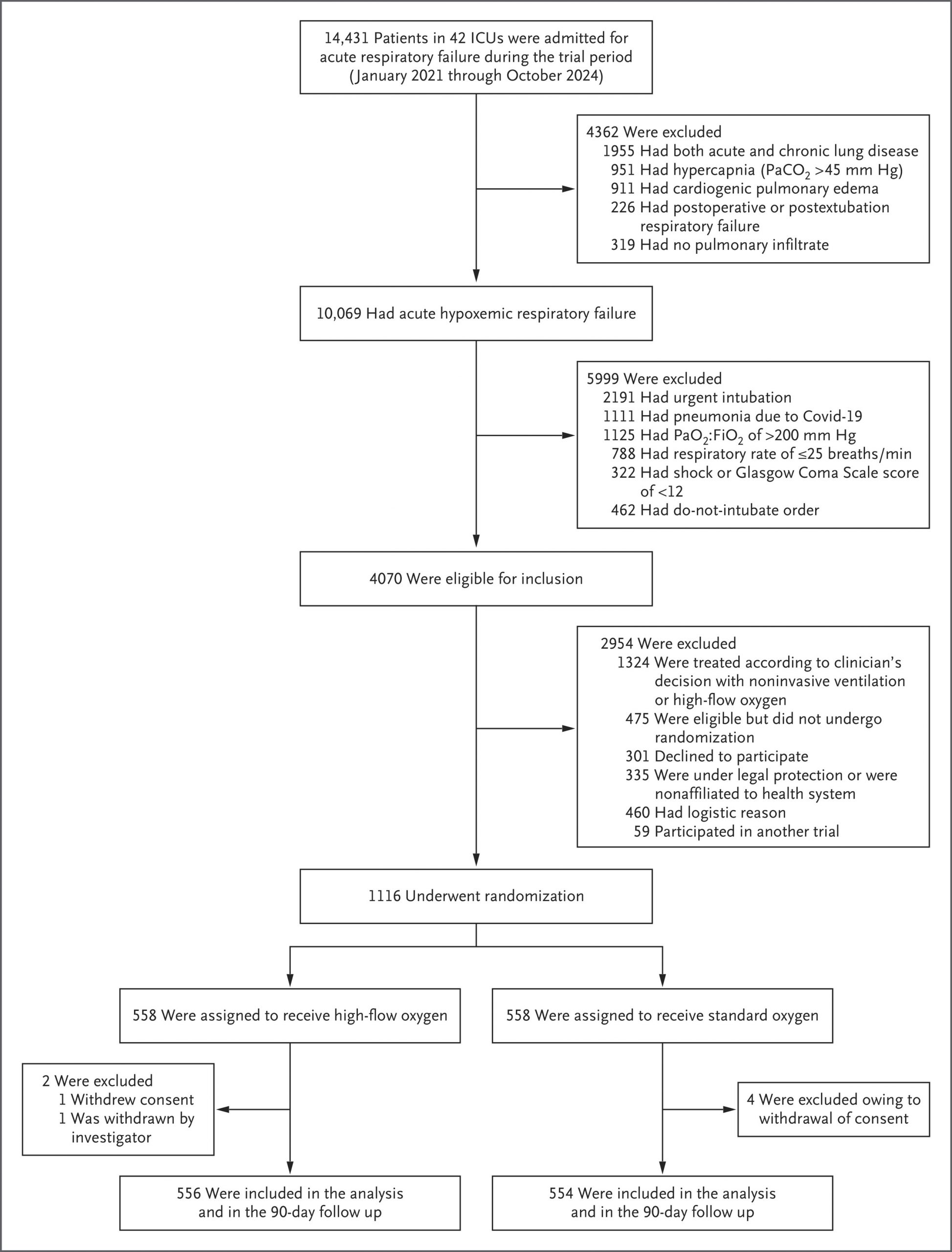
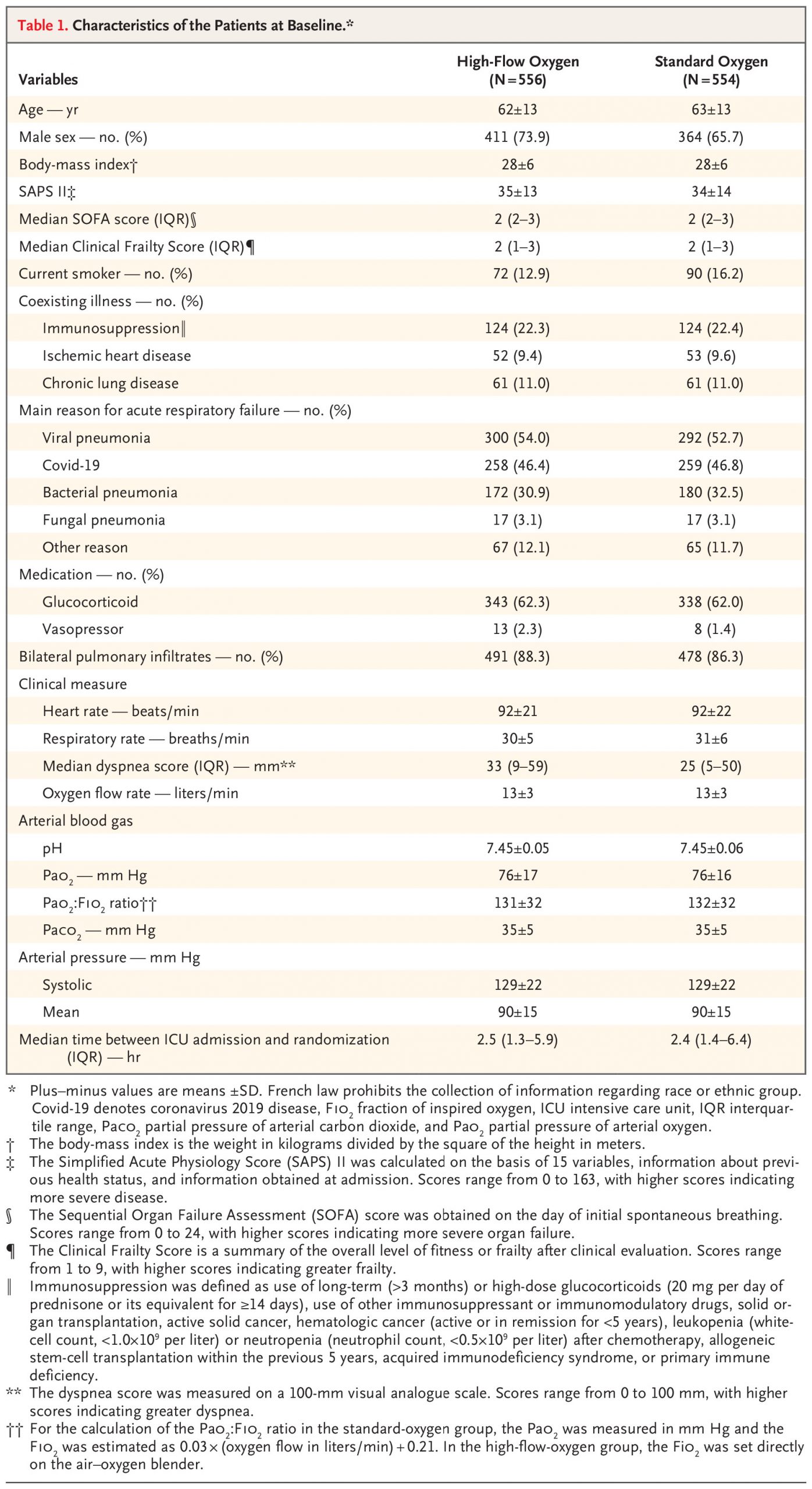
In this multicenter, open-label trial, we randomly assigned patients who had acute hypoxemic respiratory failure to receive high-flow-oxygen or standard-oxygen therapy. All the patients had a ratio of the partial pressure of arterial oxygen to the fraction of inspired oxygen of 200 or less, a respiratory rate of more than 25 breaths per minute, and pulmonary infiltrate on chest imaging. The primary outcome was death by day 28.
RESULTS
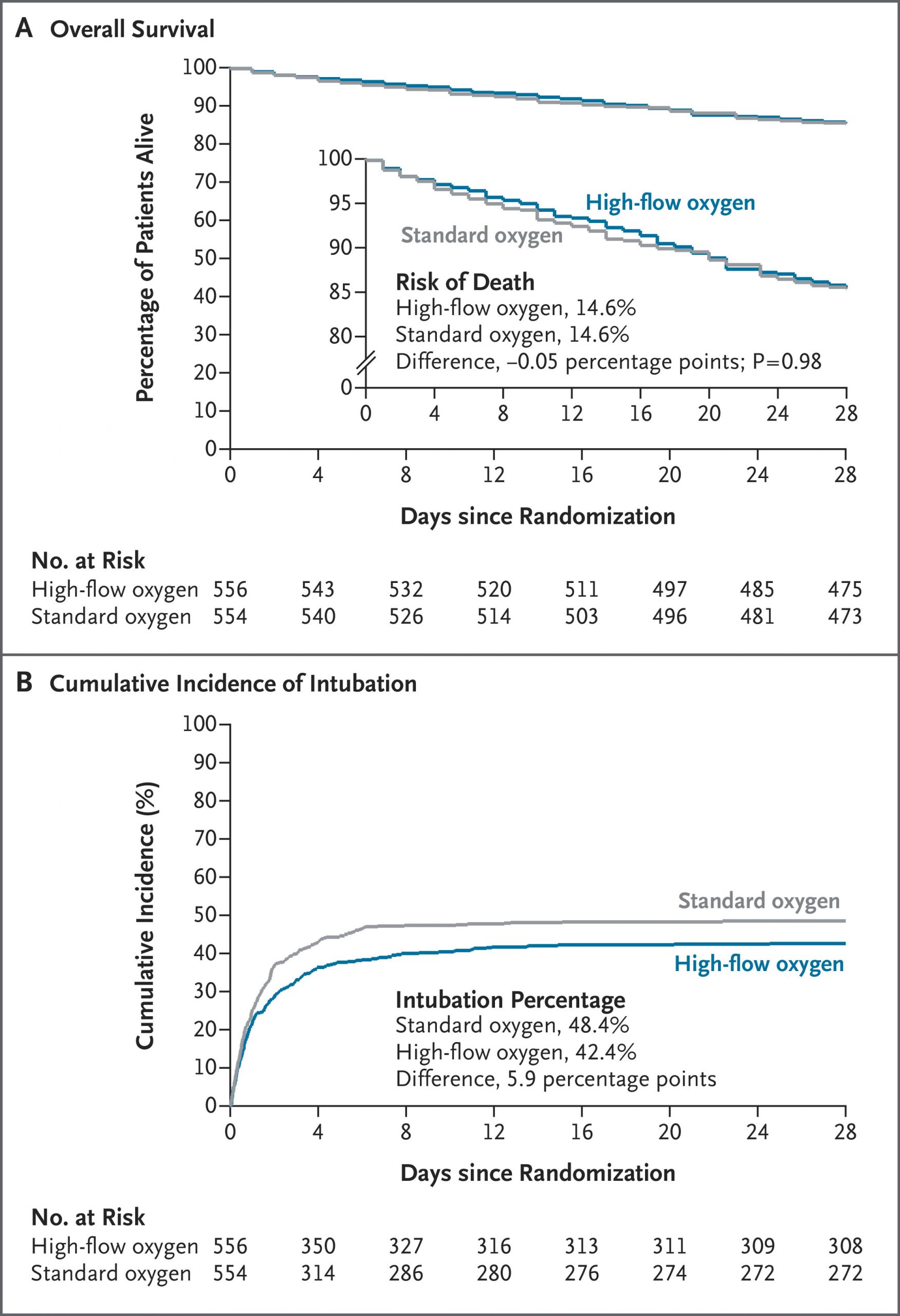
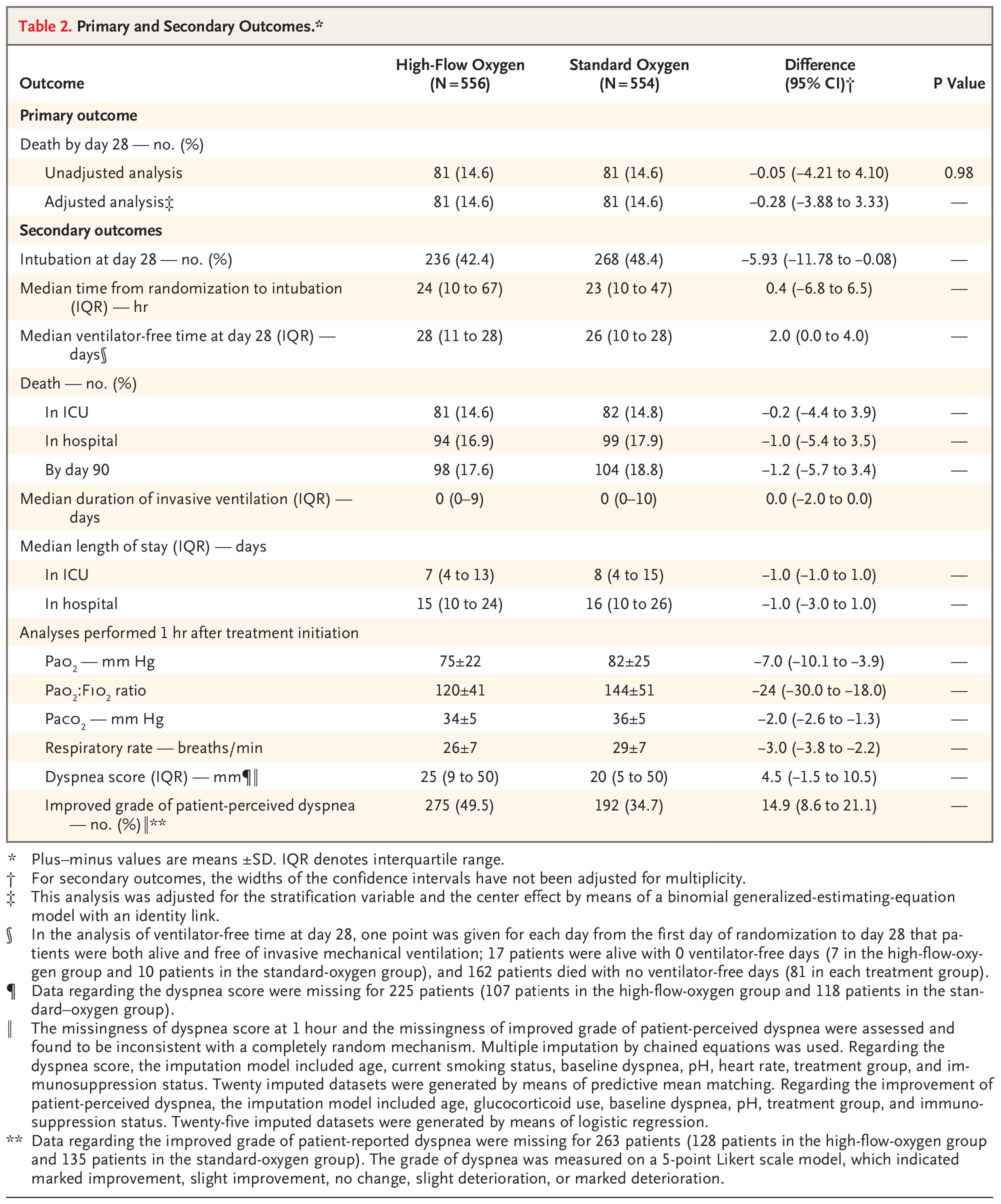
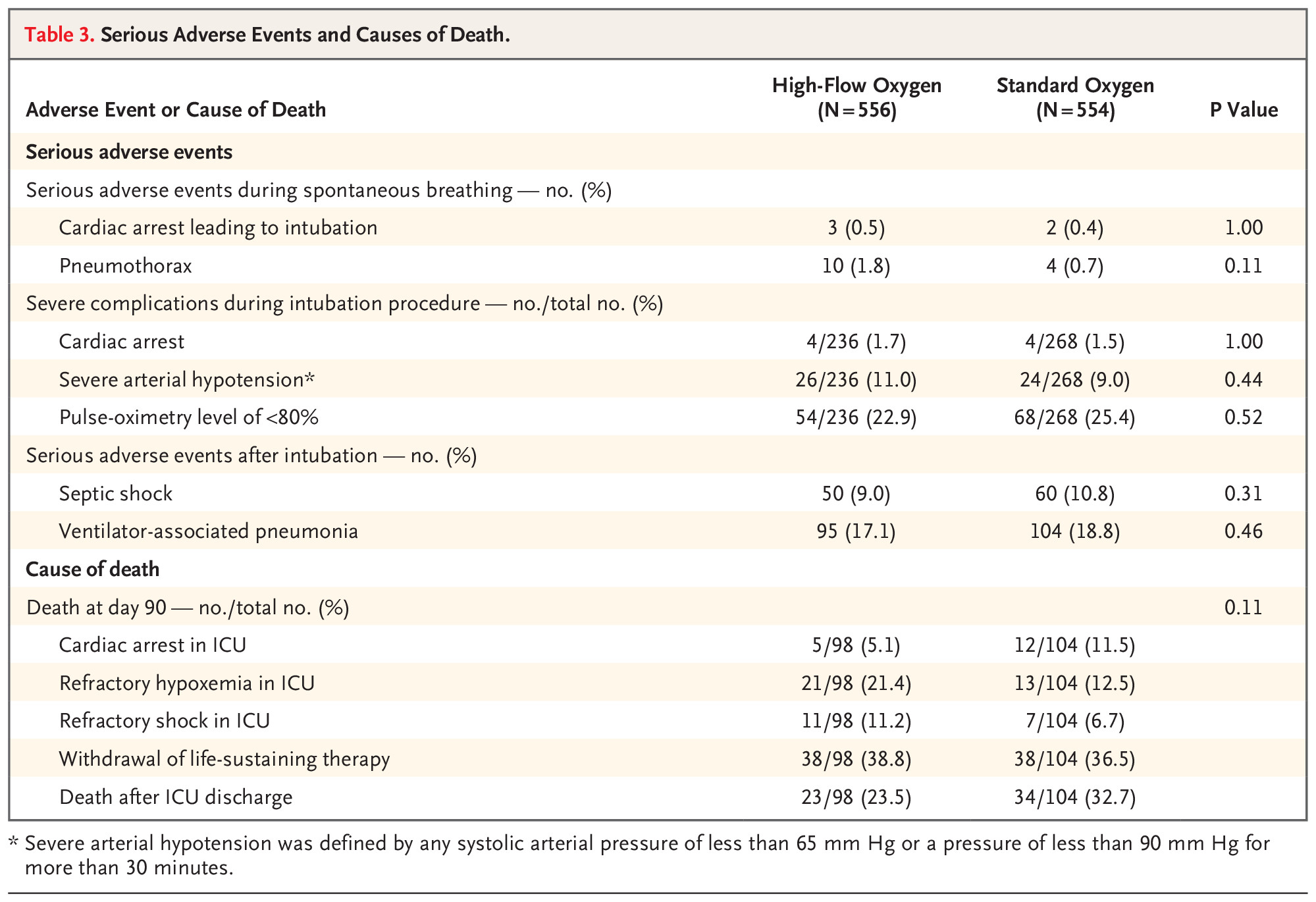
A total of 1116 patients underwent randomization. Of these patients, 1110 (556 in the high-flow-oxygen group and 554 in the standard-oxygen group) were included in the analysis. Mortality at day 28 was 14.6% (in 81 of 556 patients) in the high-flow-oxygen group and 14.6% (in 81 of 554 patients) in the standard-oxygen group (difference, −0.05 percentage points; 95% confidence interval [CI], −4.21 to 4.10; P=0.98). The incidence of intubation by day 28 was 42.4% (in 236 of 556 patients) in the high-flow-oxygen group and 48.4% (in 268 of 554 patients) in the standard-oxygen group (difference, −5.93 percentage points; 95% CI, −11.78 to −0.08). Serious adverse events (cardiac arrest or pneumothorax) occurred during spontaneous breathing in 13 patients (2.3%) in the high-flow-oxygen group and in 6 patients (1.1%) in the standard-oxygen group.
CONCLUSIONS
Among patients with acute hypoxemic respiratory failure, the use of oxygen delivered through a high-flow nasal cannula did not significantly reduce mortality at day 28. (Funded by the French Ministry of Health and Fisher and Paykel Healthcare; SOHO ClinicalTrials.gov number, NCT04468126.)
