Intermittent or Continuous Renal-Replacement Therapy in Acute Kidney Injury
Stéphane Gaudry, Marouane Boubaya, Guillaume Louis, et al
N Engl J Med Published October 14, 2026
DOI: 10.1056/NEJMoa2608397
Abstract
BACKGROUND
The preferred method of renal-replacement therapy for acute kidney injury in critically ill patients remains uncertain.
METHODS
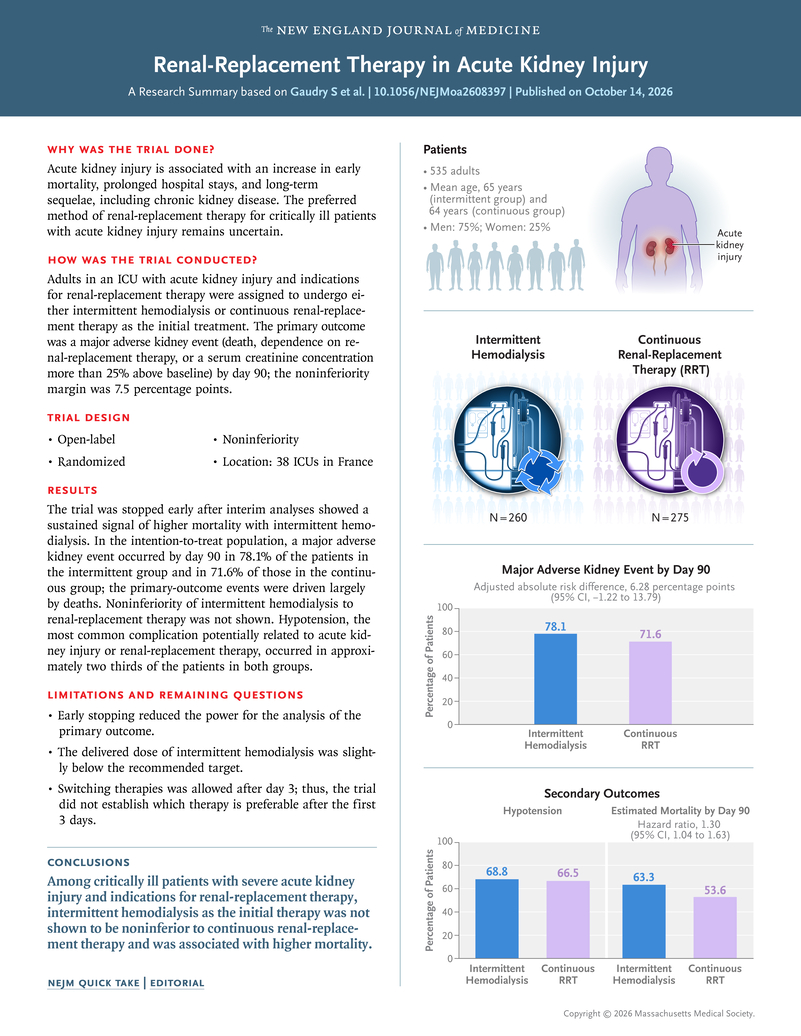
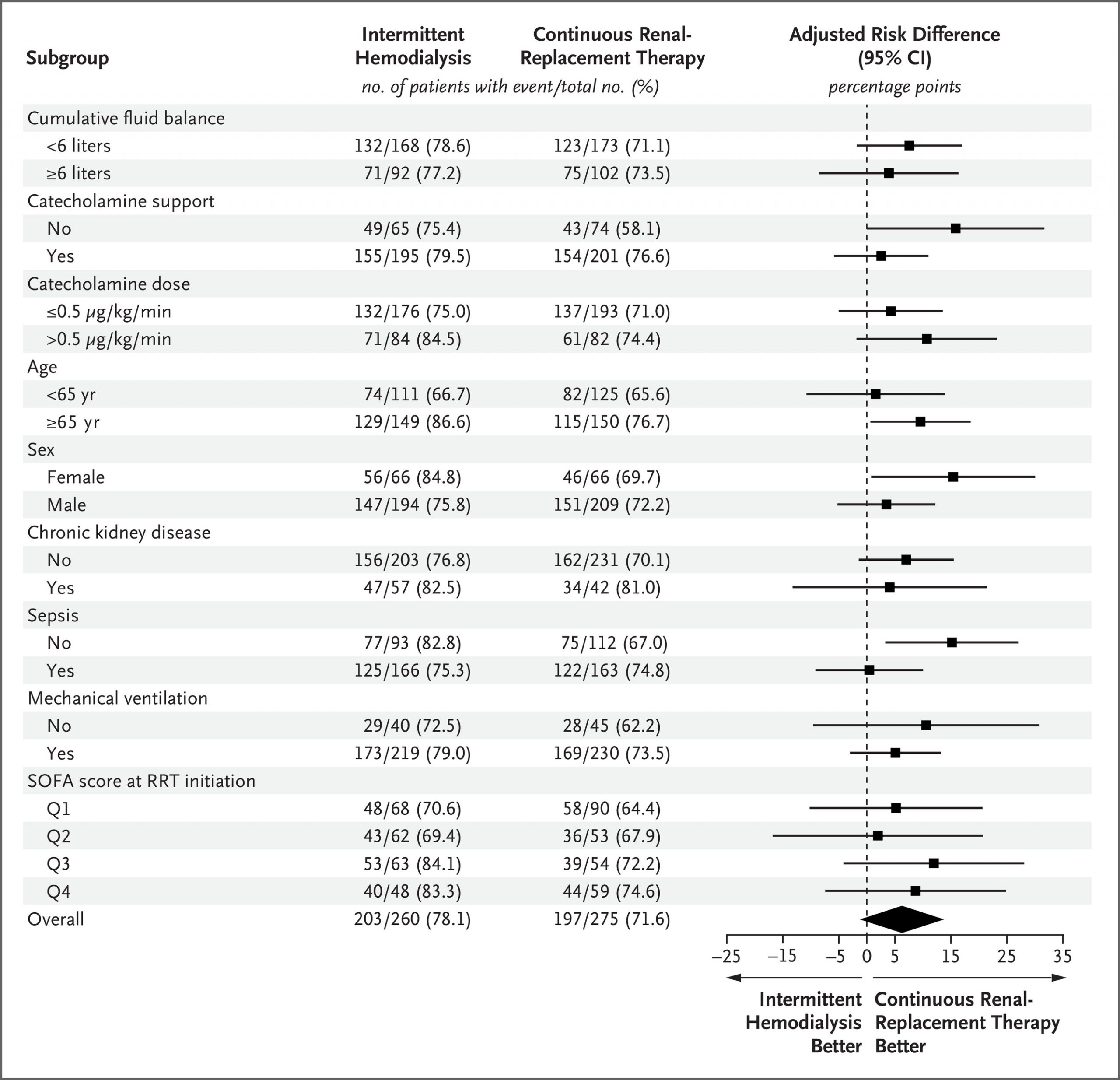
In this multicenter, open-label, noninferiority trial, we randomly assigned critically ill adults with acute kidney injury who had indications for renal-replacement therapy to undergo intermittent hemodialysis or continuous renal-replacement therapy as the initial treatment. The primary outcome was a major adverse kidney event — defined as death, dependence on renal-replacement therapy, or a serum creatinine concentration more than 25% above the baseline value — by day 90.
RESULTS
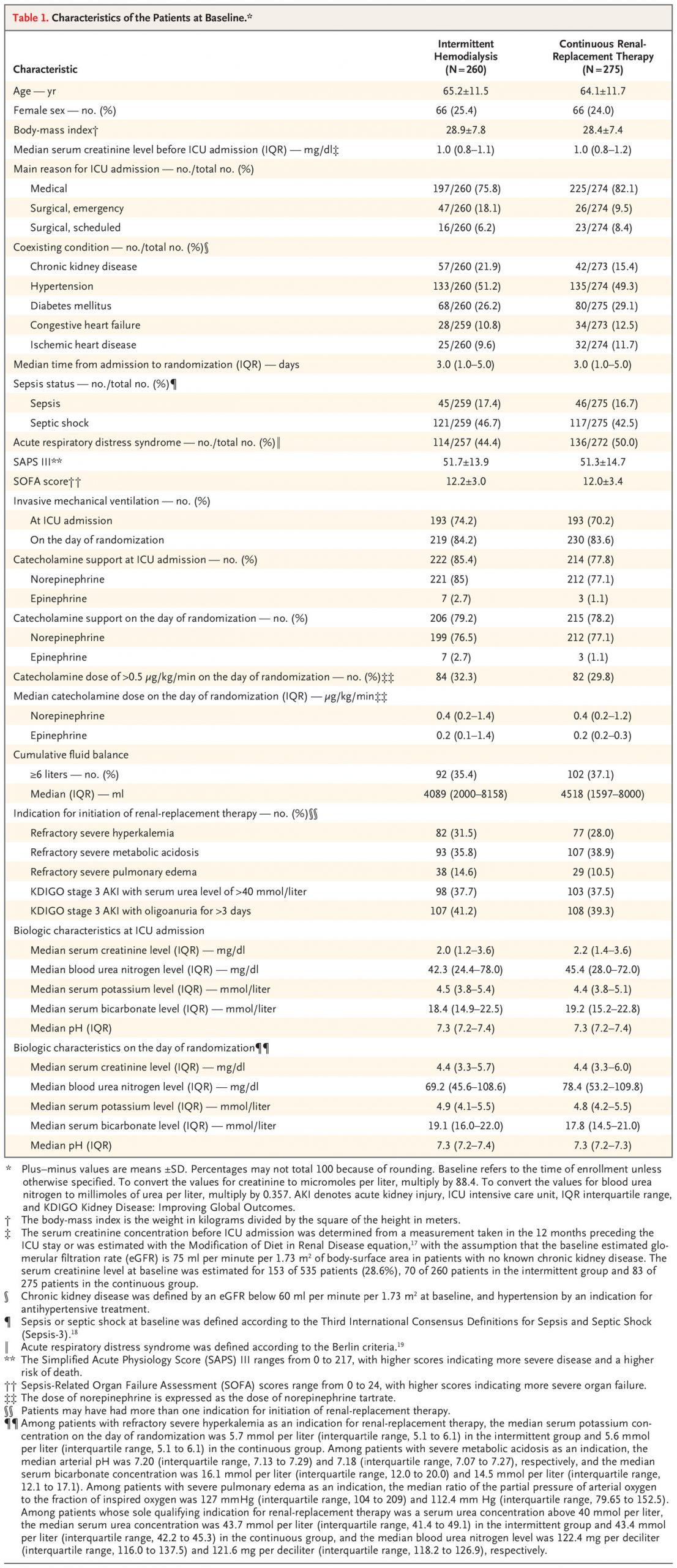
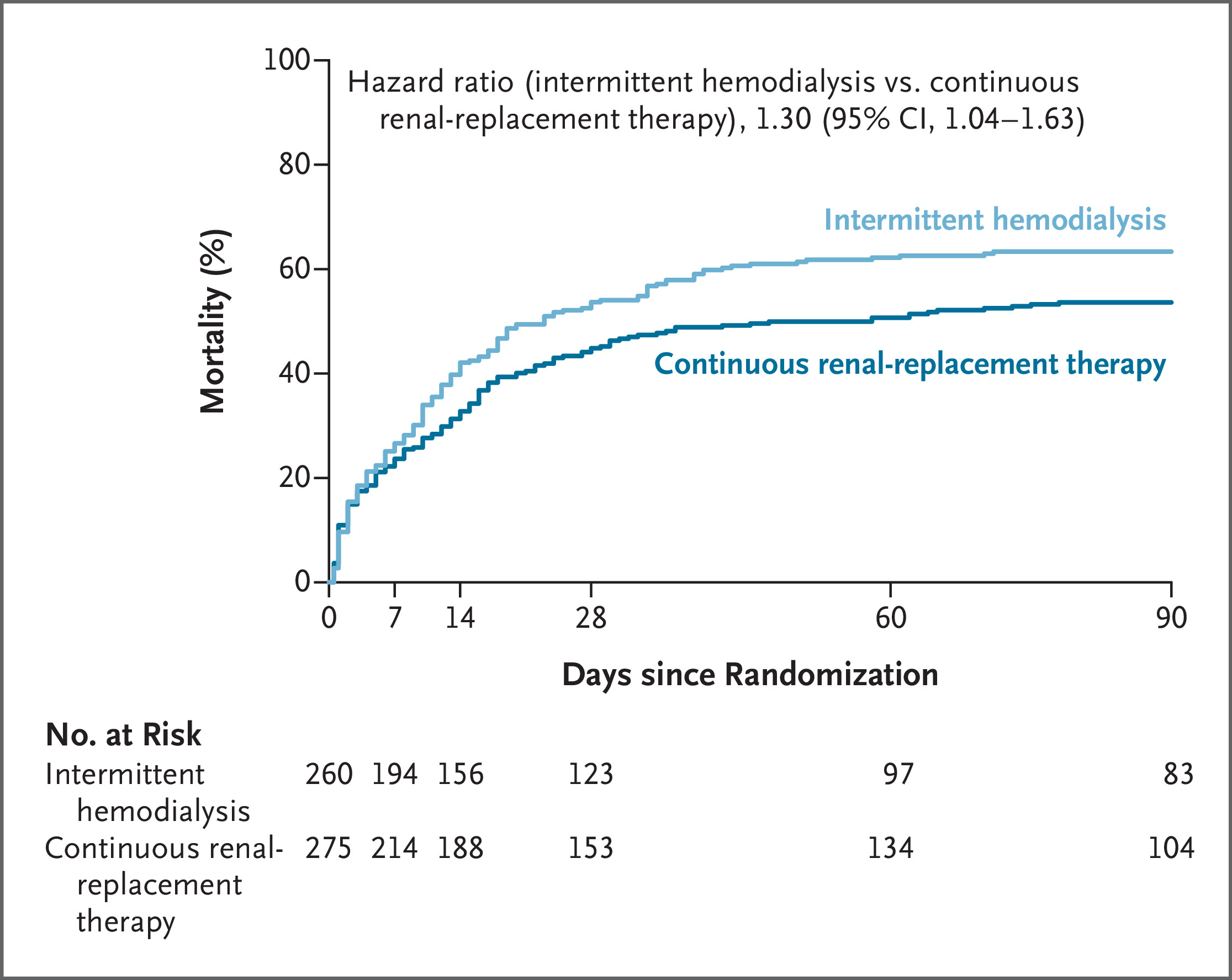
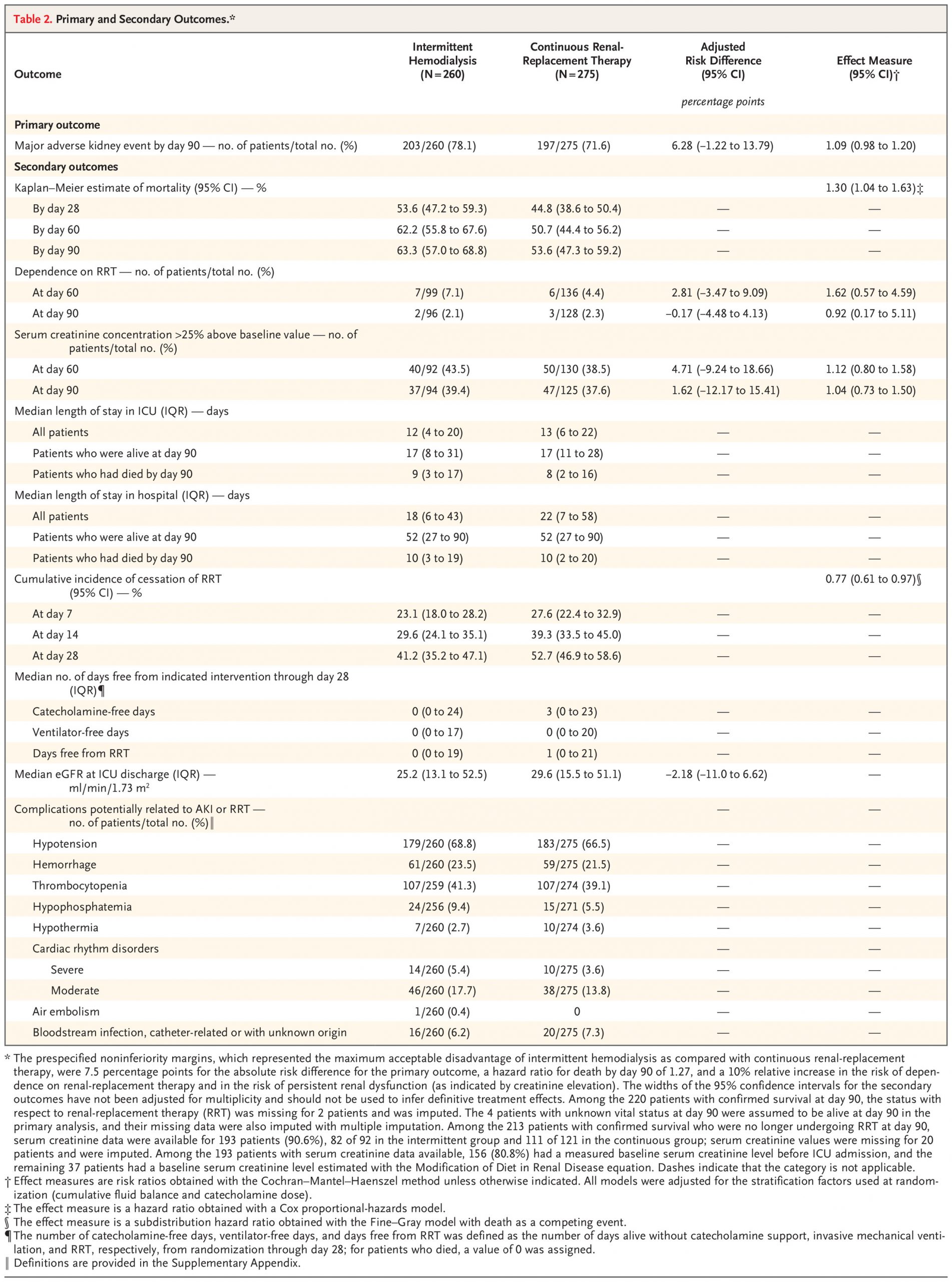
The trial was stopped early after sequential interim analyses showed a sustained signal of higher mortality with intermittent hemodialysis than with continuous renal-replacement therapy. A total of 554 patients underwent randomization, with 272 patients assigned to undergo intermittent hemodialysis and 282 to undergo continuous renal-replacement therapy; 535 patients (260 in the intermittent group and 275 in the continuous group) were included in the intention-to-treat population. A major adverse kidney event occurred by day 90 in 203 patients (78.1%) in the intermittent group and in 197 patients (71.6%) in the continuous group (adjusted absolute risk difference, 6.28 percentage points; 95% confidence interval [CI], −1.22 to 13.79). Death by day 90 occurred in 164 patients (63.1%) and in 147 patients (53.5%), respectively. Kaplan–Meier mortality estimates at day 90 were 63.3% and 53.6% (hazard ratio, 1.30; 95% CI, 1.04 to 1.63). The most common complication potentially related to acute kidney injury or renal-replacement therapy was hypotension, which occurred in 179 patients (68.8%) in the intermittent group and in 183 patients (66.5%) in the continuous group.
CONCLUSIONS
Among critically ill patients with acute kidney injury who had indications for renal-replacement therapy, intermittent hemodialysis as the initial treatment approach was not shown to be noninferior to continuous renal-replacement therapy with respect to major adverse kidney events by day 90 and was associated with higher mortality. (Funded by the French Ministry of Health; ICRAKI ClinicalTrials.gov number, NCT06032884.)
