- Original
- Published:
Epidemiology and outcomes of hospital-acquired bloodstream infections in intensive care unit patients: the EUROBACT-2 international cohort study
Alexis Tabah, Niccolò Buetti, Quentin Staiquly, et al
Intensive Care Med (2023). https://doi.org/10.1007/s00134-022-06944-2
Abstract
Purpose
In the critically ill, hospital-acquired bloodstream infections (HA-BSI) are associated with significant mortality. Granular data are required for optimizing management, and developing guidelines and clinical trials.
Methods
We carried out a prospective international cohort study of adult patients (≥ 18 years of age) with HA-BSI treated in intensive care units (ICUs) between June 2019 and February 2021.
Results
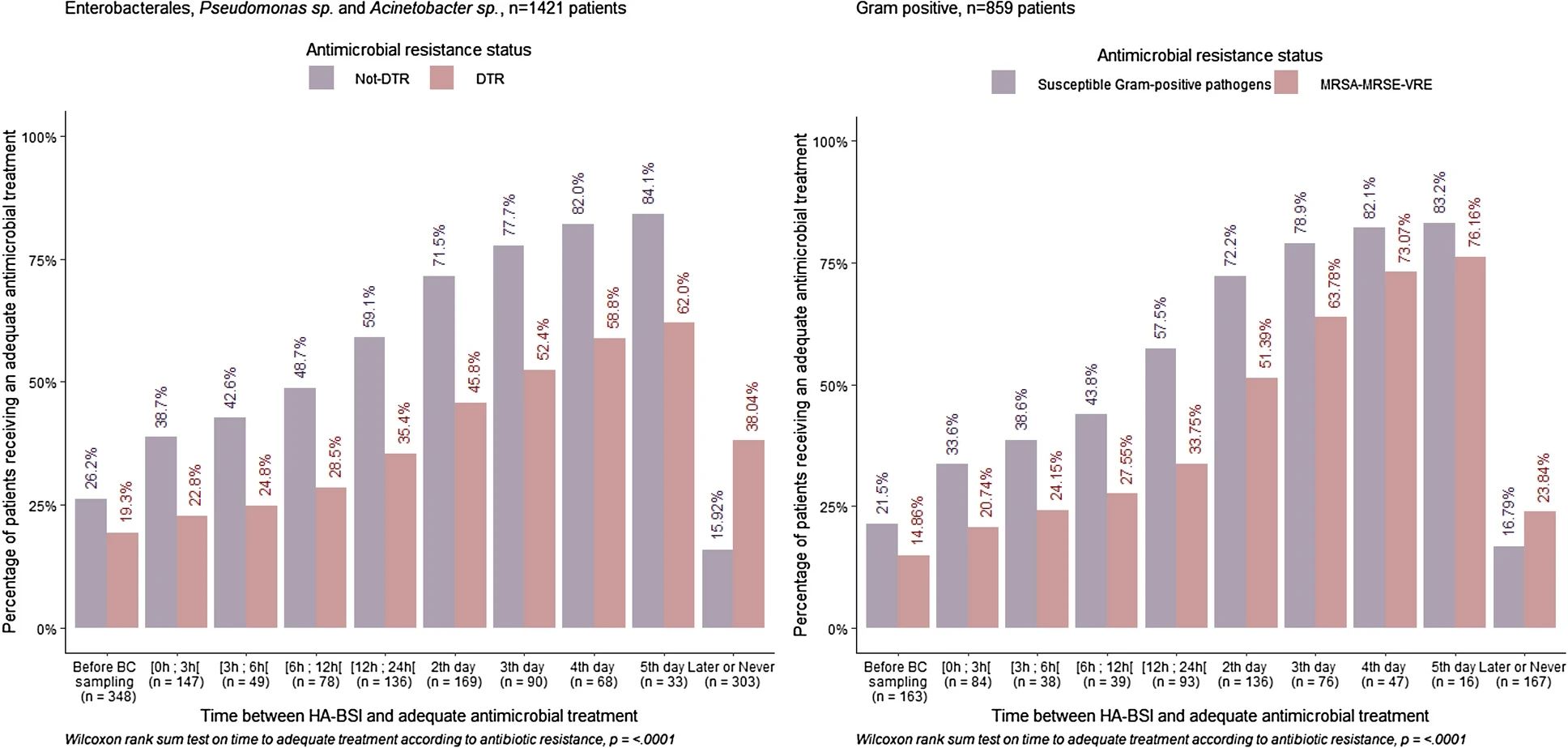
2600 patients from 333 ICUs in 52 countries were included. 78% HA-BSI were ICU-acquired. Median Sequential Organ Failure Assessment (SOFA) score was 8 [IQR 5; 11] at HA-BSI diagnosis. Most frequent sources of infection included pneumonia (26.7%) and intravascular catheters (26.4%). Most frequent pathogens were Gram-negative bacteria (59.0%), predominantly Klebsiella spp. (27.9%), Acinetobacter spp. (20.3%), Escherichia coli (15.8%), and Pseudomonas spp. (14.3%). Carbapenem resistance was present in 37.8%, 84.6%, 7.4%, and 33.2%, respectively. Difficult-to-treat resistance (DTR) was present in 23.5% and pan-drug resistance in 1.5%. Antimicrobial therapy was deemed adequate within 24 h for 51.5%. Antimicrobial resistance was associated with longer delays to adequate antimicrobial therapy. Source control was needed in 52.5% but not achieved in 18.2%. Mortality was 37.1%, and only 16.1% had been discharged alive from hospital by day-28.
Conclusions
HA-BSI was frequently caused by Gram-negative, carbapenem-resistant and DTR pathogens. Antimicrobial resistance led to delays in adequate antimicrobial therapy. Mortality was high, and at day-28 only a minority of the patients were discharged alive from the hospital. Prevention of antimicrobial resistance and focusing on adequate antimicrobial therapy and source control are important to optimize patient management and outcomes.
Take-home message
| In this study, hospital-acquired bloodstream infections were frequently caused by Gram-negative, carbapenem resistant or with difficult to treat resistance pathogens. Antibiotic resistance was associated with delays to antimicrobial therapy. Mortality was 37% at day-28. |
