Article
What is the most appropriate next step in a patient with progressive subcutaneous emphysema and hemodynamic deterioration?
Kimoto, K., Iwasaki, Y., Hagiwara, Y. et al
Intensive Care Med (2026). https://doi.org/10.1007/s00134-026-08471-w
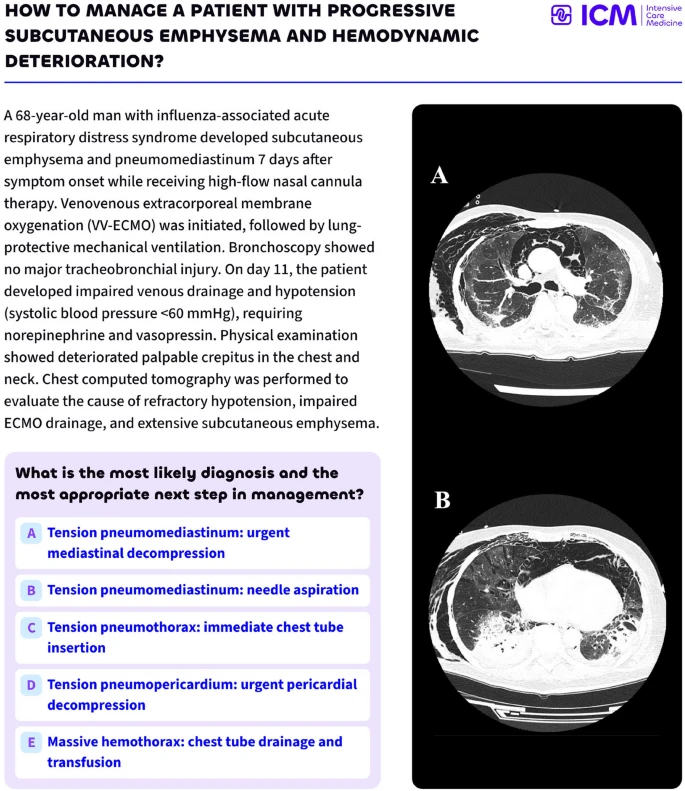
Tension pneumomediastinum is a rare but life-threatening complication; while most cases are managed conservatively, those with tension physiology causing hemodynamic compromise require invasive decompression (Fig. 1). Severe lung injury may cause alveolar rupture, allowing air to dissect along bronchovascular sheaths into the mediastinum (Macklin effect). To date, no guidelines for mediastinal decompression have been established.
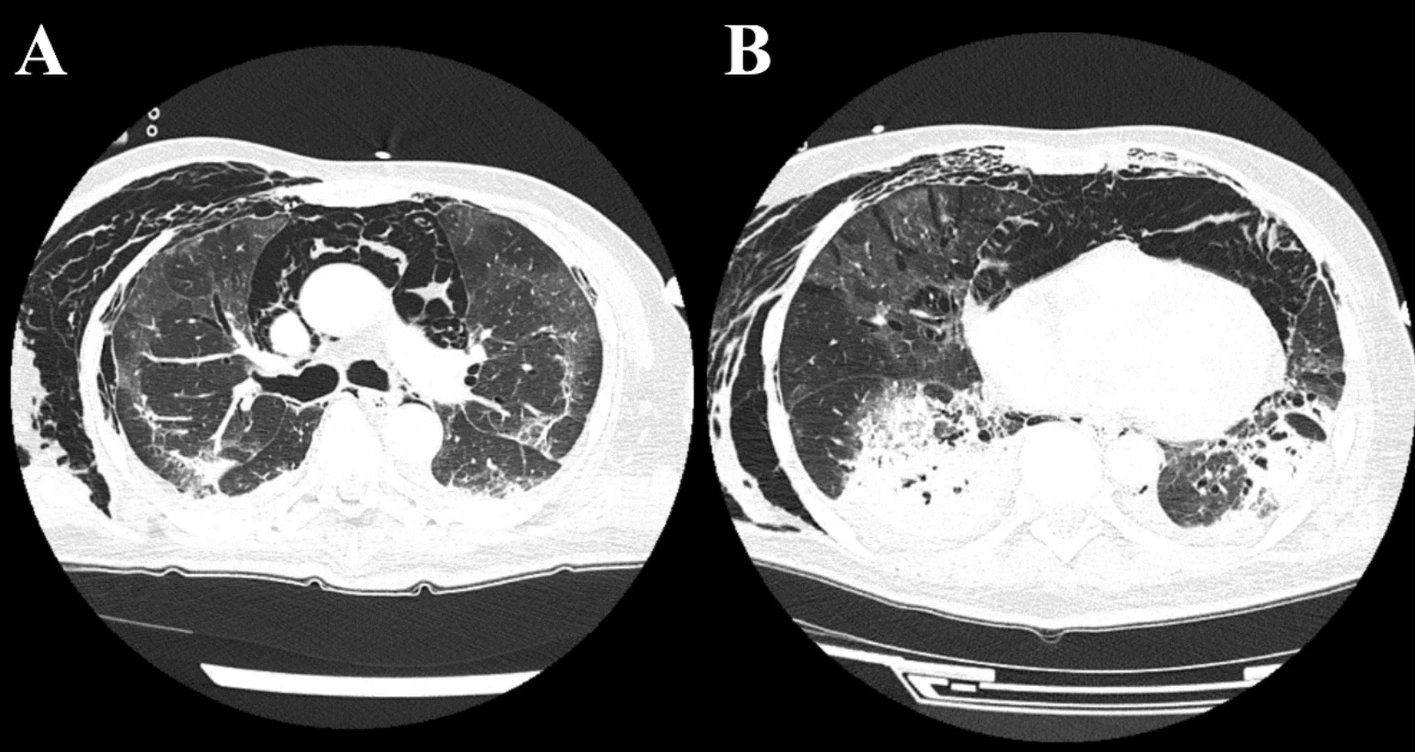
Chest computed tomography images obtained during hemodynamic deterioration and impaired venous drainage. (a) Axial image showing mediastinal air around the ascending aorta. (b) Axial image showing mediastinal air surrounding the heart, together with cervicothoracic subcutaneous emphysema, bilateral consolidation, and pleural effusion
Needle aspiration may be insufficient in the presence of a persistent air leak. Although mediastinotomy or CT-guided parasternal drainage may be considered, thoracoscopic decompression may be more appropriate in cases with multilayered or compartmentalized mediastinal air. In this case, a subxiphoid thoracoscopic mediastinal approach enabled the minimally invasive placement of multiple drains, resulting in effective decompression and hemodynamic improvement without bleeding complications. No grossly visible pleural or parenchymal lesion was identified during surgery, and the etiology of the air leak remained undetermined.
Negative pressure was maintained at − 20 mmHg and then gradually reduced as clinical and radiographic improvement occurred. The system was transitioned to a water seal prior to removal, with no evidence of an air leak. Pneumomediastinum improved radiographically by postoperative day 3 (Online Resources 1 and 2), and the chest drains were removed after discontinuing mechanical ventilation. Thoracoscopic decompression may be effective for refractory tension pneumomediastinum.
