Minocycline-Induced Hyperpigmentation
Aarti Maharaj, Michael Omar
N Engl J Med 2026;394: e24
DOI: 10.1056/NEJMicm2513782
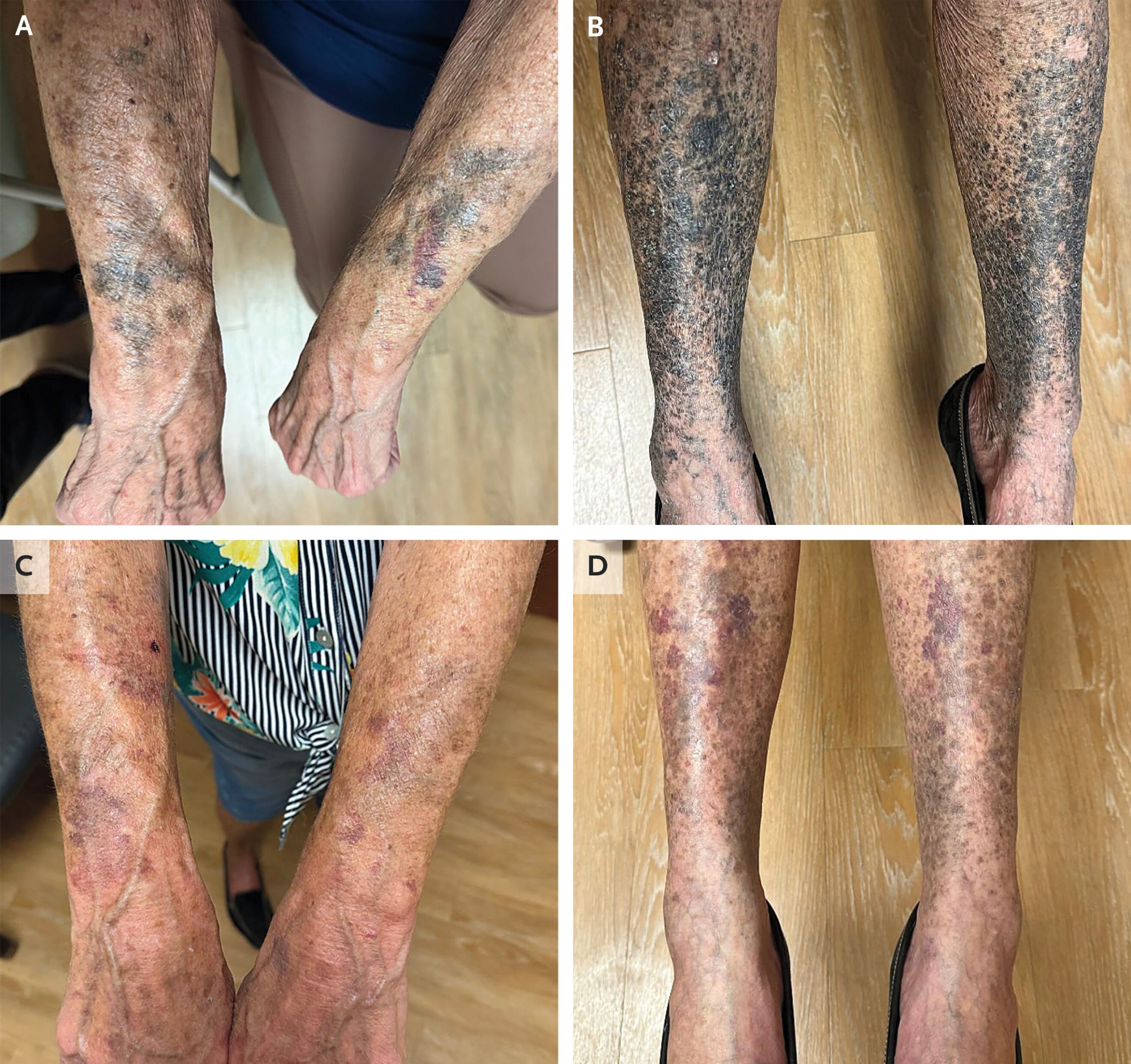
A 68-year-old woman with rosacea presented to the cardiology clinic with a 6-week history of dark patches on the skin of her arms and legs. Two weeks before the onset of the skin changes, she had started taking 100 mg daily of oral minocycline to treat rosacea. The dark patches, which had first appeared on her legs, were asymptomatic. On physical examination, scattered and confluent patches of blue-gray hyperpigmentation on the distal third of the forearms (Panel A) and shins (Panel B) were noted, along with hyperpigmentation on the sides of the tongue. A diagnosis of minocycline-induced hyperpigmentation was made. Tissue hyperpigmentation is a well-recognized adverse effect of minocycline. It typically develops after months of treatment but may rarely occur with shorter courses. Type II hyperpigmentation — defined by blue-gray discoloration of normal skin on the extensor surfaces of the arms and legs — was diagnosed in this case. The patient was advised to discontinue minocycline and avoid sun exposure. At the 6-month follow-up, the hyperpigmentation had abated somewhat (Panels C and D).
