HUMANITIES: ORIGINAL RESEARCHVolume 169, Issue 2P486-495February 2026
Post-Intensive Care Syndrome Awareness and Communication: Surveys of ICU Providers and Patients
Mark L. Rolfsen, Matthew F. Mart, Hannah Kieffer, et al
Chest 2026; 169: 486-495
DOI: 10.1016/j.chest.2025.08.048
Abstract
Background
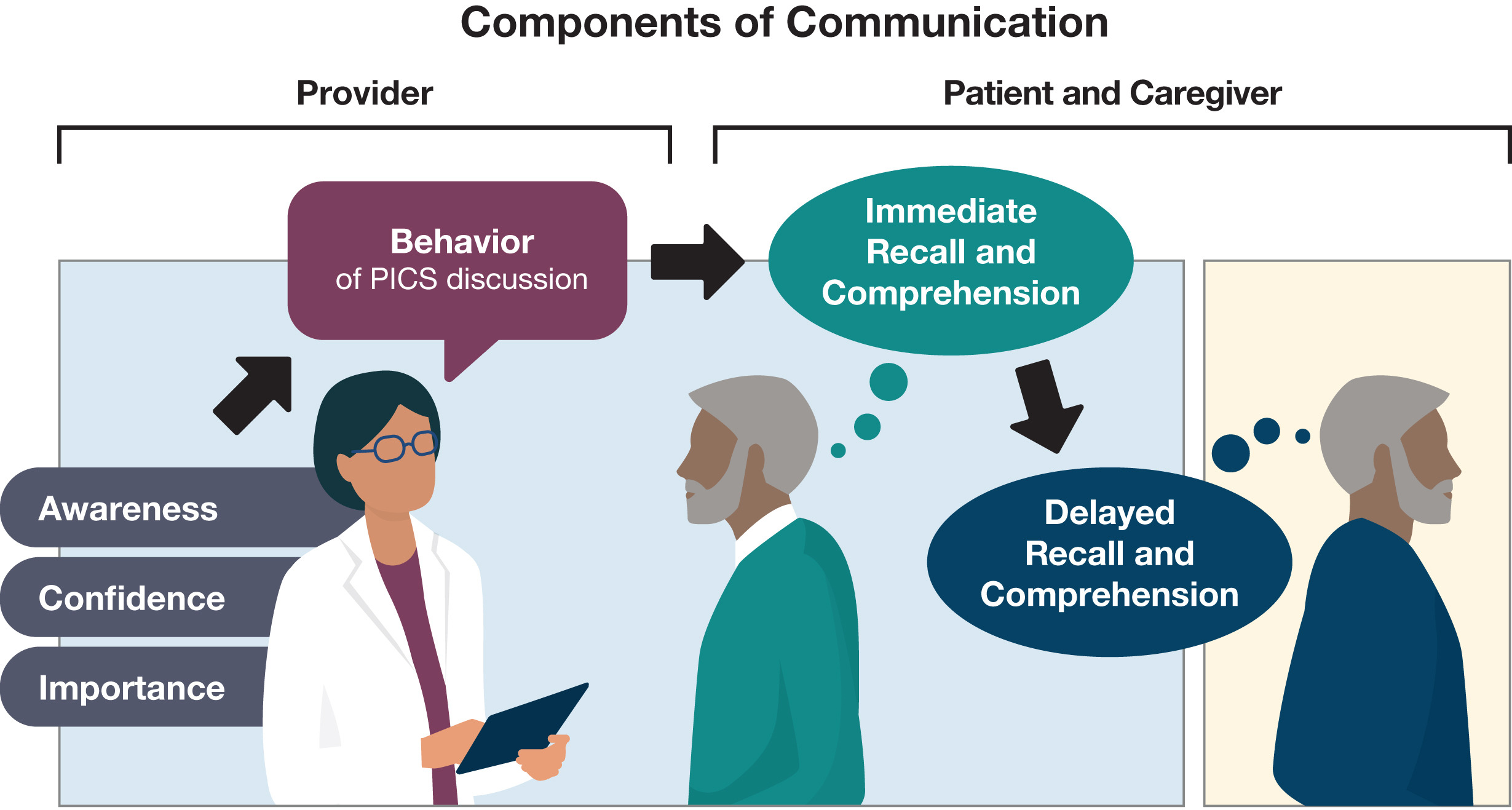
Survivors of critical illness often experience new or worsening impairments in various domains of health after discharge, collectively referred to as post-intensive care syndrome (PICS). Although this condition is common, it remains unclear whether providers are communicating routinely about survivorship and PICS to patients and families and whether patients are remembering these conversations.
Research Question
How often do ICU providers discuss the concept of PICS with at-risk patients or families, and how often do patients remember being told about the concept of PICS?
Study Design and Methods
We distributed online surveys to ICU health care providers at 9 US institutions and to patients who survived critical illness in the preceding year at a single site.
Results
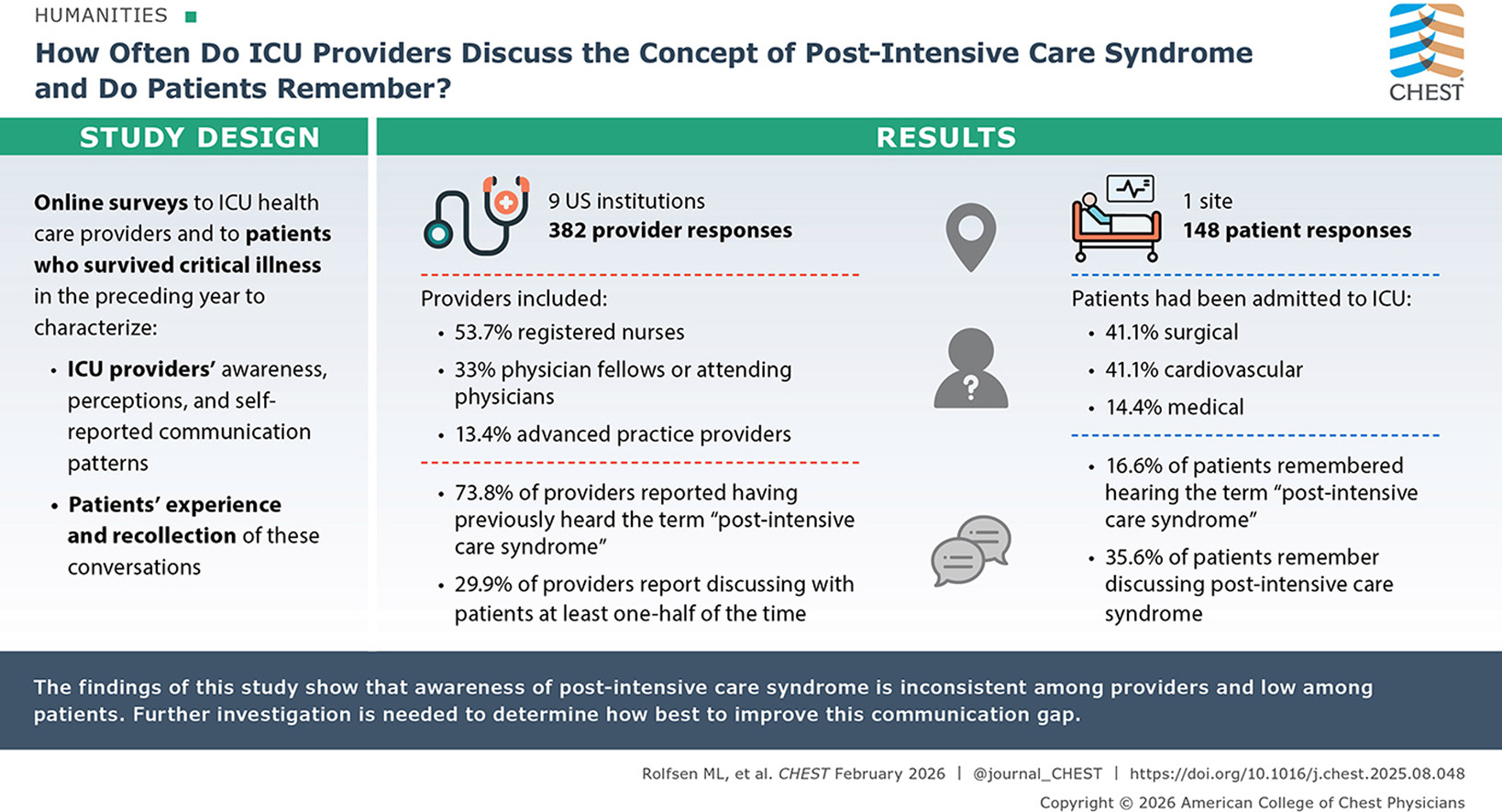
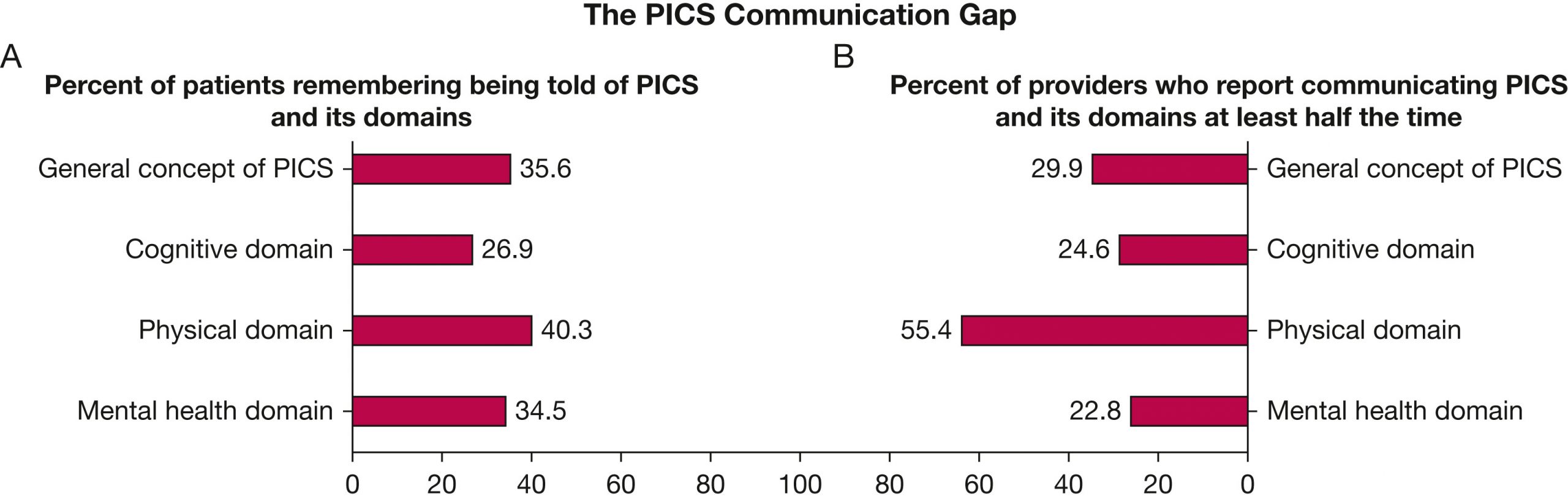
We collected a convenience sample of 382 provider responses and 148 patient responses. The providers were registered nurses (53.7%), physician fellows or attending physicians (33%), and advanced practice providers (13.4%). Patients predominantly had been admitted to surgical (41.1%), cardiovascular (41.1%), and medical (14.4%) ICUs. We found that 73.8% of providers reported having previously heard the term post-intensive care syndrome. In comparison, only 16.6% of patients remembered ever being told the term. When asked how often they would discuss with patients or families the possibility of any new or worsening impairments after critical illness, less than one-third of providers (29.9%) said they do so at least one-half of the time. Only about one-third of patients (35.6%) remembered such conversations.
Interpretation
Our results show that awareness of PICS is inconsistent among providers and low among patients. Few ICU team members reported routinely talking to patients or families about the common, disabling impairments that often occur after critical illness. Few patients remembered being told about the possibility of PICS. Further investigation is needed to determine how best to improve this communication gap.
