Early versus delayed catheter drainage for patients with necrotizing pancreatitis and early persistent organ failure (TIMING): a multicenter randomized controlled trial
Ke, L., Li, G., Mao, W. et al.
Intensive Care Med (2025). https://doi.org/10.1007/s00134-025-08020-x
Abstract
Purpose
Acute necrotic collection (ANC) is an early, local complication of necrotizing pancreatitis, and guidelines recommend a deliberate delay in treating ANC. In patients with early persistent organ failure, such delay may be harmful. This study aimed to assess whether early intervention for ANC confers clinical benefits in this patient population.
Methods
This is a multicenter, open-label, randomized controlled trial. At 7 days after disease onset, patients with ANC and persistent organ failure were screened for: (1) organ failure lasting longer than 7 days; (2) organ failure worsening in severity; or (3) new-onset organ failure. If one or more criteria were met, they were randomized to receive either early percutaneous catheter drainage or standard care. The primary outcome was a composite of major complications and/or death during the index admission.
Results
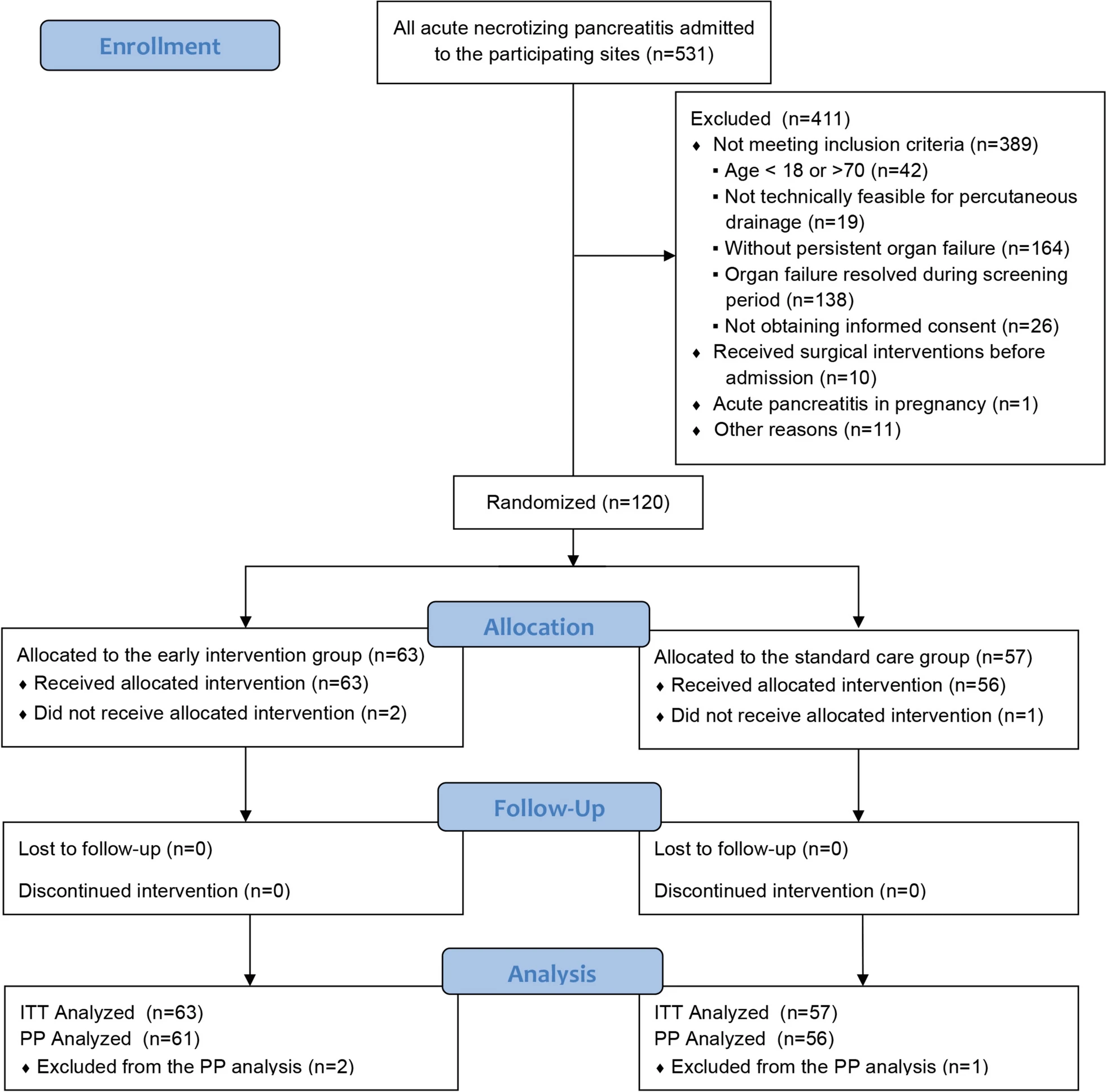
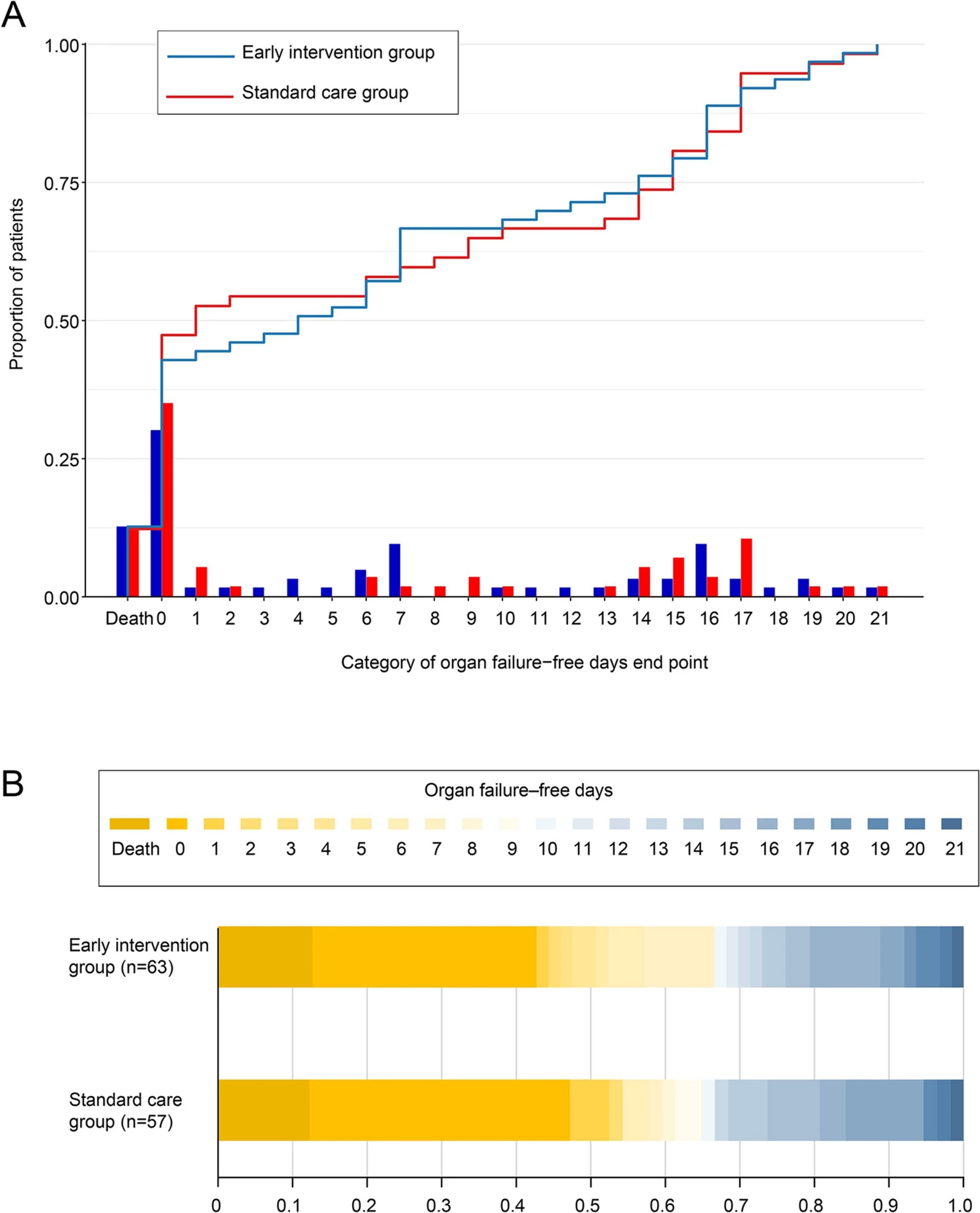
Overall, 120 patients were randomized to early intervention (N = 63) or standard care (N = 57). There was no difference in the primary composite outcome (33.3% [21/63] versus 36.8% [21/57]; risk difference [RD] − 3.5%; 95% CI, − 20.6 to 13.6%) or the individual components, including mortality. The study groups did not differ in terms of organ failure free days to 21 days after randomization (4 days [interquartile range 0–14] versus 1 day [interquartile range 0–15]). The requirement for minimally invasive debridement and open surgery was comparable between groups.
Conclusion
Early catheter drainage for ANCs in patients with necrotizing pancreatitis and early persistent organ failure, compared with standard delayed care, did not improve clinical outcomes. Future larger trials are needed to confirm our findings.
