Imaging and Pulmonary Function Techniques in ARDS
- In ICU
- Wed, 9 Jul 2025
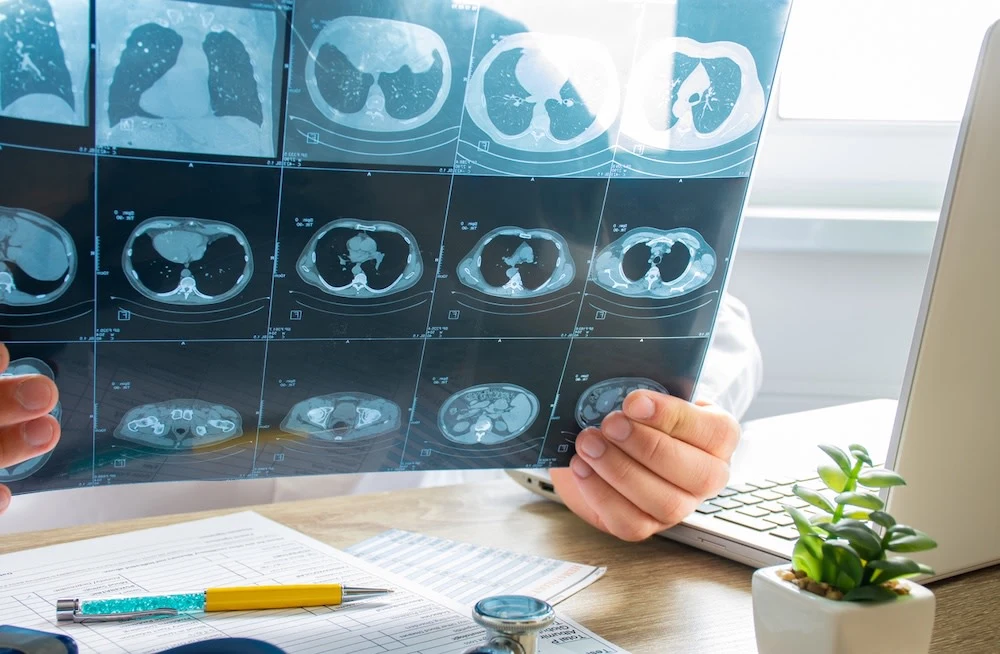
Acute Respiratory Distress Syndrome (ARDS) is a complex and heterogeneous condition requiring precise diagnosis and personalised treatment based on a thorough assessment of lung structure and function. Traditional physiological measures, such as respiratory compliance, driving pressure, transpulmonary pressure, and mechanical power, offer valuable insights for guiding therapy. However, integrating advanced imaging techniques like chest CT, lung ultrasound (LUS), and electrical impedance tomography (EIT) with these functional parameters provides a more comprehensive evaluation of respiratory status.
Chest CT helps visualise lung deformation to guide protective strategies; LUS tracks changes in lung consolidations; and EIT offers real-time data on regional ventilation distribution. Despite their potential, these imaging tools face challenges including variability in interpretation, interobserver differences, and the need for standardised protocols.
Emerging approaches like lung subphenotyping aim to improve diagnostic precision and enable tailored treatments by identifying specific traits at the bedside, potentially enhanced by artificial intelligence. Nevertheless, effective ARDS management continues to depend on fundamental respiratory physiology principles, such as lung-protective ventilation, individualised PEEP settings, and prone positioning.
A recent review explores how combining advanced lung imaging with functional respiratory measurements can enhance ARDS diagnosis and personalised care. It highlights the benefits and current limitations of these modalities, calls for standardisation and validation, and discusses future directions, including AI integration to optimise clinical decision-making.
ARDS is characterised by sudden respiratory symptoms, identifiable risk factors (like pneumonia or sepsis), bilateral lung infiltrates, and impaired oxygenation, driven by increased alveolar-capillary permeability, hypoxaemia, and decreased lung compliance. Subphenotyping helps personalise treatment. Imaging reveals significant morphological and physiological variability, distinguishing focal from non-focal lung injury patterns, which guides tailored therapies.
Mechanical ventilation strategies depend on lung recruitability: patients with highly recruitable lungs may benefit from higher PEEP, while aggressive recruitment in non-recruitable lungs risks ventilator-induced lung injury. Focal ARDS often improves with prone positioning, showing better gas exchange and compliance, whereas non-focal ARDS may respond better to recruitment maneuvers. Reduced compliance combined with high recruitability correlates with worse outcomes, while preserved compliance and low recruitability suggest milder disease. The LIVE trial underscored the importance of matching ventilation strategies to lung phenotype, as mismatched approaches can harm patients.
Effective ARDS management requires combining multiple diagnostic tools, as no single imaging modality suffices alone. Chest CT offers high-resolution views of lung structure, assessing regional aeration, injury progression, and volume changes. Qualitative and quantitative CT identify recruitable lung regions and help tailor PEEP settings. CT distinguishes focal versus non-focal morphologies, informs on alveolar hysteresis and risks of ventilator-induced lung injury, and clarifies tidal volume distribution and overdistension. However, practical limitations include risks associated with patient transport and limited availability of portable CT.
LUS is a practical bedside tool providing real-time evaluation of lung aeration and pathology, detecting B-lines, consolidations, and pleural effusions that correlate with ARDS severity. LUS aids in differentiating focal and non-focal ARDS and complements cardiac ultrasound to distinguish ARDS from cardiogenic edema. While effective for tracking aeration changes, LUS cannot reliably differentiate true alveolar recruitment or detect hyperinflation, but structured scoring systems enhance its diagnostic utility. It is useful for monitoring disease progression and ventilator responses despite lacking anatomical detail compared to CT.
EIT is a non-invasive, bedside method offering continuous, real-time monitoring of regional ventilation distribution and dynamics. EIT-derived indices like the Global Inhomogeneity Index and Centre of Ventilation quantify ventilation heterogeneity and guide ventilator adjustments, including PEEP titration. EIT maps regional compliance and identifies ventilation patterns such as overdistension, collapse, and pendelluft, providing unique insights not accessible via global compliance measures. It can also assess ventilation-perfusion matching and “silent spaces” of hypoventilation. However, EIT does not measure lung aeration directly and depends on interpretation of impedance changes.
Other advanced imagingtechniques, such as dual-energy CT, ventilation/perfusion scans, CT pulmonary angiography, and SPECT, though less commonly used, offer valuable complementary information on pulmonary and vascular pathophysiology, especially in complex ARDS or COVID-19 cases.
Together, these imaging modalities provide complementary structural and functional insights that enhance individualised ARDS diagnosis and management, though practical and interpretive challenges remain. Integrating advanced imaging techniques (CT, LUS, EIT) with respiratory mechanics deepens understanding of ARDS pathophysiology and supports more precise, personalised ventilation strategies, though broad clinical adoption remains limited. Imaging reveals regional physiological abnormalities often missed by global respiratory measures, enabling real-time assessment of ventilation distribution, lung recruitability, and mechanical strain to optimise alveolar recruitment while minimising ventilator-induced lung injury (VILI).
Although interest in imaging-guided mechanical ventilation for ARDS is growing, current evidence does not conclusively show mortality or ventilator-free day benefits. Recent meta-analyses report no significant improvements from strategies guided by imaging or key physiological parameters like driving pressure (ΔP) or transpulmonary pressure (PL). This highlights the need for high-quality, multicentre randomised controlled trials to assess the efficacy, feasibility, and cost-effectiveness of such approaches.
Emerging imaging technologies, including dual-energy CT (DECT) and advanced ultrasound, may better characterise lung and vascular pathology. Research is also needed to identify actionable imaging biomarkers with clear operational thresholds, such as changes in EIT regional compliance or LUS aeration scores, that can reliably guide ventilator adjustments.
Future protocols should integrate multimodal imaging with functional metrics (compliance, ΔP, PL, mechanical power) to improve personalised ARDS care. Additionally, artificial intelligence and machine learning hold promise for analysing complex imaging and physiological data, enhancing diagnosis, predicting disease progression, and supporting real-time decision-making. Early studies of AI-driven closed-loop ventilation systems show improved adherence to lung-protective targets, but further research is required to confirm their clinical benefit.
Source: Critical Care
Image Credit: iStock
References:
Battaglini D, Schultz MJ, Puentes GAC et al. (2025) Imaging and pulmonary function techniques in ARDS diagnosis and management: current insights and challenges. Crit Care. 29, 282.
