Article
Black hole sign
Hayano, S., Tani, N., Toyama, Y. et al.
Intensive Care Med (2026). https://doi.org/10.1007/s00134-026-08470-x
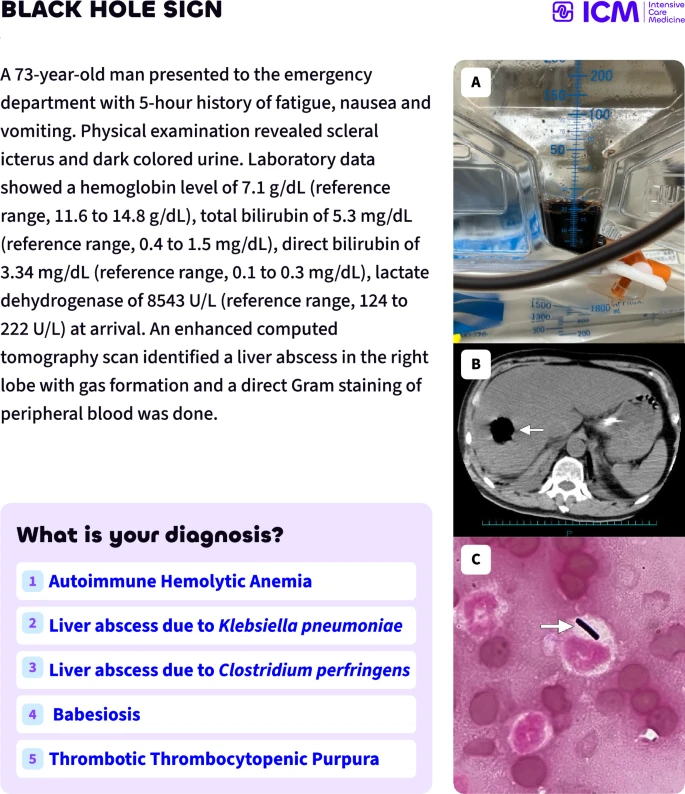
Direct gram stains of peripheral blood can show gram-positive rods (Fig. 1C, arrow), and C. perfringens bacteremia can be confirmed through blood culture within 5 h of incubation. For C. perfringens sepsis accompanied by intravascular hemolytic anemia, a treatment with meropenem and clindamycin can be initiated.
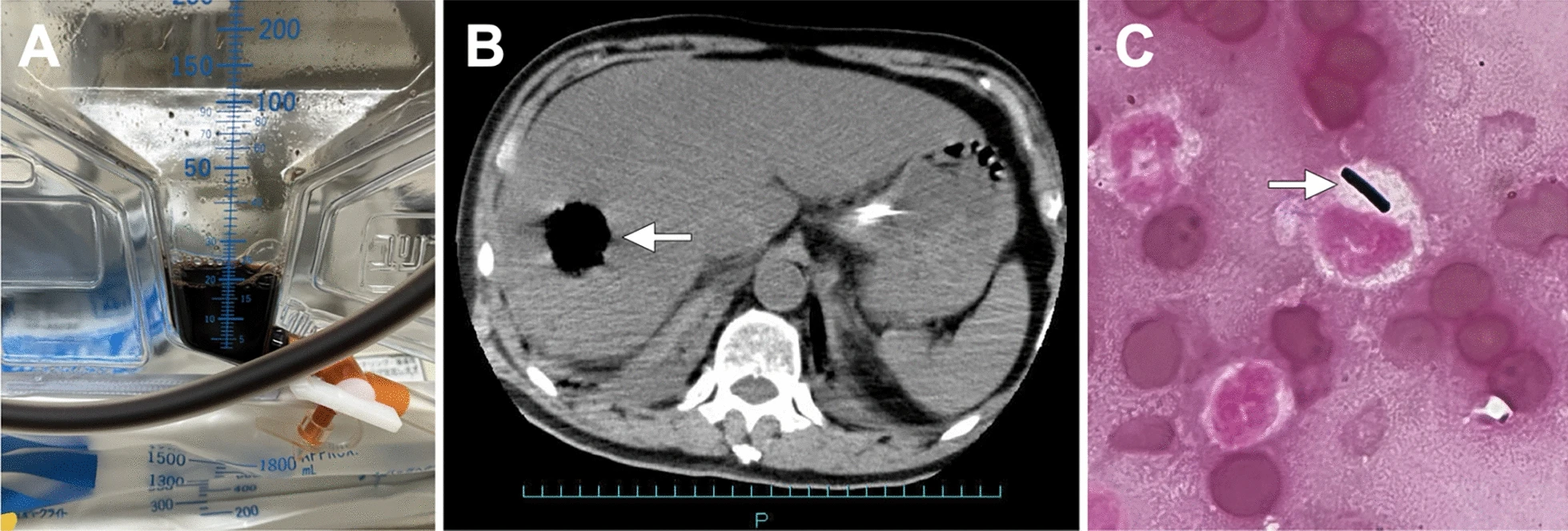
A Dark-colored urine drained from a urethral catheter. B Computed tomography scan showing a gas-forming liver abscess in the right hepatic lobe. C Direct gram stain of peripheral blood showing gram-positive rods
Severe intravascular hemolysis is a rare complication that occurs in approximately 2–15% of cases of C. perfringens bacteremia. This condition is caused by alpha-toxinα-toxin (phospholipase C), which can disrupt erythrocyte membranes and cause massive intravascular hemolysis. This condition is associated with a very high mortality rate of up to 80%, with extremely rapid progression leading to a median time from admission to death of only 8–9.7 h. Therefore, rapid recognition and immediate source control, such as hepatic drainage or resection, are crucial for patient survival. Peripheral blood gram stains of the buffy coat are useful for early diagnosis because of the high amount of bacterial load in the blood. Furthermore, gas-forming liver abscesses (black hole sign) are characteristic findings for diagnosing this condition.
