Prehospital Whole Blood in Traumatic Hemorrhage — a Randomized Controlled Trial
Jason E. Smith, Rebecca Cardigan, Emily Sanderson, et al
N Engl J Med Published March 17, 2026
DOI: 10.1056/NEJMoa2516043
Abstract
BACKGROUND
Whole-blood transfusion has recently gained favor in the management of severe hemorrhage; however, data from large clinical trials evaluating its clinical effectiveness and safety are lacking.
METHODS
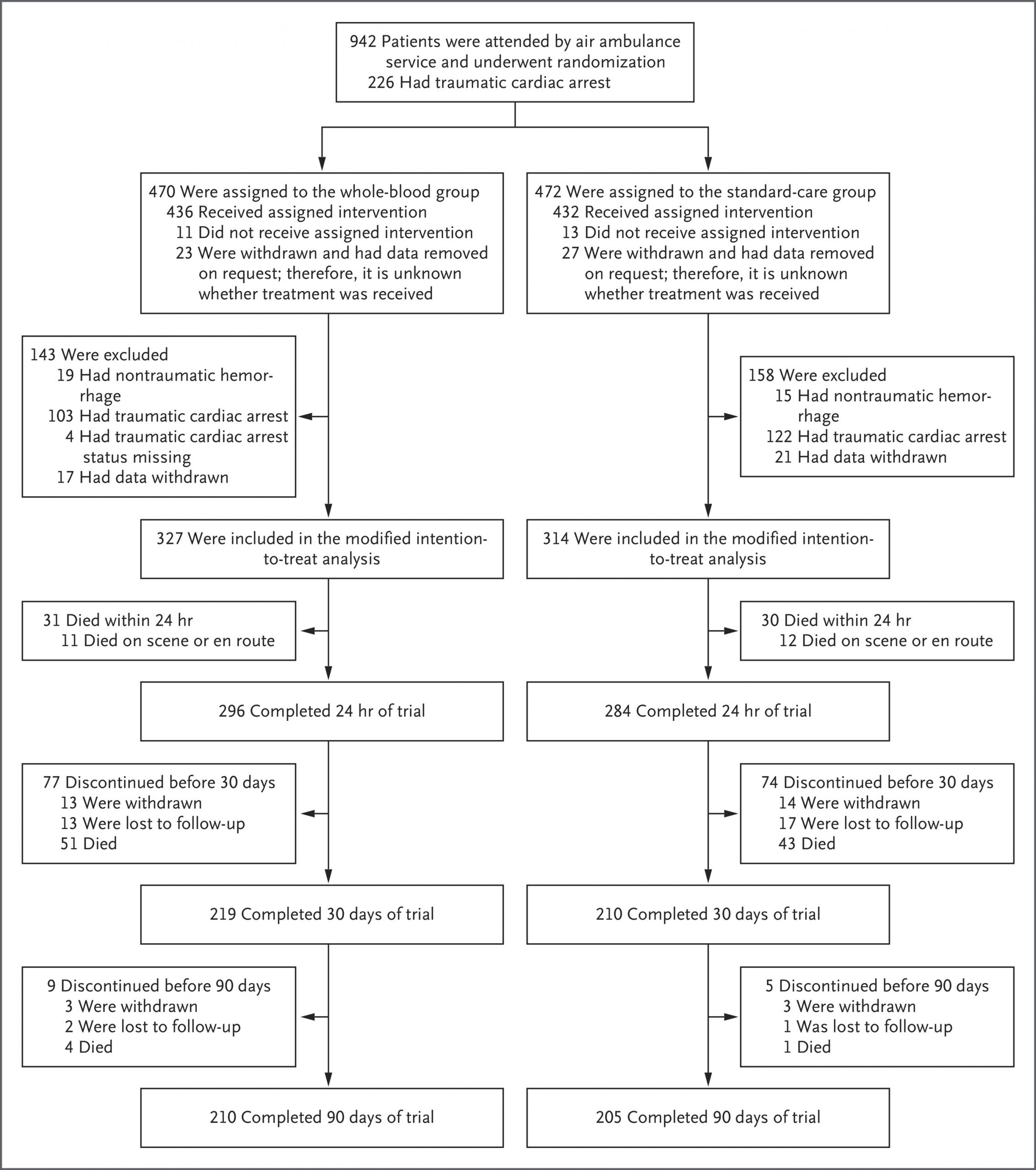
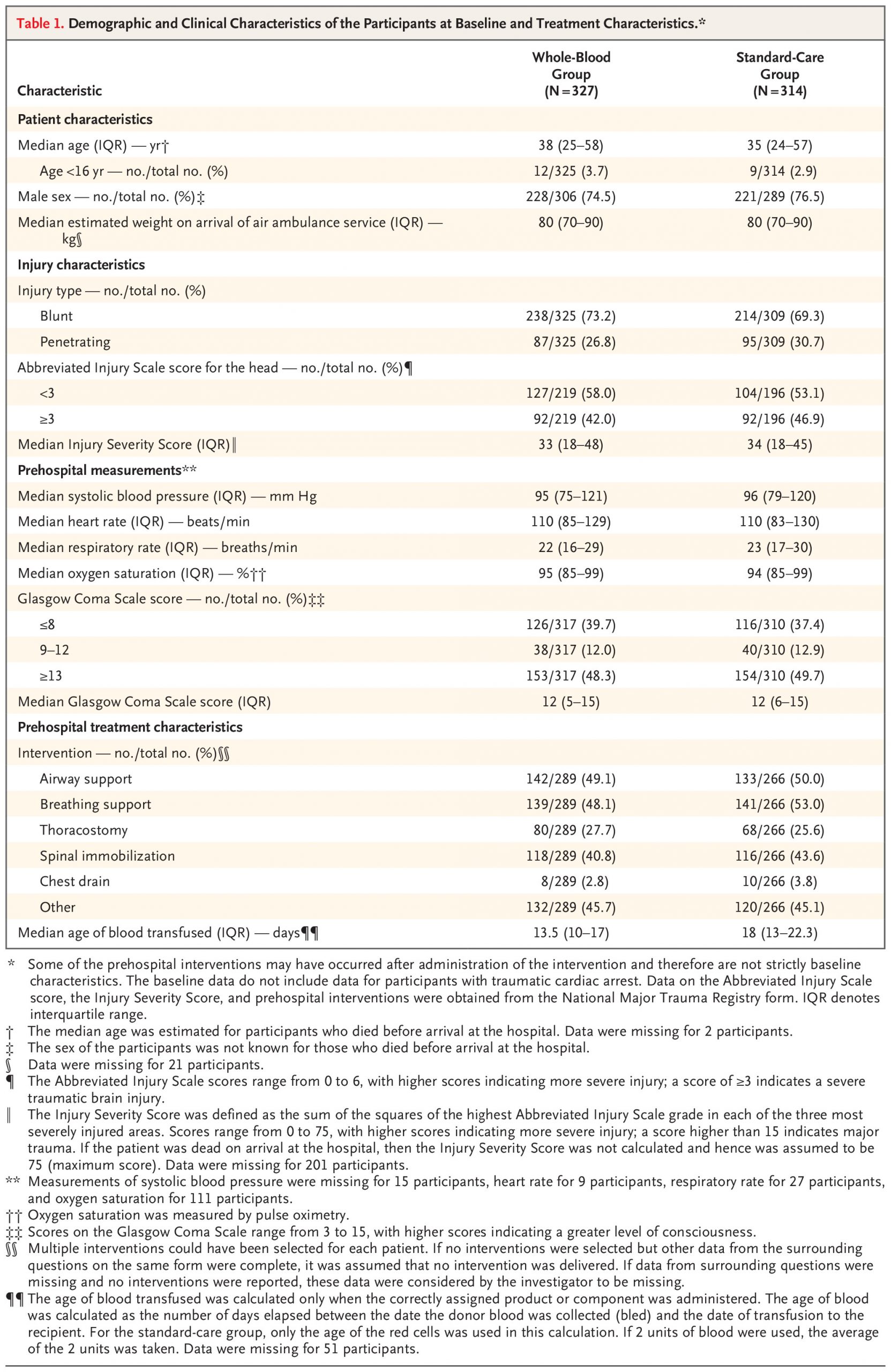
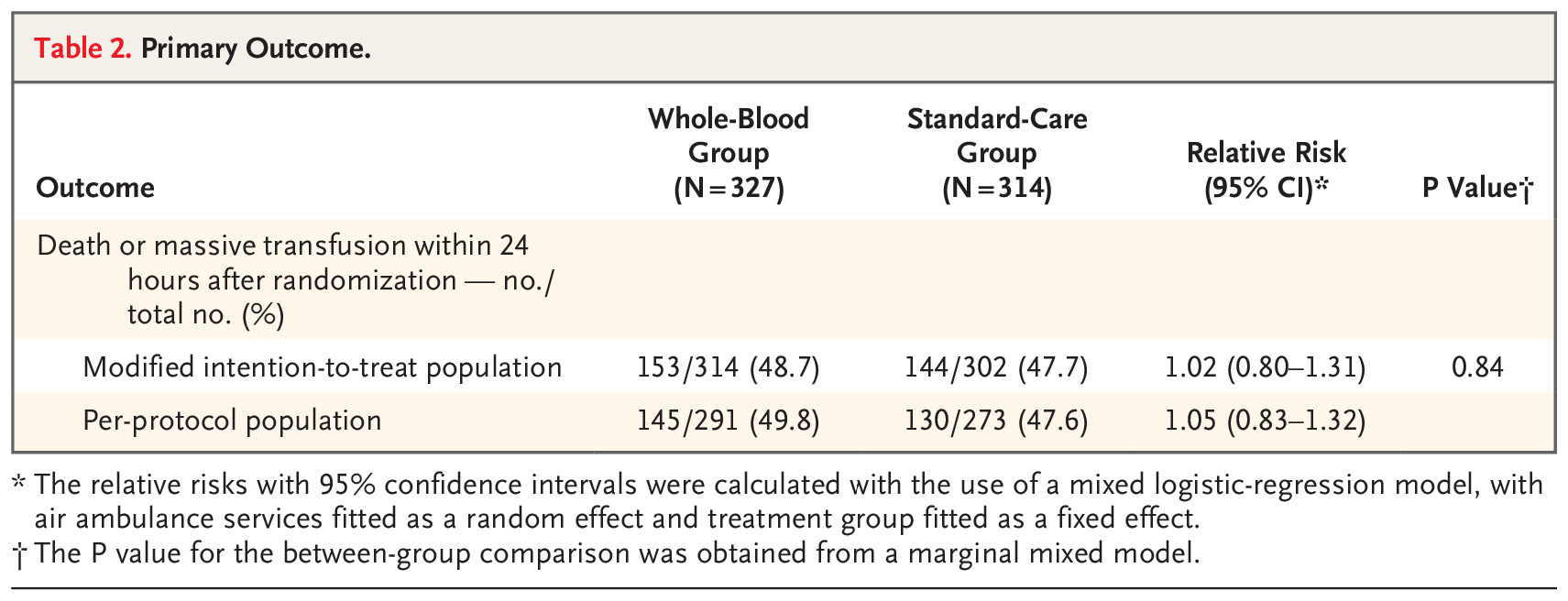
We conducted a pragmatic, phase 3, multicenter, unblinded, randomized, superiority trial across 10 air ambulance services in England. Patients with major traumatic hemorrhage who were attended by a participating air ambulance service were randomly assigned to receive either whole-blood transfusion (up to 2 units) or standard care with blood components (up to 2 units each of red cells and plasma) before arrival at the hospital. The primary outcome was a composite of death from any cause or massive transfusion (≥10 units of blood components or products) within 24 hours after randomization.
RESULTS
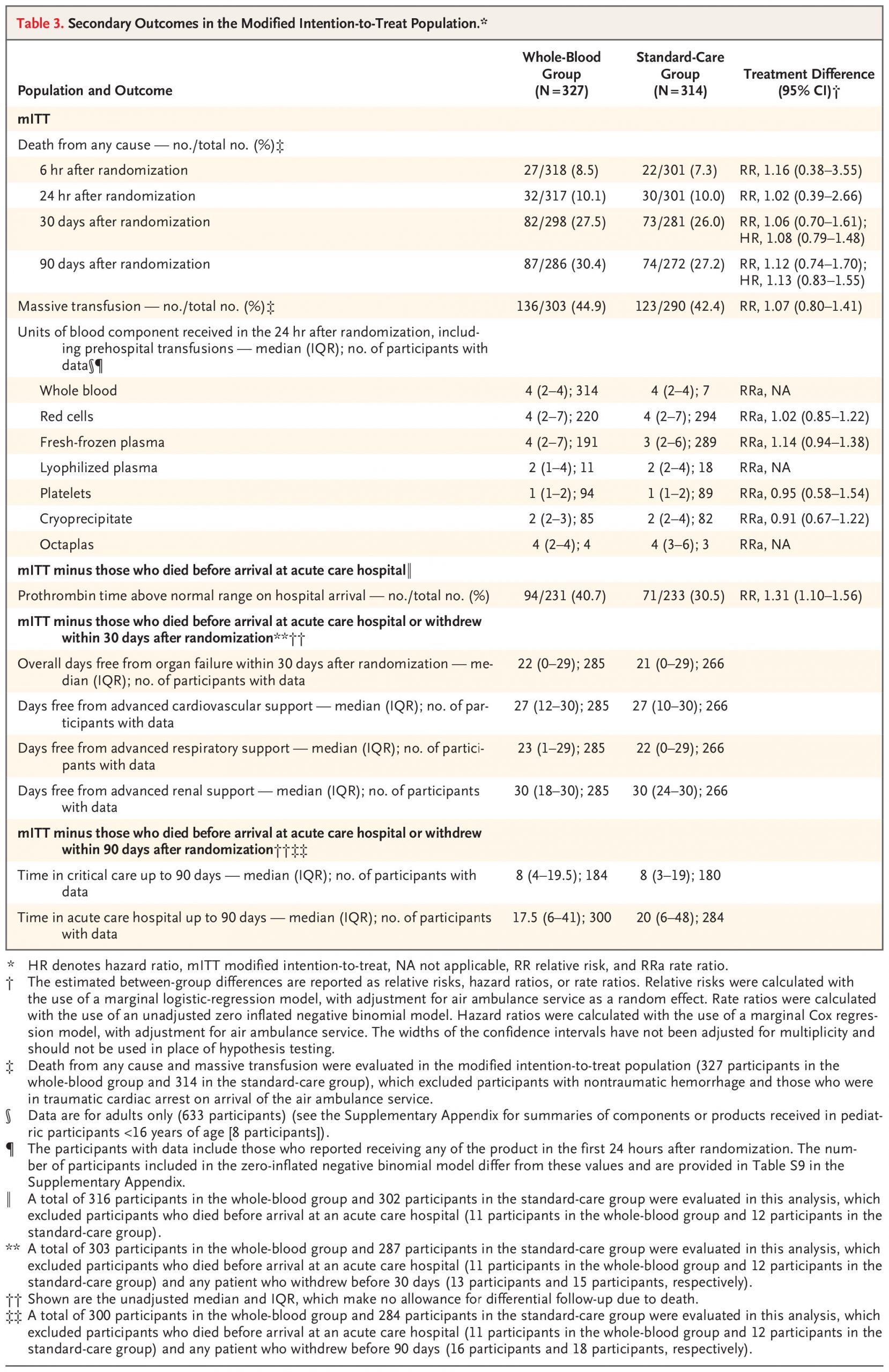
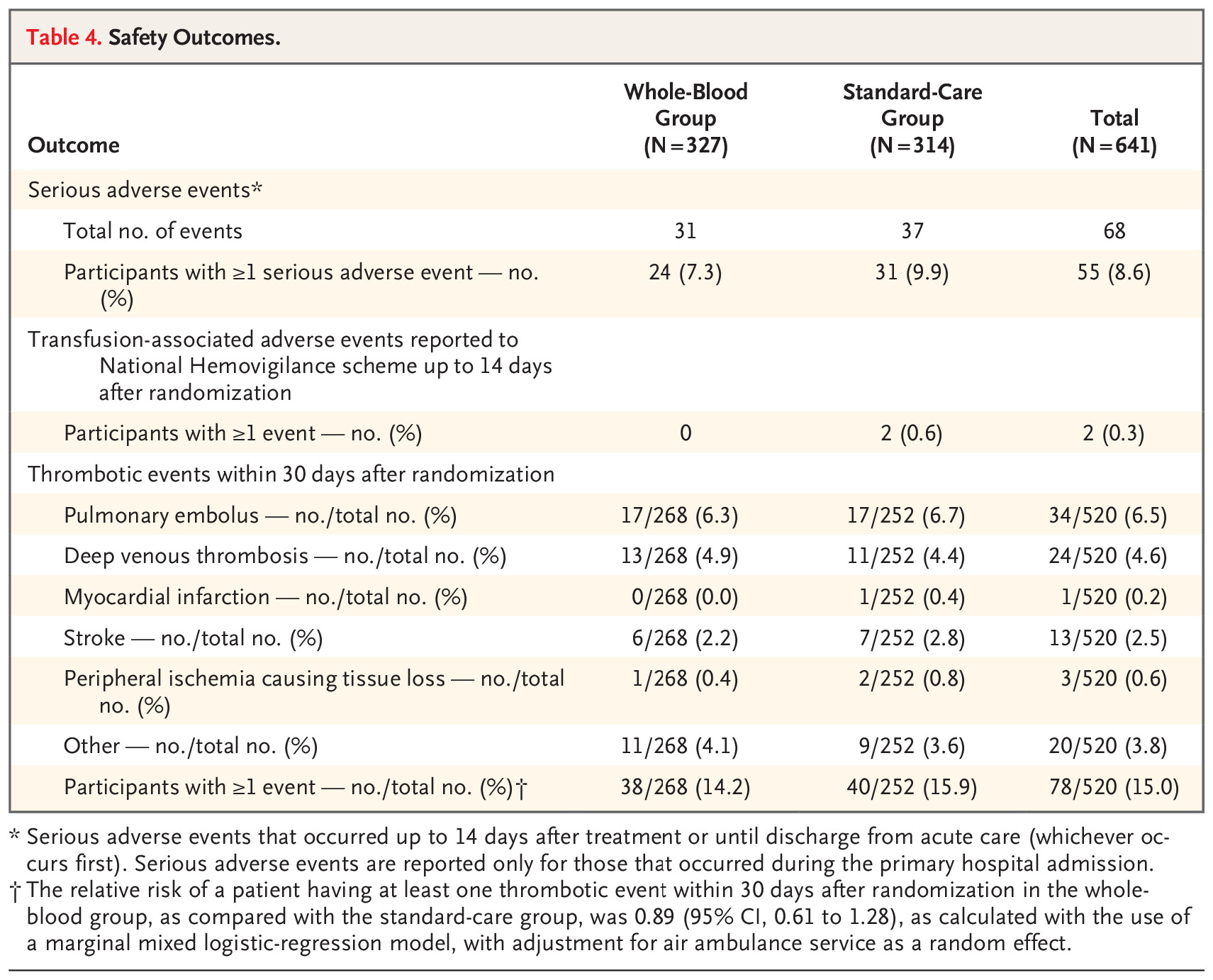
A total of 942 patients underwent randomization. After the exclusion of participants with nontraumatic hemorrhage or traumatic cardiac arrest, 616 were included in the analysis (314 in the whole-blood group and 302 in the standard-care group). A primary-outcome event occurred in 48.7% of the participants in the whole-blood group and in 47.7% of those in the standard-care group (relative risk, 1.02; 95% confidence interval, 0.80 to 1.31; P=0.84). The incidence of death from any cause at all time points, massive transfusion, and other secondary outcomes appeared to be similar in the two groups. Prothrombin times were above the normal range in 40.7% of the participants in the whole-blood group and in 30.5% of those in the standard-care group. More serious adverse events occurred in the standard-care group than in the whole-blood group (37 and 31, respectively). The incidence of thrombotic events appeared to be similar in the two groups.
CONCLUSIONS
Among participants with life-threatening hemorrhage, prehospital transfusion of 2 units of whole blood was not superior to standard care in reducing the risk of death or massive transfusion within 24 hours. (Funded by NHS Blood and Transplant and others; ISRCTN Registry number, ISRCTN23657907.)
