Research
Machine learning based screening of potential paper mill publications in cancer research: methodological and cross sectional study
Baptiste Scancar, Jennifer A Byrne, David Causeur, et al
BMJ 2026; 392 doi: https://doi.org/10.1136/bmj-2025-087581 (Published 30 January 2026)Cite this as: BMJ 2026;392:e087581
Abstract
Objectives To train and validate a machine learning model to distinguish paper mill publications from genuine cancer research articles, and to screen the cancer research literature to assess the prevalence of papers that have textual similarities to paper mill papers.
Design Methodological and cross sectional study applying a BERT (bidirectional encoder representations from transformers) based, text classification model to article titles and abstracts.
Setting Retracted paper mill publications listed in the Retraction Watch database were used for model training. The cancer research corpus was screened by the model using the PubMed database restricted to original cancer research articles published between 1999 and 2024.
Population The model was trained on 2202 retracted paper mill papers and validated on independent data collected by image integrity experts. 2.6 million cancer research papers were screened.
Main outcome measures Classification performance of the model. Prevalence of papers flagged as similar to retracted paper mill publications with 95% confidence intervals and their distribution over time, by country, publisher, cancer type, research area, and within high impact journals (top 10%).
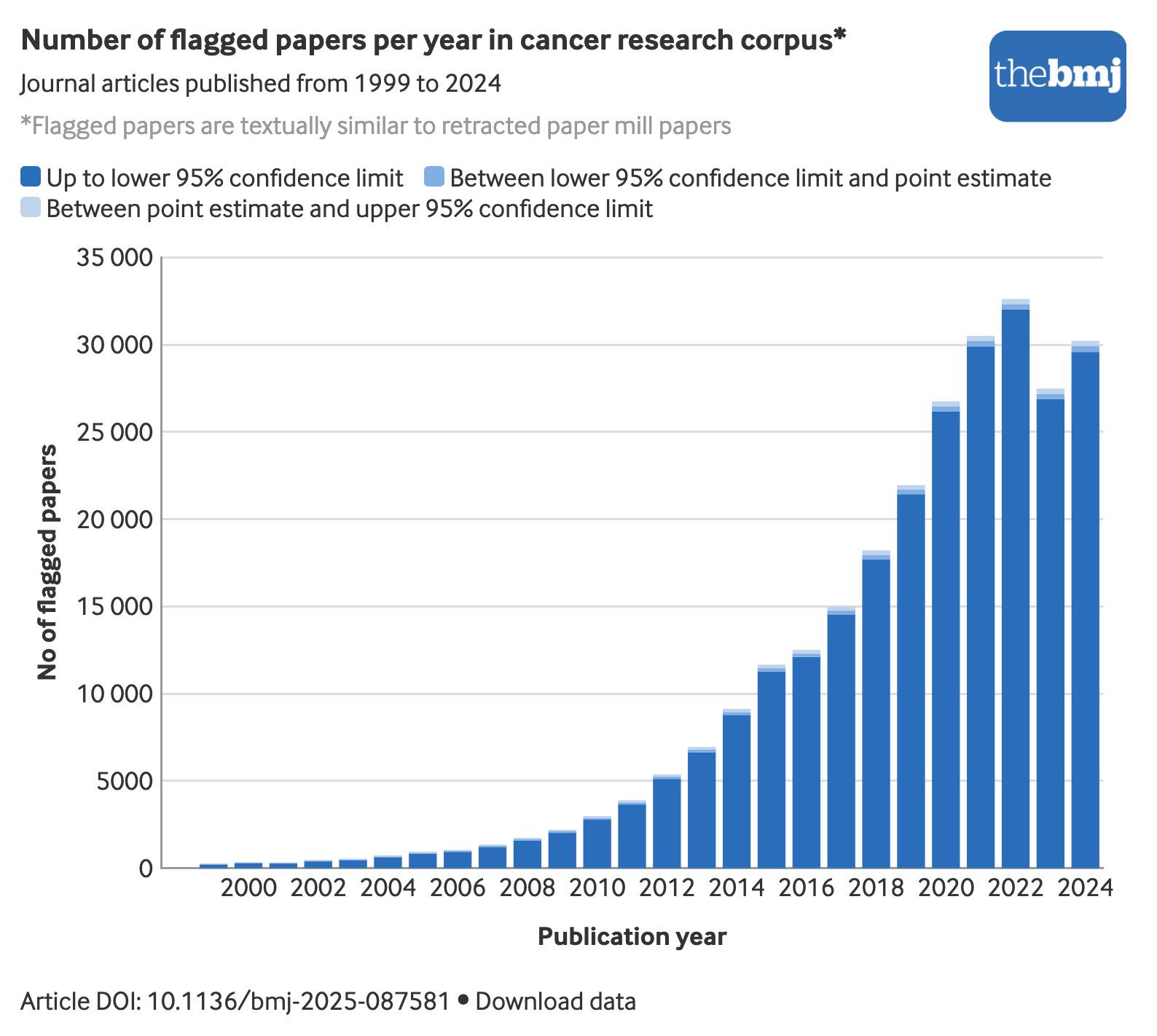
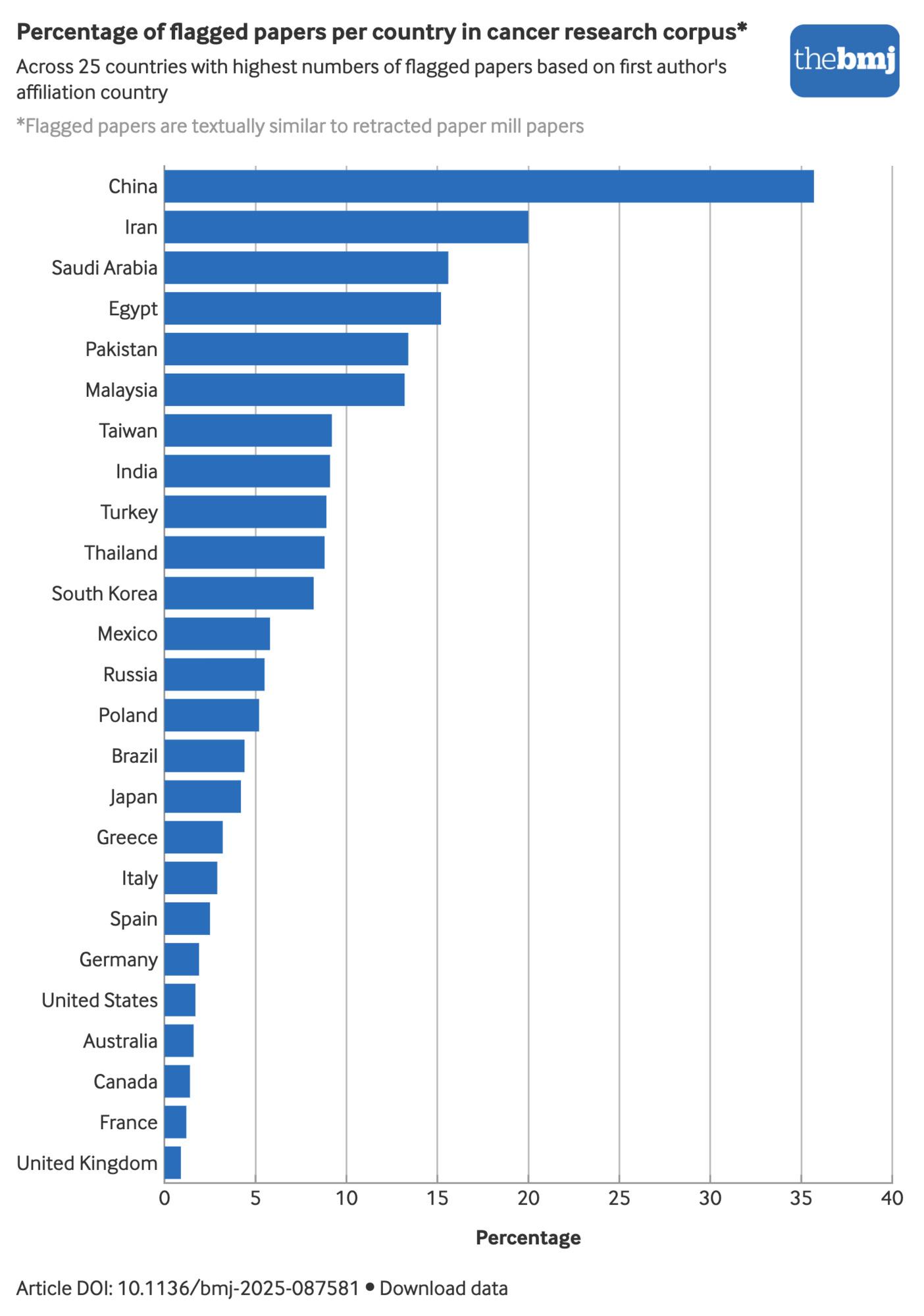
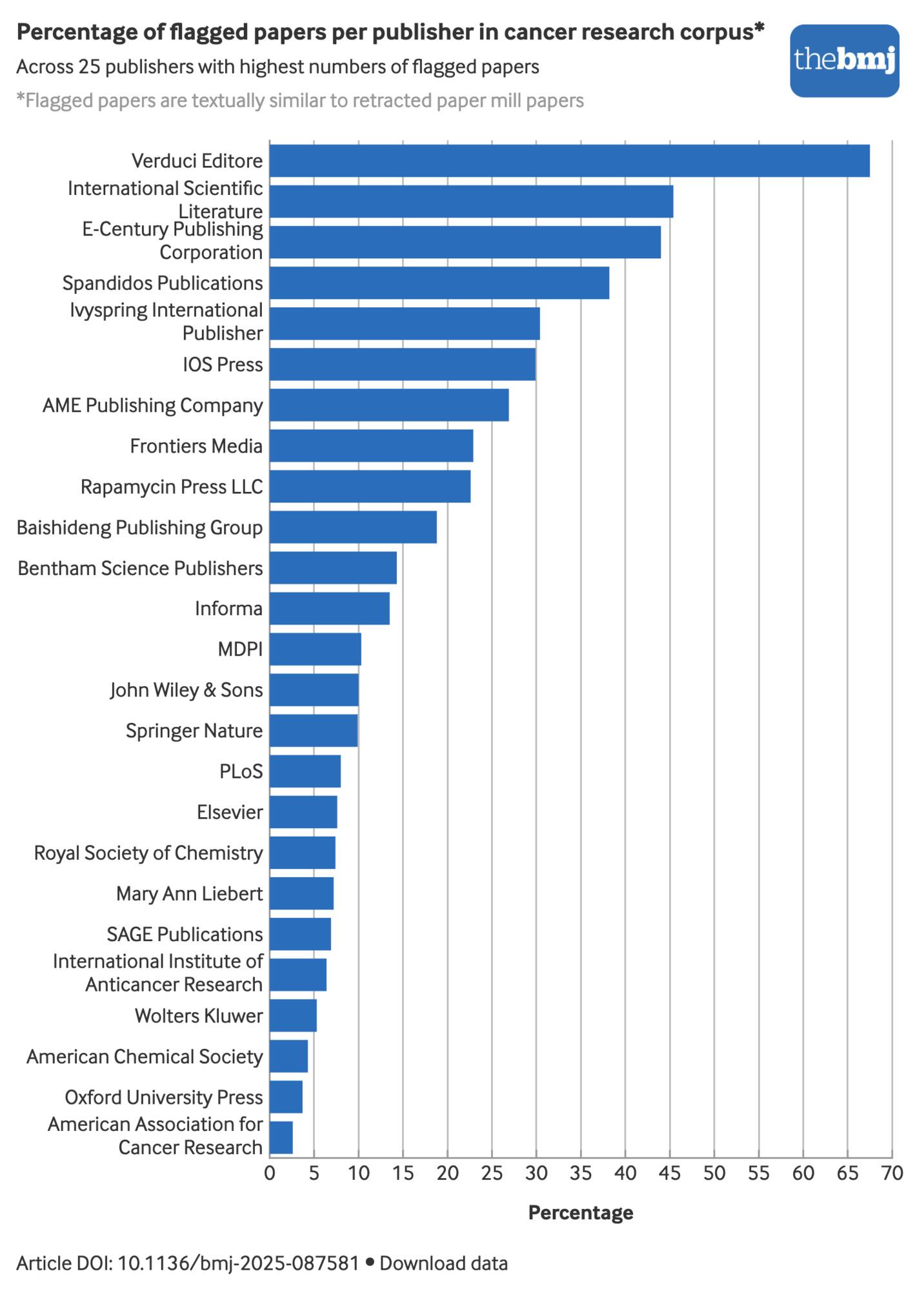
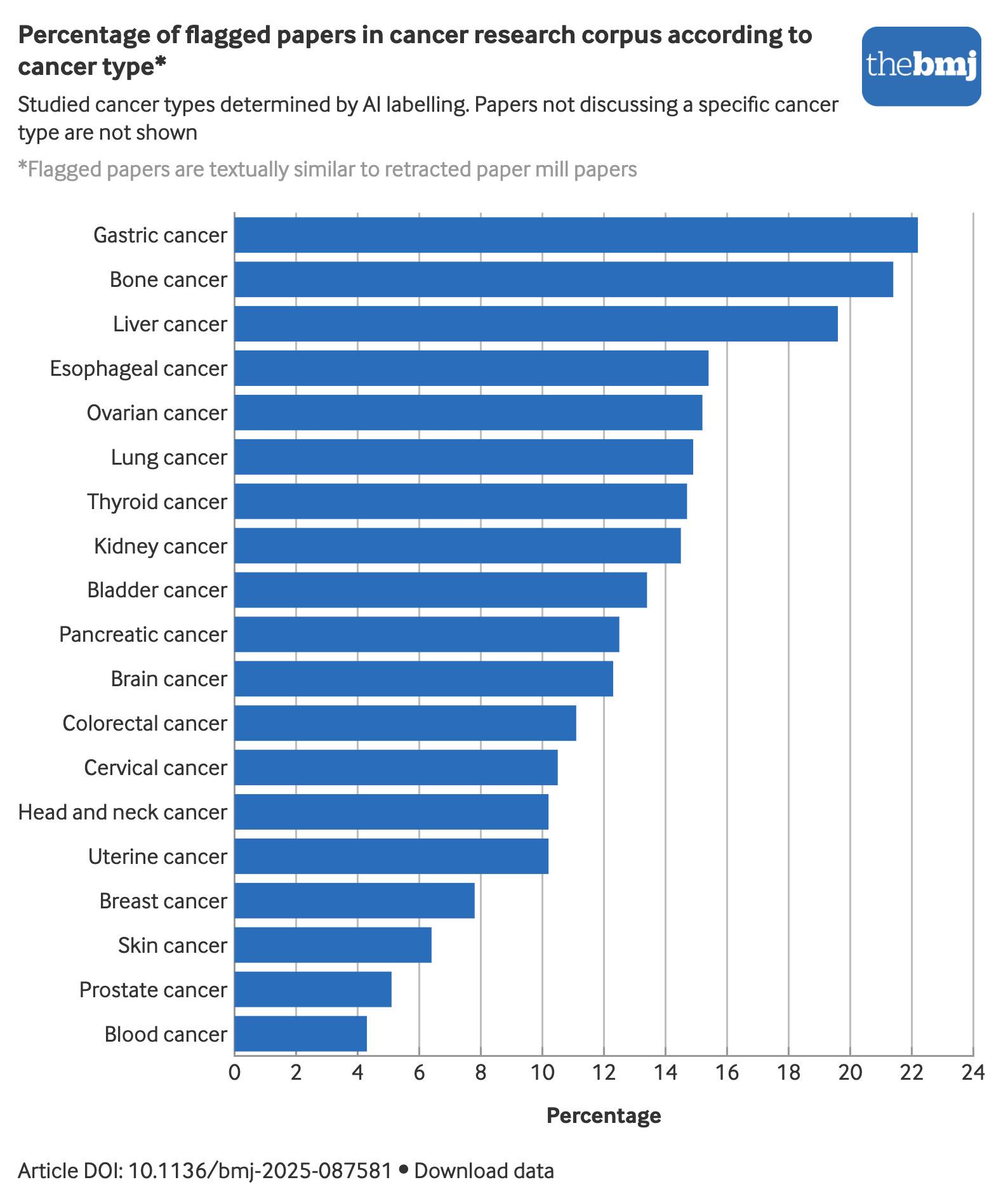
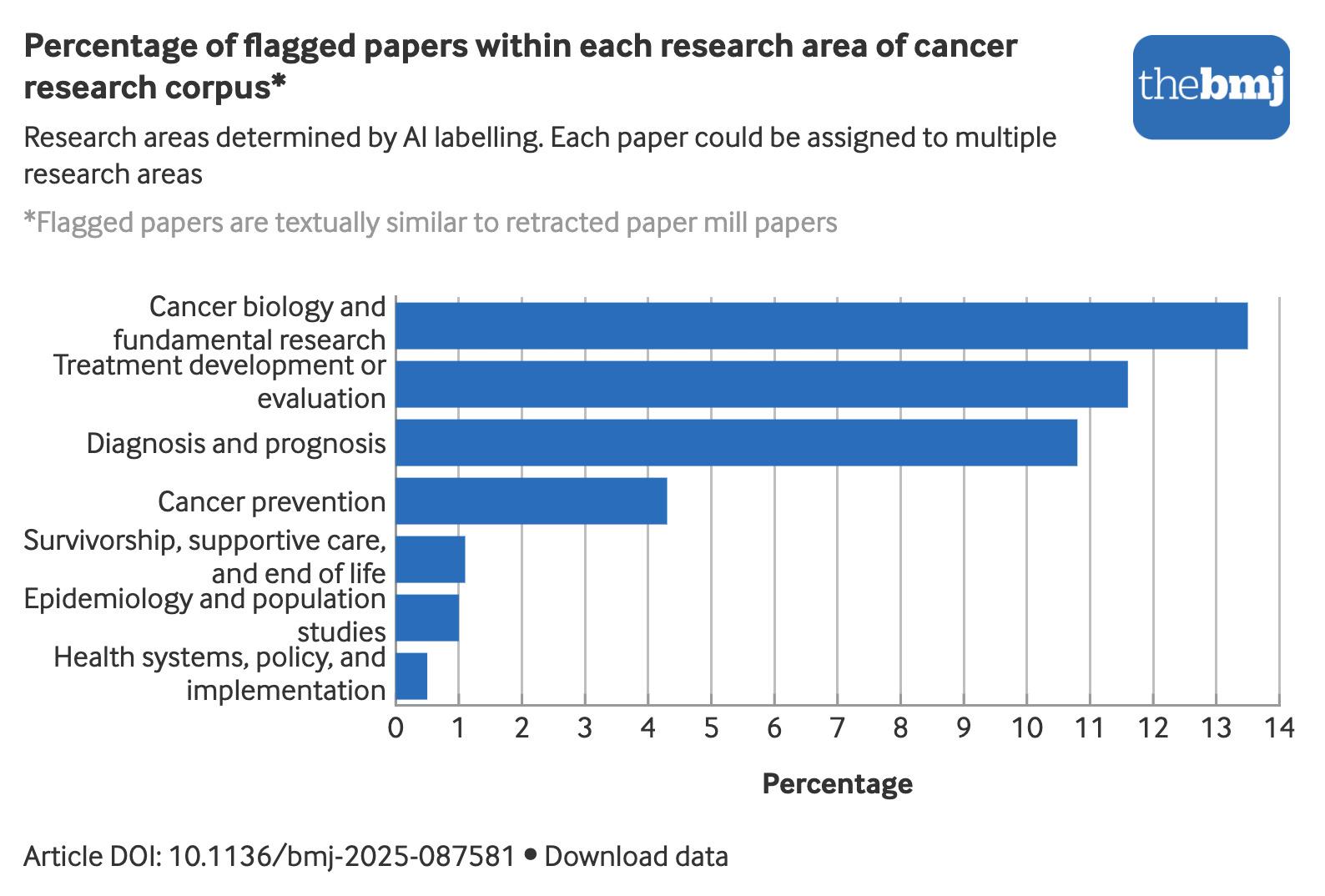
Results The model achieved an accuracy of 0.91. When applied to the cancer research literature, it flagged 261 245 of 2 647 471 papers (9.87%, 95% confidence interval 9.83 to 9.90) and revealed a large increase in flagged papers from 1999 to 2024, both across the entire corpus and in the top 10% of journals by impact factor. More than 170 000 papers affiliated with Chinese institutions were flagged, accounting for 36% of Chinese cancer research articles. Most publishers had published substantial numbers of flagged papers. Flagged papers were overrepresented in fundamental research and in gastric, bone, and liver cancer.
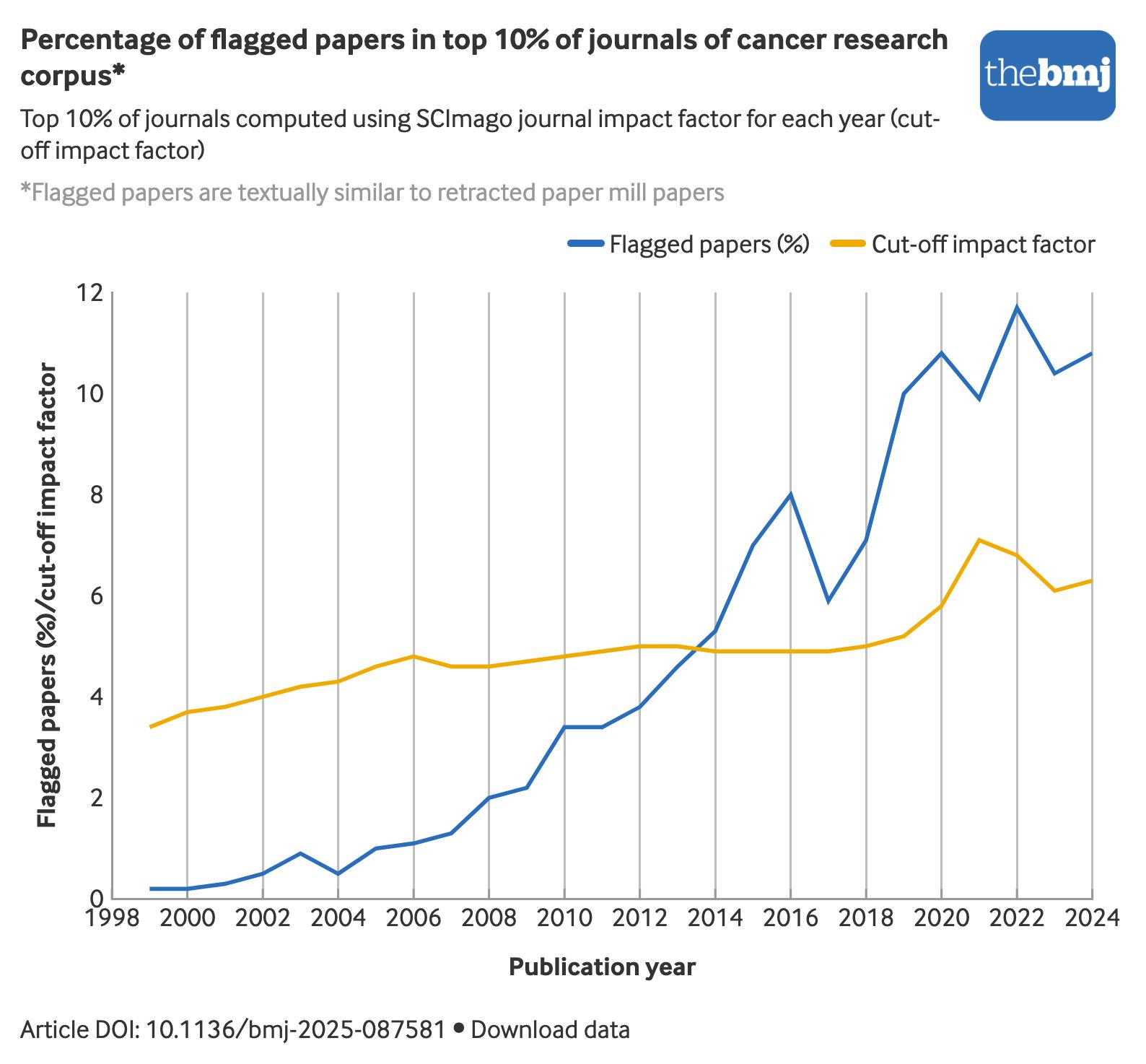
Conclusions Paper mills are a large and growing problem in the cancer literature and are not restricted to low impact journals. Collective awareness and action will be crucial to address the problem of paper mill publications.
