Reproducible clinical archetypes in acute respiratory failure: a multi-cohort trajectory analysis
Marshall, D.C., Green, A.D., Komorowski, M. et al
Intensive Care Med (2026)
https://doi.org/10.1007/s00134-026-08441-2
Abstract
Purpose
Acute hypoxemic respiratory failure (AHRF) is common and biologically heterogeneous. Static phenotyping at a single time point does not capture illness evolution and risks stage-mixing; reproducible clinical course archetypes may address this. We aimed to identify, externally validate, and predict trajectory classes (TCs) of persistent AHRF.
Methods
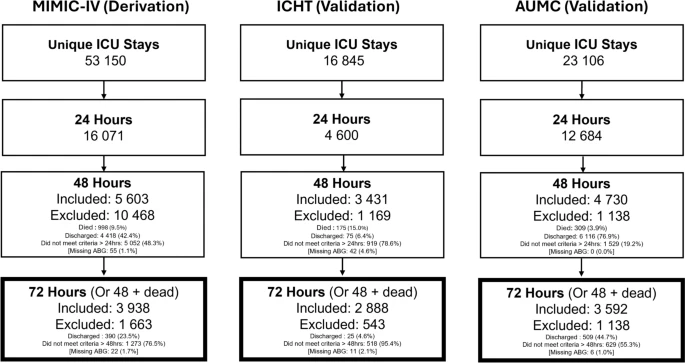
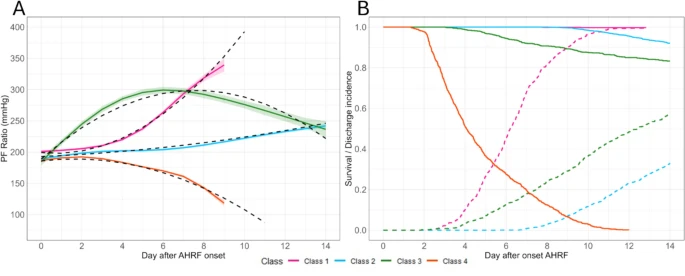
We analyzed MIMIC-IV (derivation; n = 3938) and two external validation cohorts (UK/Netherlands; n = 6480) comprising adults with PaO2/FiO2 < 300 mmHg and PEEP ≥ 5 cmH2O for ≥ 72 h. Daily mean PaO2/FiO2 to day 14 and time to ICU discharge/death were jointly modelled using a competing-risk latent class mixed model. Early TC prediction used a 12-variable XGBoost model. We explored prevalence of ARDS and hyperinflammatory subphenotypes between TCs.
Results
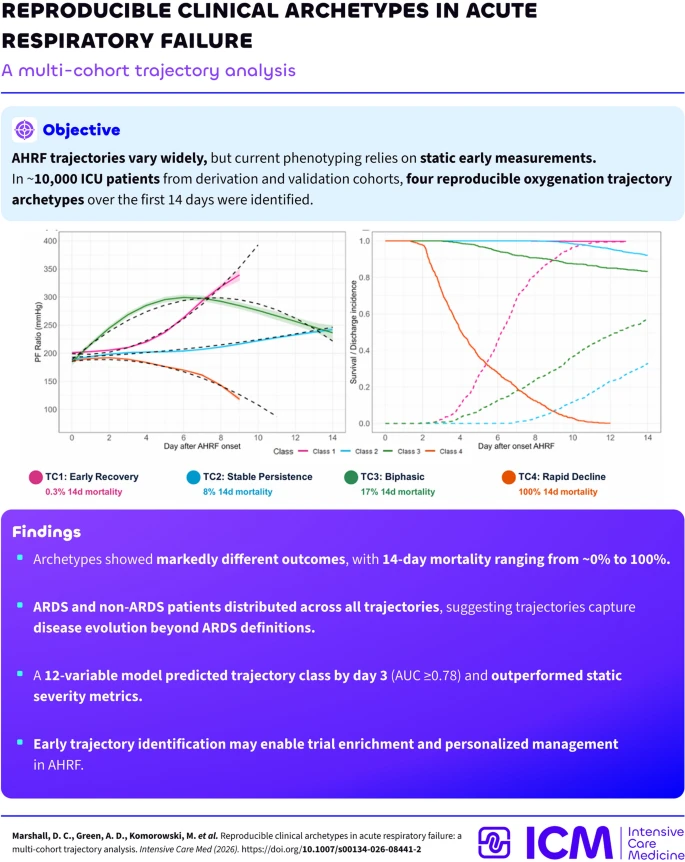
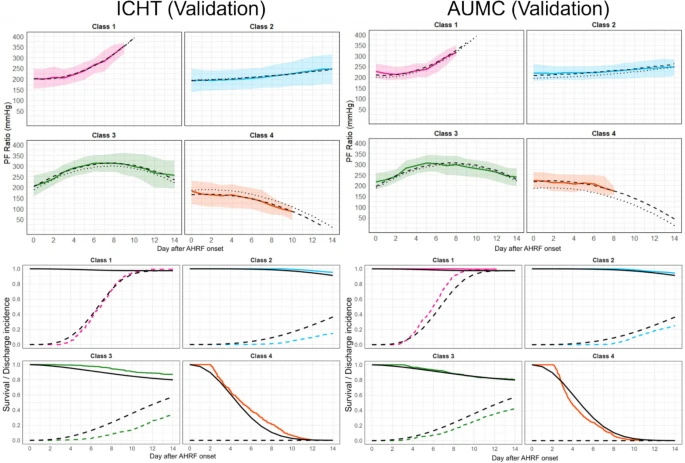
A four-class model provided optimal fit: (TC1) early recovery (0.3% 14-day mortality); (TC2) stable persistence (8% 14-day mortality); (TC3) biphasic improvement–deterioration (17% 14-day mortality); and (TC4) rapid decline (100% 14-day mortality). These archetypes generalized to external cohorts with high assignment certainty. TCs demonstrated distinct patterns in other clinical biomarker trajectories. TC4 was enriched for the hyperinflammatory subphenotype (41–53%), while TC2 was most common in patients with ARDS (50%). Early TC prediction models achieved mean AUCs ≥ 0.78 (0.70–0.86) by day 3 in external validation.
Conclusions
Four reproducible oxygenation archetypes capture the 14-day course of persistent respiratory failure. By providing early prognostic value distinct from static baseline severity, these trajectories have the potential to guide therapeutic strategies, reduce patient heterogeneity in trials, and direct biological phenotyping.
