Effects of out-of-bed armchair positioning on oxygenation in spontaneously breathing ICU patients receiving respiratory support: a randomized controlled trial
Fossat, G., Muller, L., Seguin, A. et al.
Intensive Care Med (2026).
https://doi.org/10.1007/s00134-026-08453-y
Abstract
Purpose
Comparing the effects of an out-of-bed armchair position versus an in-bed semi-recumbent position on oxygenation in spontaneously breathing intensive care unit (ICU) patients, receiving respiratory support is a common practice with limited supported evidence.
Methods
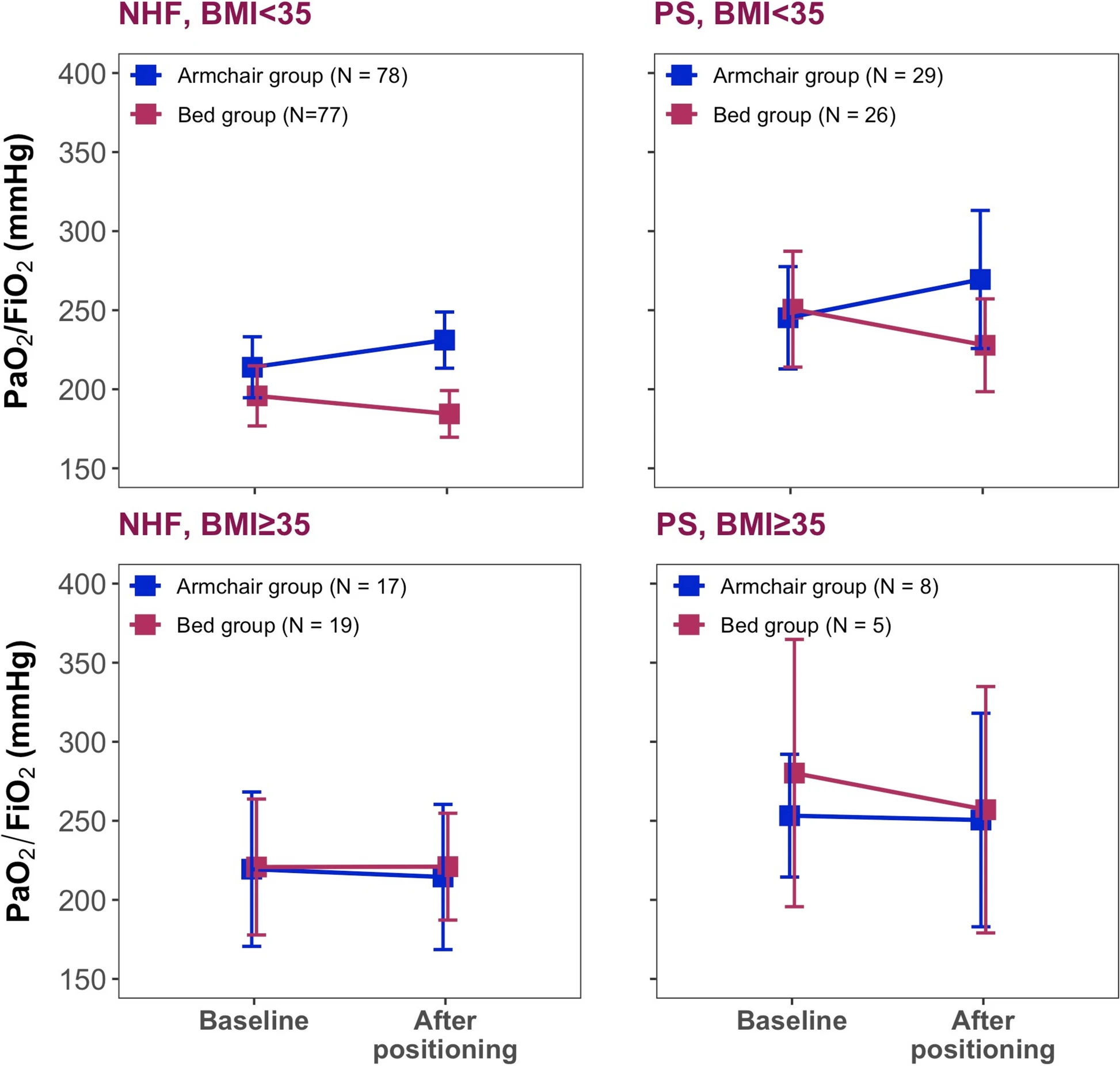
A single-center randomized controlled trial in spontaneously breathing adult ICU patients receiving invasive pressure support ventilation, high-flow nasal oxygen, or non-invasive ventilation. Patients were assigned to armchair or semi-recumbent in-bed positioning for 3 h. Arterial blood gasses were obtained immediately before and after positioning. PaO2/FiO2 (P/F) changes were analyzed with a linear mixed-effects model including group, time, and their interaction, adjusted for stratification variables.
Results
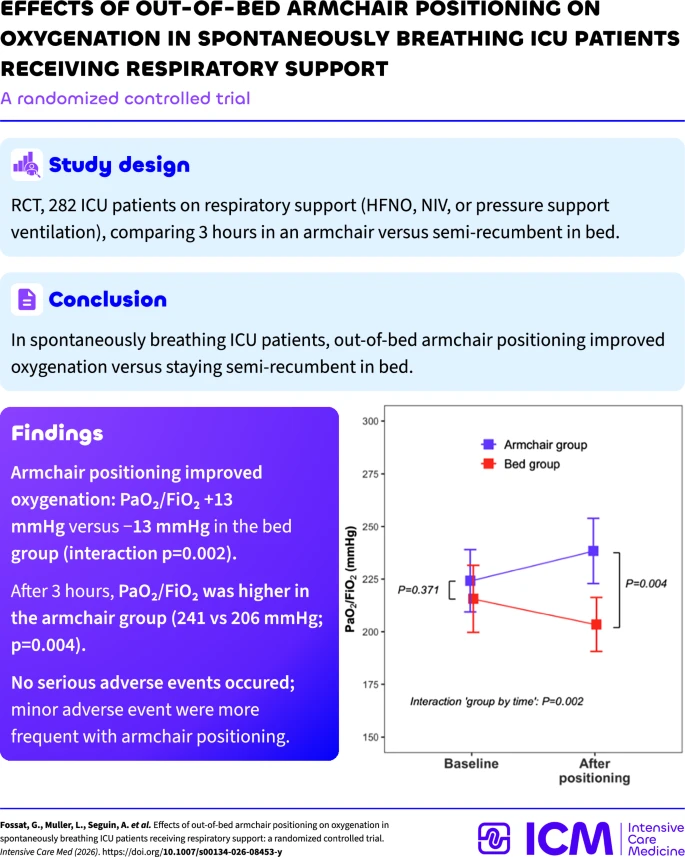
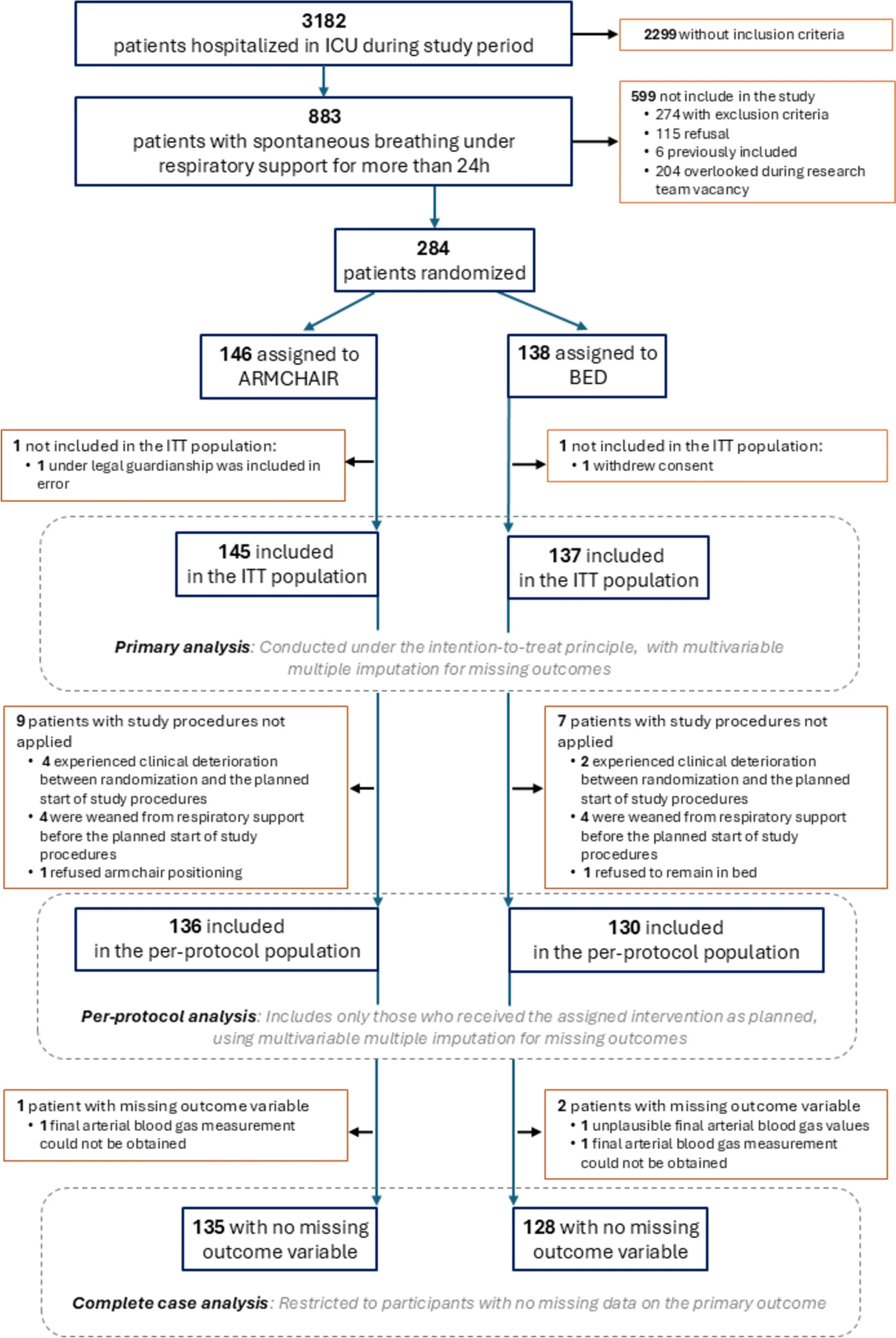
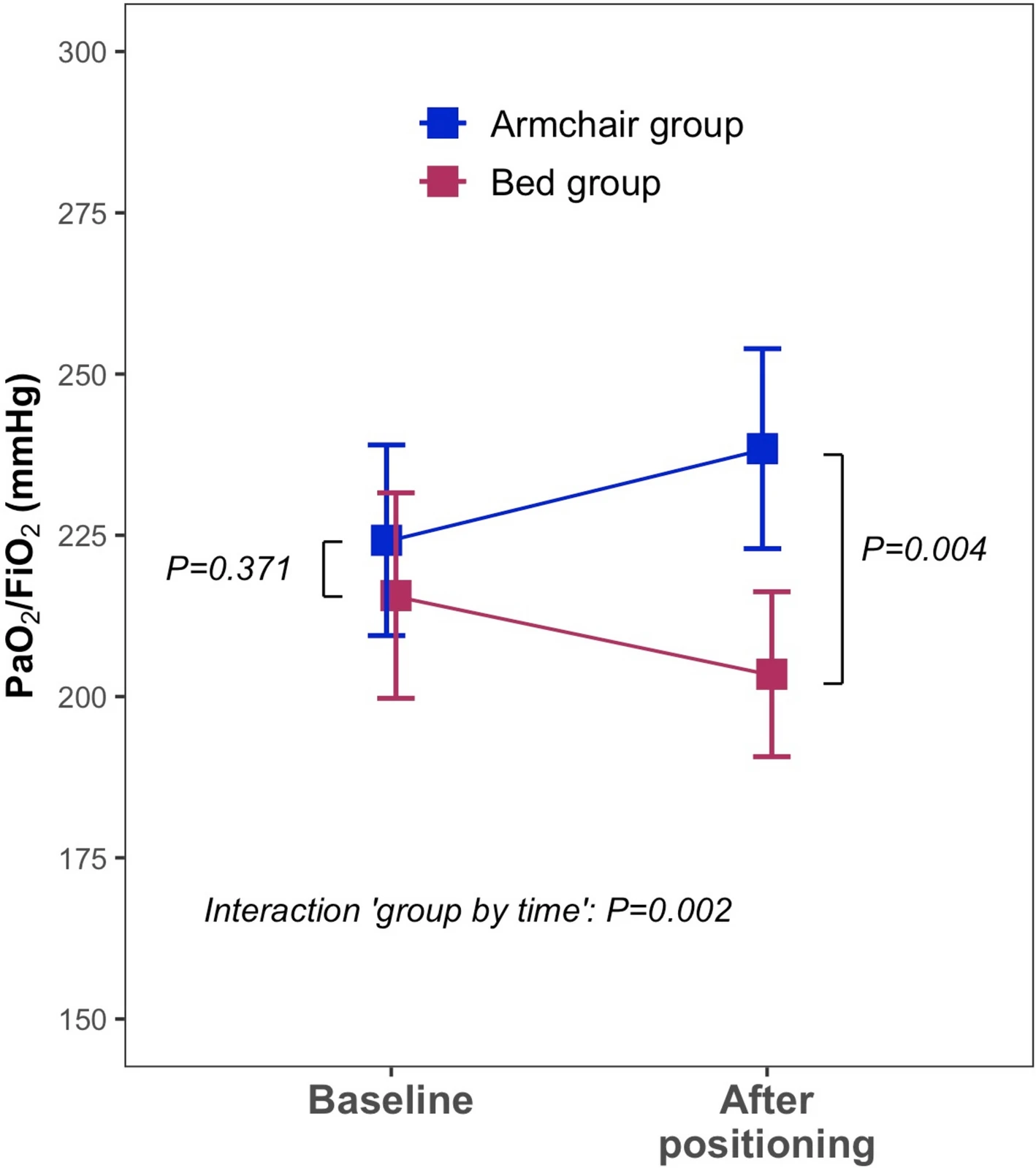
284 patients were randomized (146 and 138 in the armchair and bed groups, respectively). Baseline P/F ratios did not differ between groups. A significant interaction between group and time was observed (p = 0.002). In the armchair group, the P/F ratio increased by 13 mm Hg (95% CI 1–24), whereas it decreased by 13 mm Hg (95% CI − 25 to − 1) in the bed group. The post-positioning marginal mean P/F ratio was higher in the armchair group (241 mm Hg, 95% CI 214–268) than in the bed group (206 mm Hg, 95% CI 179–233; p = 0.004). No serious adverse events occurred. Minor adverse events were more frequent in the armchair group but had minimal impact on positioning duration.
Conclusion
In spontaneously breathing ICU patients receiving respiratory support, out-of-bed armchair positioning was associated with higher oxygenation after 3 h than remaining in a semi-recumbent position, with no serious adverse events observed.
ClinicalTrials.gov-Identifier
NCT04446559.
