ORIGINAL ARTICLE
Early vasopressin administration in septic shock: A systematic review, meta-analysis, and multicenter retrospective observational study
Chiwon Ahn, Gun Tak Lee, Jae Hwan Kim, et al
Eur J Intern Med May 7, 2026
DOI: 10.1016/j.ejim.2026.106933
Abstract
Objective
To determine the optimal timing for initiating vasopressin in septic shock.
Methods
First, we performed a retrospective analysis of a multicenter registry of adults with septic shock to evaluate associations between vasopressin initiation timing—defined by norepinephrine (NE) dose at initiation or time from first vasopressor use—and clinical outcomes. Second, we conducted a systematic review and meta-analysis integrating these registry data with randomized controlled trials (RCTs) and observational studies comparing early versus non-early vasopressin initiation. The primary outcome was mortality.
Results
The registry analysis included 2001 patients. Initiation of vasopressin at an NE dose ≥0.5 μg/kg/min (adjusted odds ratio [aOR] 2.15, 95% CI 1.59–2.92) and delays of 6–24 hours after initial vasopressor use (aOR 1.59, 95% CI 1.21–2.11) were associated with higher 28-day mortality compared with initiation at NE doses <0.25 μg/kg/min and within 2 hours, respectively.
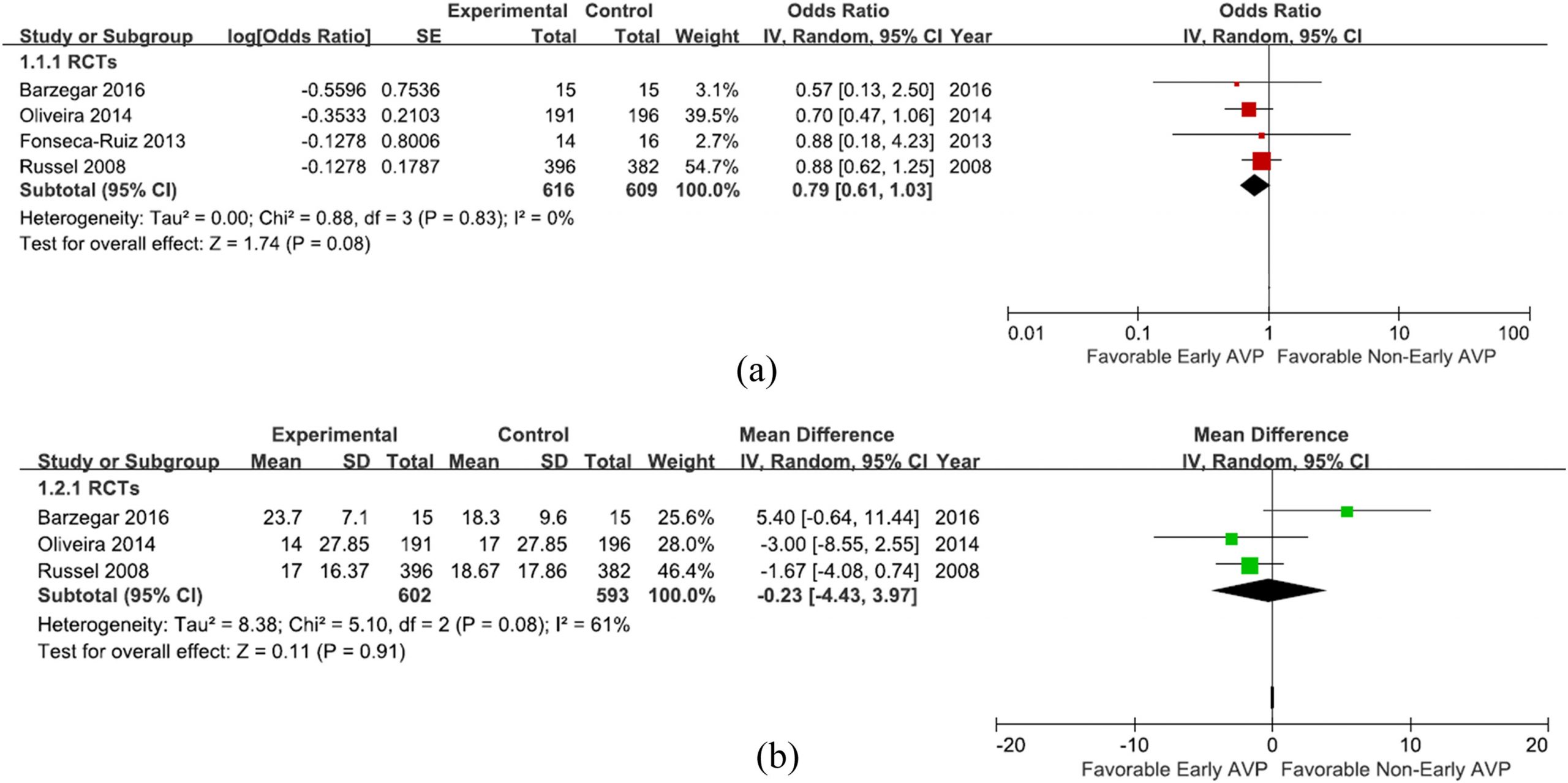
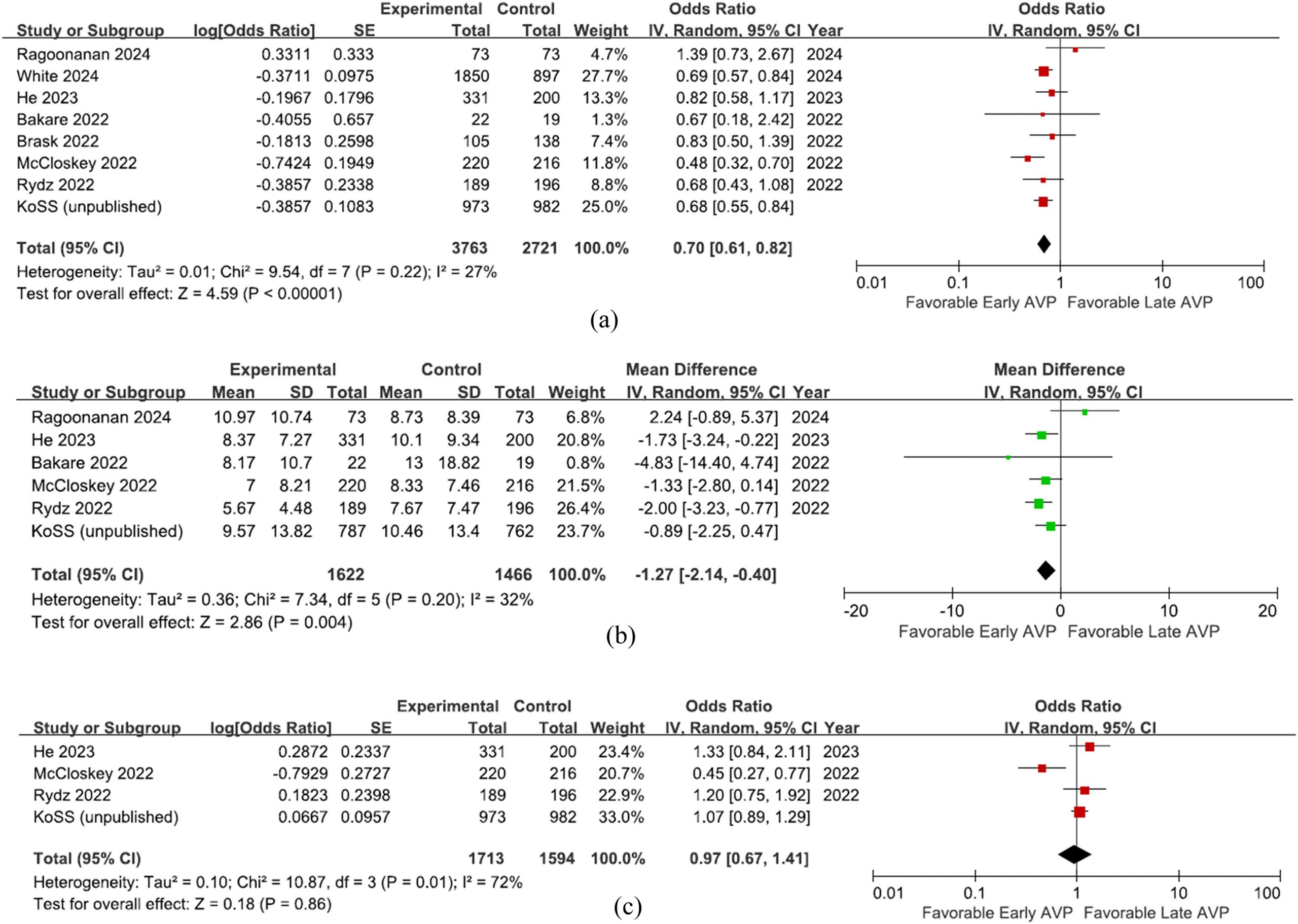
The meta-analysis included 15 studies (5 RCTs and 10 observational studies). In RCTs, early vasopressin initiation was not associated with reduced mortality (OR 0.84, 95% CI 0.66–1.07) but was associated with a lower requirement for renal replacement therapy (OR 0.46, 95% CI 0.26–0.81). In observational studies, early initiation was associated with lower mortality (OR 0.71, 95% CI 0.60–0.84) and shorter ICU LOS (mean difference −1.06 days, 95% CI −1.94 to −0.18).


Conclusion
Earlier vasopressin initiation may offer clinical benefits in septic shock. However, as evidence is primarily observational and findings vary by study design, further high-quality randomized studies are warranted.
