Beyond Multidisciplinary Care in Post-ICU Recovery
- In ICU
- Tue, 14 Apr 2026
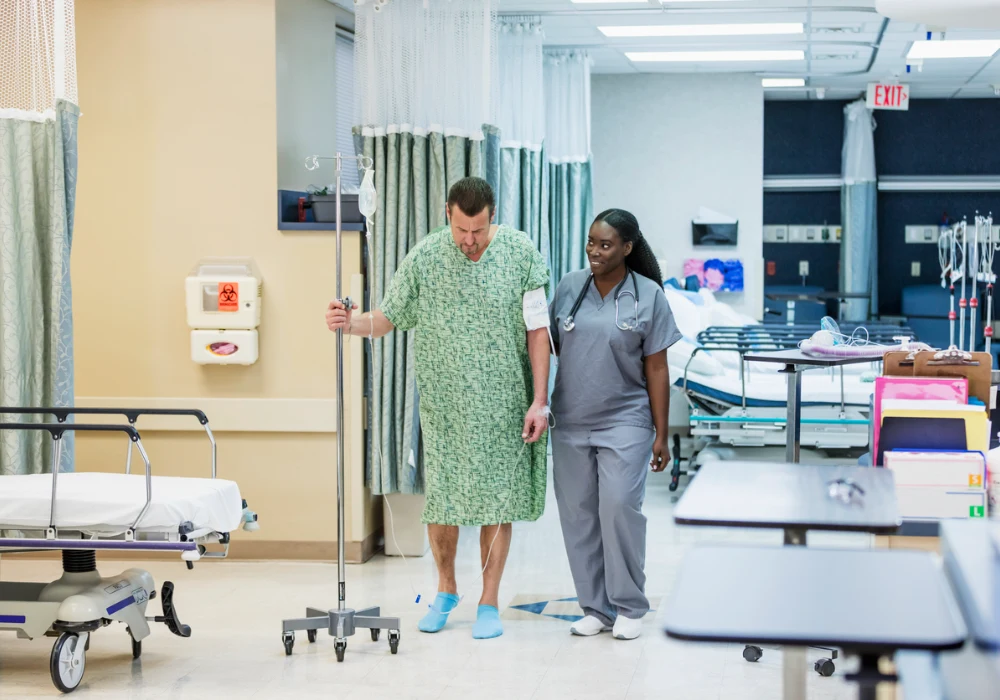
A scientific letter published in Intensive Care Medicine addresses the growing challenge of post-intensive care syndrome and questions whether current care models adequately support long-term recovery. Survival after critical illness has improved, but many patients experience prolonged physical, cognitive, psychological and social impairments after discharge. These sequelae, grouped under post-intensive care syndrome, affect up to 50–70% of survivors and extend beyond the patient to relatives, who may also develop psychological distress. This broader impact influences recovery trajectories and reintegration into daily life. Structured follow-up programmes have emerged to address these needs, yet important gaps remain in care organisation across the continuum, particularly outside specialised intensive care settings.
Limits of Multidisciplinary Follow-Up Models
Dedicated post-ICU clinics have become a central response to the long-term consequences of critical illness. These services typically bring together intensive care physicians and allied health professionals to address multiple aspects of recovery. This model has improved recognition of long-term morbidity and created structured pathways for assessing patient needs after discharge. By acknowledging the multidimensional nature of post-intensive care syndrome, these programmes represent a significant development in critical care practice.
Must Read: Communication Strategies in the ICU
However, multidisciplinary care often operates through parallel contributions from different disciplines rather than through integrated collaboration. Care remains organised within discipline-specific silos, limiting the coherence of overall management. When confined to specialised follow-up clinics, these models remain disconnected from the broader healthcare system where most long-term care occurs. General practitioners and organ-based specialists play a central role in ongoing management, yet the conceptual framework of post-intensive care syndrome rarely extends into these settings.
As a result, symptoms such as dyspnoea, fatigue, cognitive impairment, anxiety and functional decline are frequently managed in isolation. Clinical approaches focus on specific organs or conditions rather than recognising a shared underlying syndrome linked to critical illness. This fragmentation reduces the ability to form a comprehensive understanding of the patient’s condition and weakens continuity of care across settings.
Towards a Transdisciplinary Framework for Recovery
A shift towards transdisciplinary care offers an alternative approach to addressing these limitations. Collaboration in healthcare spans a continuum, from multidisciplinary models with parallel contributions to interdisciplinary approaches involving active collaboration and ultimately to transdisciplinary models that integrate perspectives within a shared framework. In a transdisciplinary approach, professionals from different disciplines work collectively to interpret patient needs and develop coordinated care plans, rather than contributing separate assessments.
This model emphasises integration rather than aggregation of expertise. It recognises that patient experiences span multiple dimensions, including biological, psychological, social and experiential aspects, each governed by distinct but interconnected logics. By fostering openness between disciplines, transdisciplinary care enables the development of shared perspectives that transcend traditional boundaries. This integrated approach aligns with the complexity of survivorship after critical illness, where no single discipline can fully capture the patient’s condition.
Evidence supporting transdisciplinary care in post-intensive care syndrome remains limited. However, similar models in other areas of medicine provide relevant insights. Collaborative care approaches in mental health, which integrate primary care physicians, care managers and specialists within a shared framework, have demonstrated improved outcomes compared with usual care. Although direct evidence in critical care survivorship is still emerging, these examples suggest that integrated models can enhance coordination and effectiveness.
Placing post-intensive care syndrome at the centre of a shared framework may help address persistent fragmentation. It enables continuous integration of perspectives from intensive care units, post-ICU services, specialists and primary care, creating a more coherent trajectory of care. This approach complements specialist management by offering an overarching perspective on the patient’s condition and supporting coordinated decision-making.
Barriers to Integration Across Care Pathways
Several structural and conceptual barriers hinder the transition to transdisciplinary care. Communication between intensive care teams and downstream providers remains limited, reducing continuity between hospital discharge and community-based management. Responsibility for follow-up is often unclear, and time constraints restrict opportunities for coordination across settings. Formal training on survivorship after critical illness is limited, and discussions about long-term outcomes within intensive care units remain inconsistent.
The absence of a shared language further complicates coordination. Post-intensive care syndrome is widely recognised in critical care literature but is not formally classified within international diagnostic systems. This limits its integration into routine clinical workflows, referral pathways and documentation practices. Without explicit recognition, the syndrome does not consistently guide clinical reasoning or care planning outside specialised settings.
Practical measures can support progress towards integration. Expanding education beyond intensive care specialists to include primary care physicians and organ-based specialists can improve awareness and recognition. Clear communication tools, such as explicitly naming post-intensive care syndrome in discharge summaries and referral letters, can link persistent symptoms to their underlying context and support coordinated management. Structured follow-up pathways can function as hubs that actively connect different levels of care rather than operating as isolated services.
Digital tools and monitoring systems may also help bridge transitions between hospital and community care. These approaches can support early identification of recovery challenges and facilitate communication across providers. However, without a shared conceptual framework, such tools alone are unlikely to resolve fragmentation.
Post-intensive care syndrome highlights the limitations of siloed healthcare models when addressing complex survivorship conditions. Multidisciplinary care has improved recognition and initial management but does not fully address fragmentation across the continuum of care. A transdisciplinary approach offers a framework for integrating perspectives and coordinating long-term management. Achieving this shift requires changes in education, communication and organisational structures, as well as broader recognition of post-intensive care syndrome across healthcare settings. Without such changes, ICU survivors are likely to continue navigating disconnected care pathways that do not fully reflect the complexity of their recovery.
Source: Intensive Care Medicine
Image Credit: iStock
References:
Rousseau AF, Berger-Estilita J & Leaver S (2026) Post-intensive care syndrome: why multidisciplinary care is not enough? Intensive Care Med: In Press.
