Article
Short-term light sedation with remimazolam besylate versus propofol in the ICU (SHOSREB): a multicentre, randomized, single-blind, controlled trial
Yang, X., Pan, J., Gong, X. et al.
Intensive Care Med (2026). https://doi.org/10.1007/s00134-026-08381-x
Abstract
Purpose
To explore the efficacy and safety of remimazolam besylate in short-term sedation in the ICU in comparison with propofol.
Method
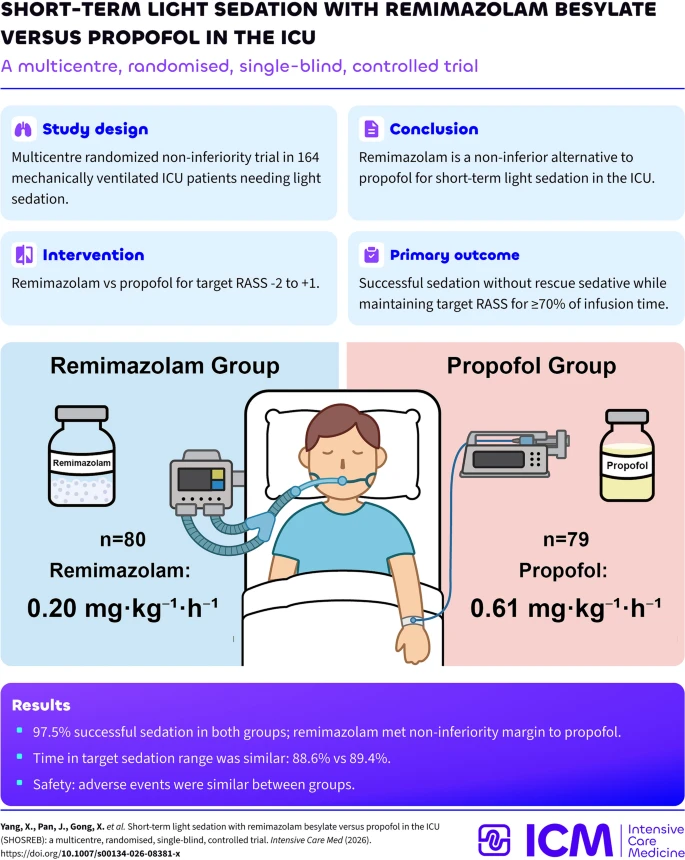
A multicenter, randomized, single-blind, non-inferiority trial was conducted in mechanically ventilated patients, who needed light sedation, defined as Richmond Agitation–Sedation Scale (RASS) scores between −2 and + 1. The primary outcome was successful sedation, which was defined as no rescue sedative administered during the study drug infusion period while maintaining RASS scores between –2 and + 1 for at least 70% of the total infusion time.
Results
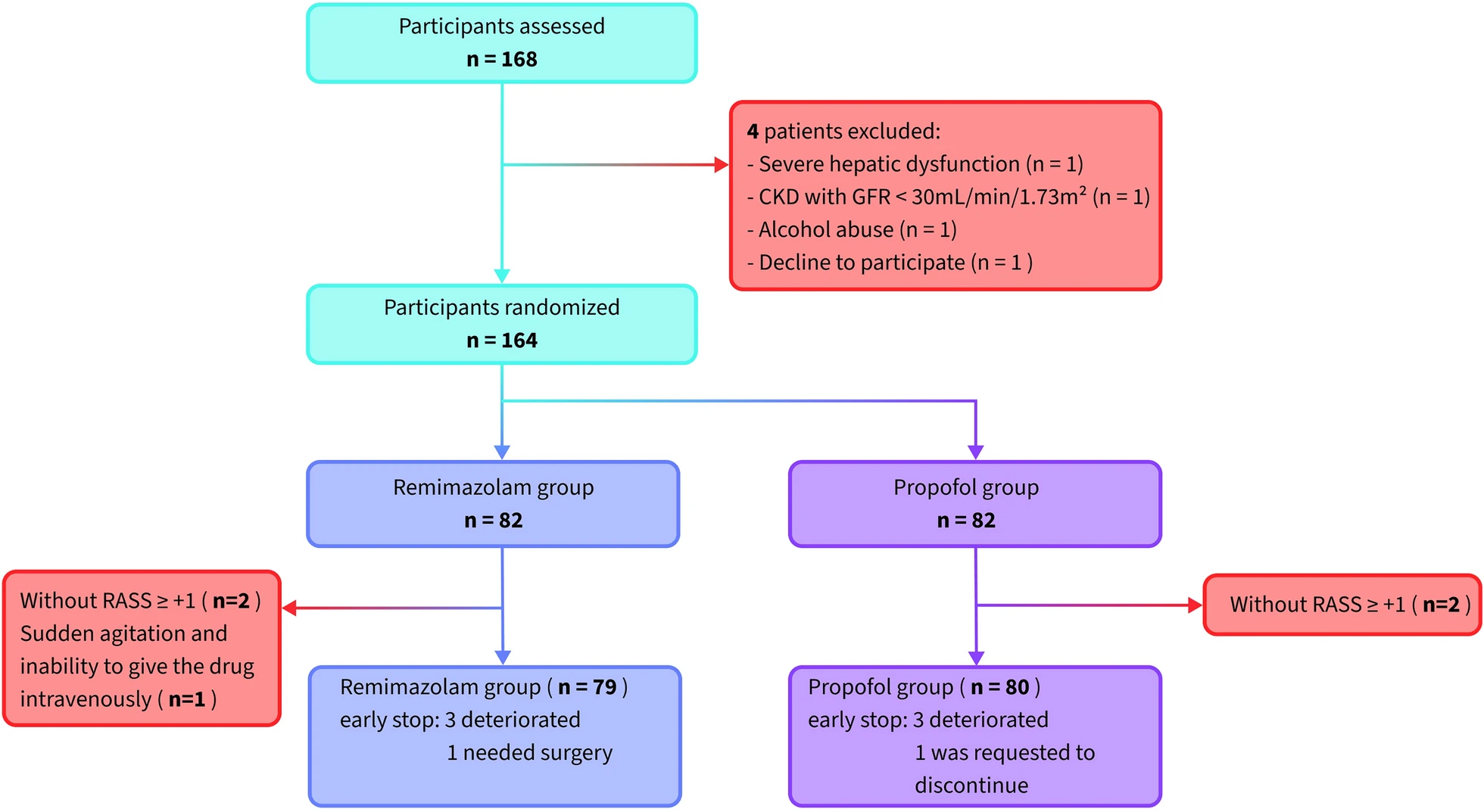
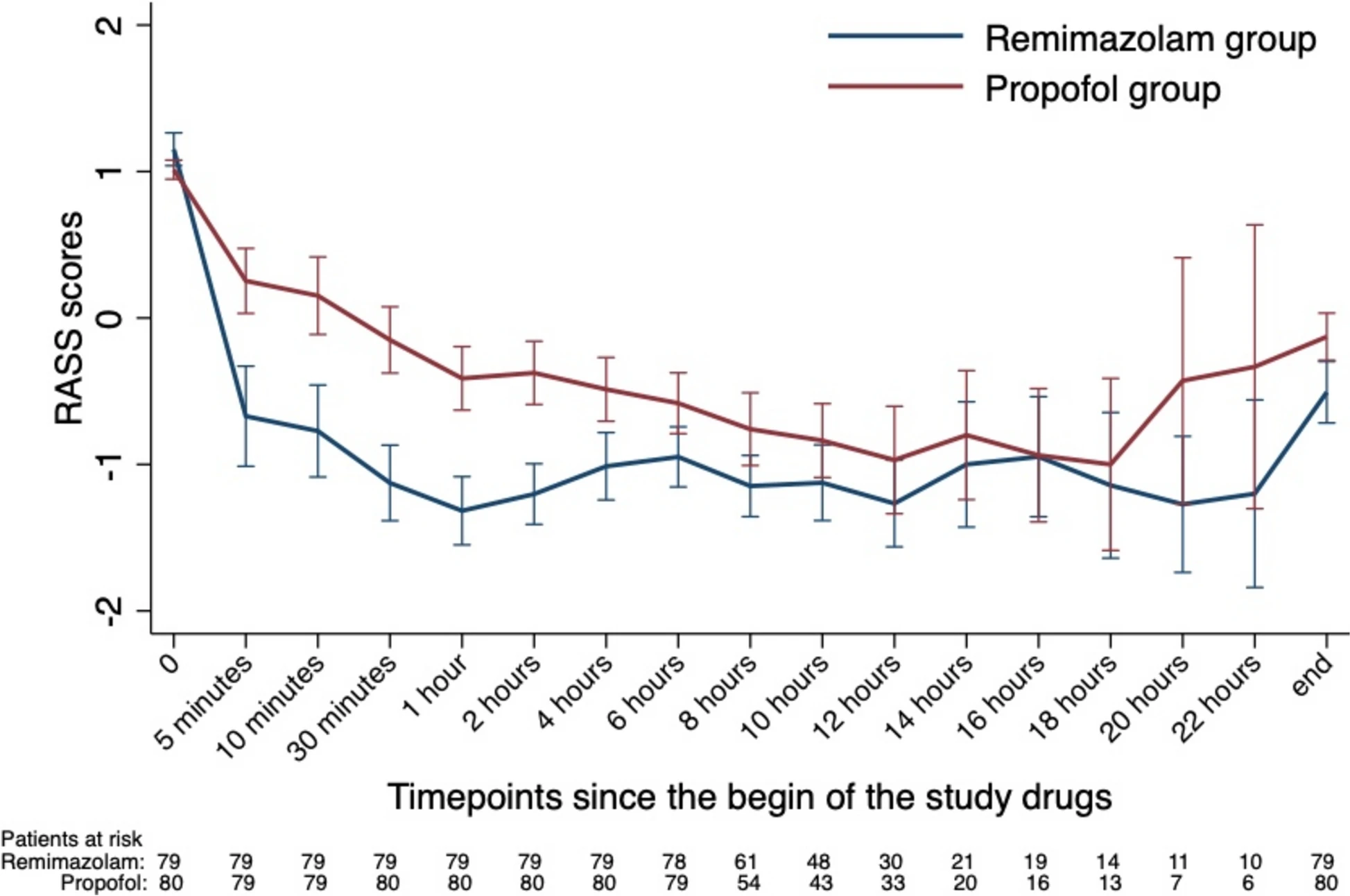
A total of 164 participants were included and randomized equally into the remimazolam group and the propofol group. Remimazolam was continuously infused for 10.5 [8.1–14.7] h and propofol for 11.0 [7.0–14.3] h (p = 0.534). The median average maintaining dose of remimazolam and propofol was 0.20 [0.19–0.30] mg·kg⁻1·h⁻1 and 0.61 [0.30–1.17] mg·kg⁻1·h⁻1, respectively. The percentage of participants successfully sedated in both groups was 97.5% (p = 0.497) with a difference of 0 (95% confidence interval (CI) −6.5% to 6.4%), above the predefined non-inferiority margin of −8%. There was no significant difference in the mean percentage of time with target RASS scores between the remimazolam group (88.6%; 95% CI: 84.2%–92.9%) and the propofol group (89.4%; 95% CI: 85.0%–93.8%) (p = 0.543).
Conclusion
Remimazolam besylate could be non-inferior to propofol for achieving successful short-term light sedation in the ICU.
Trial registration
ClinicalTrials.gov identifier: NCT05782894 on Feb 18th, 2023.
