Research
Incidence and prevalence of dementia among US Medicare beneficiaries, 2015-21: population based study
Beau Blass, Cassie B Ford, Samir Soneji, et al
BMJ 2025; 389 doi: https://doi.org/10.1136/bmj-2024-083034 (Published 20 May 2025)Cite this as: BMJ 2025;389:e083034
Abstract
Objective To determine the incidence and prevalence of dementia in a nationally representative cohort of US Medicare beneficiaries, stratified by important subgroups.
Design Population based study.
Setting Nationwide study between 2015 and 2021.
Participants Fee-for-service Medicare beneficiaries aged 66 or older with at least one year of continuous enrollment.
Main outcome measures Incidence and prevalence of dementia, calculated as percentage per person years or percentage of beneficiaries respectively. These metrics were also calculated in key subgroups defined by age, sex, race/ethnicity, and neighborhood socioeconomic status.
Results A total of 5 025 039 incident cases of dementia were documented from 2015 to 2021. The overall age and sex standardized incidence decreased between 2015 and 2021 from 3.5% to 2.8%. Prevalence increased during this time from 10.5% to 11.8%. Male beneficiaries had a higher age standardized incidence than did female beneficiaries in 2015 (3.5% v 3.4%), a difference that widened by 2021 (2.9% v 2.6%; estimated difference-in-difference 0.94, 95% confidence interval (CI) 0.94 to 0.95; P<0.001). Incidence was highest in 2015 for black beneficiaries (4.2%), followed by Hispanic beneficiaries (3.7%) and white beneficiaries (3.4%), and in 2021 for black beneficiaries (3.1%) followed by white beneficiaries (2.8%) and Hispanic beneficiaries (2.6%); the difference between white and black beneficiaries narrowed from 2015 to 2021 (difference-in-difference 0.92, 95% CI 0.91 to 0.93; P<0.001) as did the difference between white and Hispanic beneficiaries (difference-in-difference 0.88, 0.87 to 0.89; P<0.001).
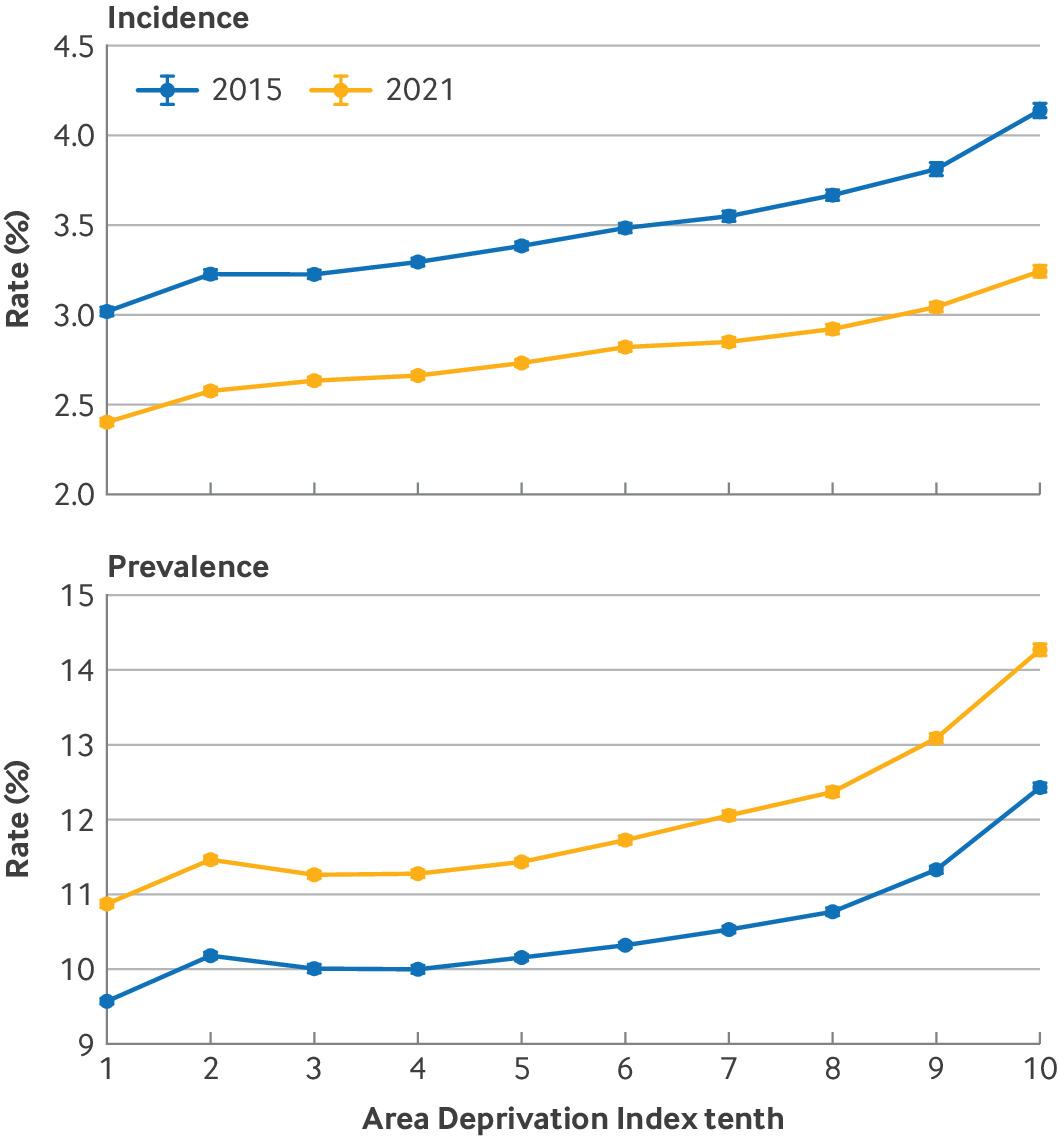
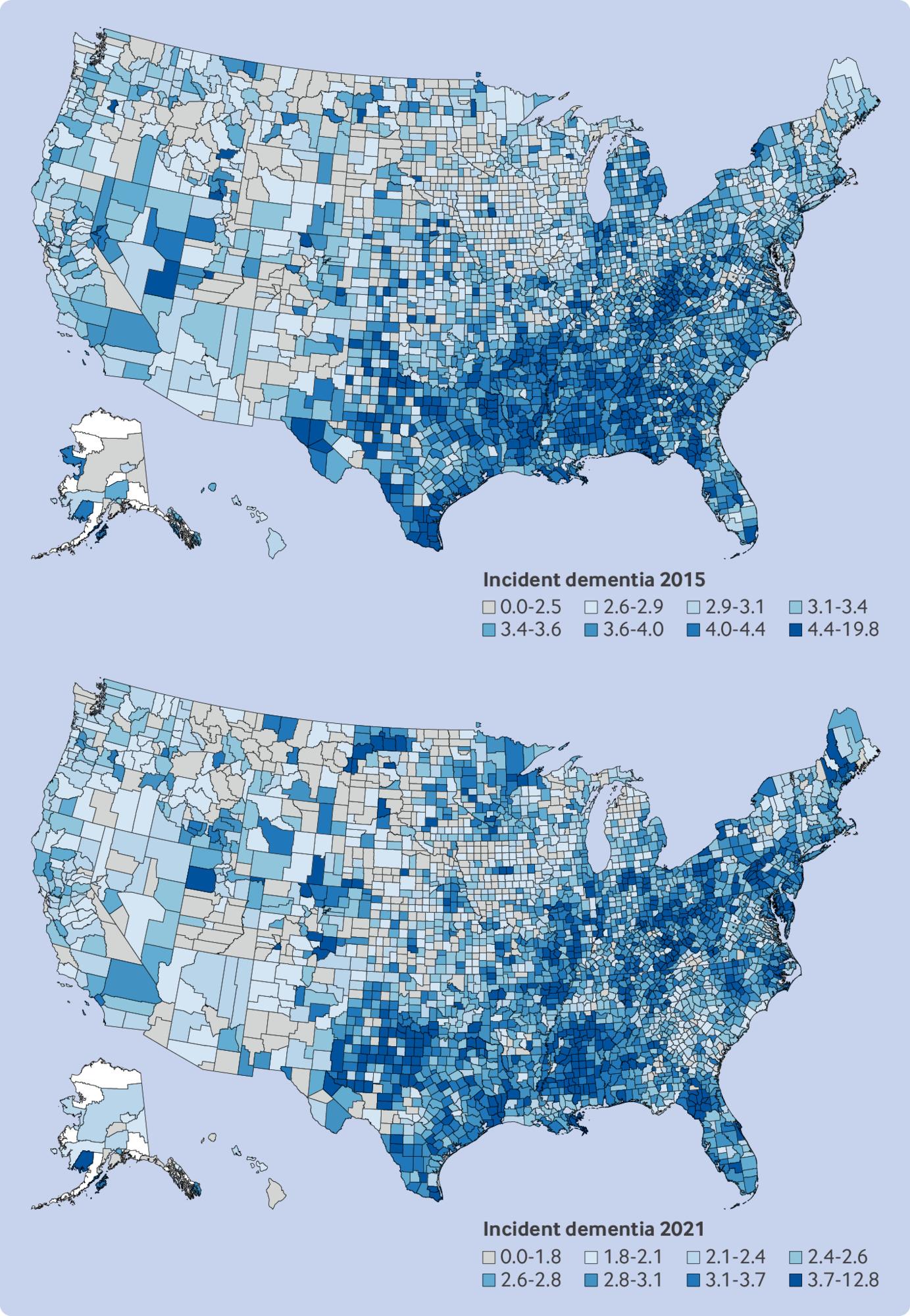
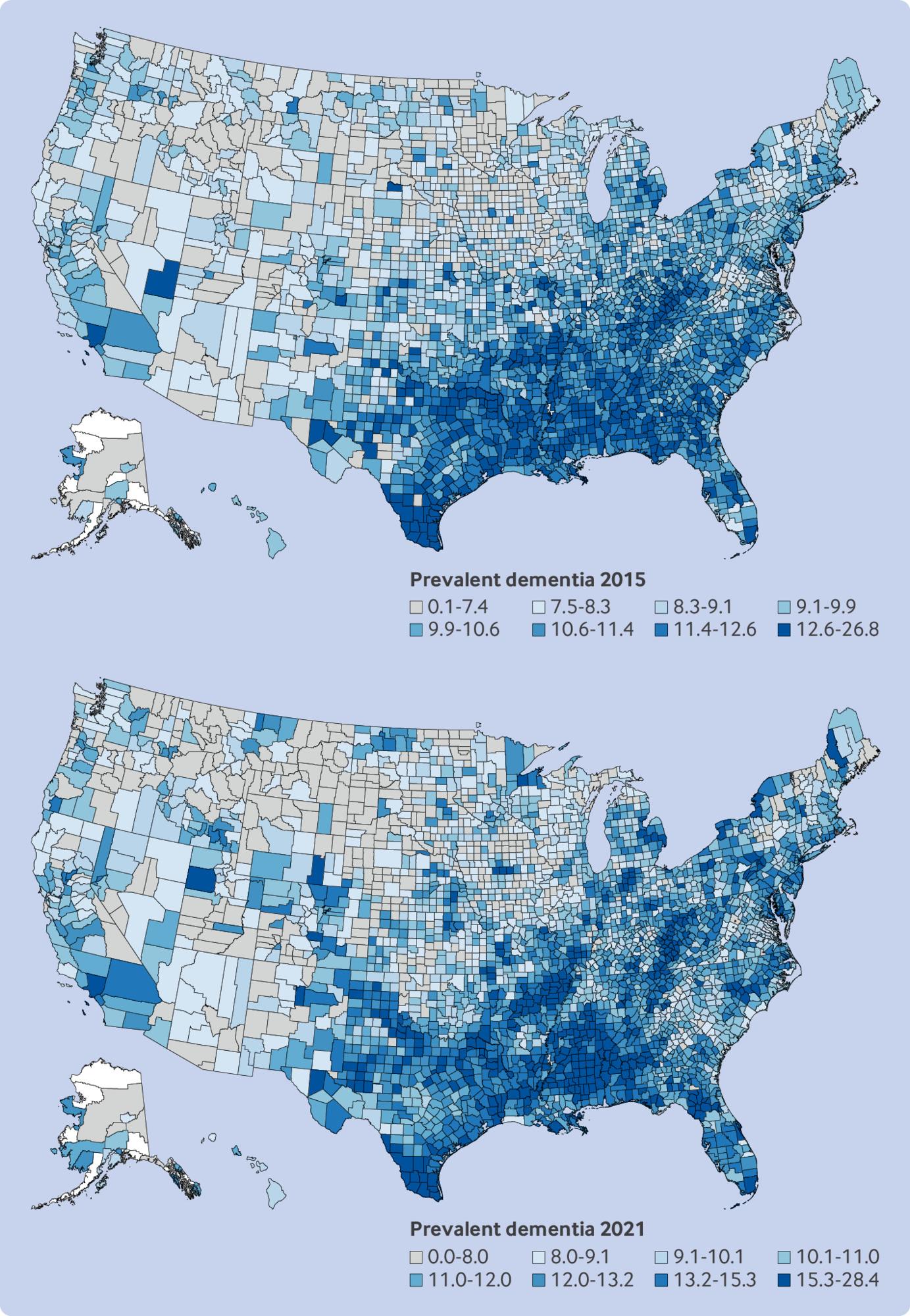
Conclusions The incidence of dementia decreased from 2015 to 2021, but the prevalence increased. Disparities in these measures by race/ethnicity, sex, and neighborhood socioeconomic status should motivate future measures to promote health equity.
