0℃
 2019年04月14日
The role of post-ICU recovery clinics
With multiple advances in critical care, more patients are given the chance to survive life-threatening illnesses such as sepsis. This growing cohort of patients, however, grapples with a new challenge – post-intensive care syndrome (PICS). A raft of symptoms, including muscle weakness, depression, anxiety, and posttraumatic stress disorder (PTSD), makes it difficult for patients with PICS to resume their prehospitalisation liv...
阅读全文
0℃
 2019年04月12日
News
Oxygen after surgery: review questions WHO advice that high levels reduce infection
BMJ 2019; 364 doi: https://doi.org/10.1136/bmj.l777 (Published 18 February 2019)Cite this as: BMJ 2019;364:l777
World Health Organization guidelines on using high levels of oxygen during and after surgery have been questioned after claims that research by an Italian surgeon lacks credibility.
Mario Schietroma of the University of L’Aquila in central Italy is the author of ...
阅读全文
0℃
 2019年04月11日
Value-based incentive programmes and CAUTI rates
Value-based incentive programmes (VBIPs) aim to drive improvements in quality and reduce costs by linking financial incentives or penalties to hospital performance. A new study evaluated the association of two U.S. federal VBIPs – the Hospital Value-Based Purchasing (VBP) Program and the Hospital-Acquired Condition Reduction Program (HACRP) – and catheter-associated urinary tract infections (CAUTIs) in the critical c...
阅读全文
0℃
 2019年04月07日
Declining rate of ARDS-related mortality
There have been multiple advances in the management of acute respiratory distress syndrome (ARDS), but the temporal trends in ARDS-related mortality are not well known. Conservative fluid management strategy for ARDS, in particular, has been extensively studied and is increasingly being used in clinical practice. However, it is largely unknown whether this changing practice parallels with the improvement in survival outcome....
阅读全文
0℃
 2019年04月03日
Harvard study: machine learning improves ED triage
The increasing number of emergency department (ED) visits often correlates with ED crowding and delays in care. This problem highlights the need for ED triage systems that accurately differentiate and prioritise critically ill from stable patients, enabling efficient allocation of finite ED resources.
Currently, the Emergent Severity Index (ESI) is the most commonly used triage algorithm in U.S. EDs....
阅读全文
0℃
 2019年03月29日
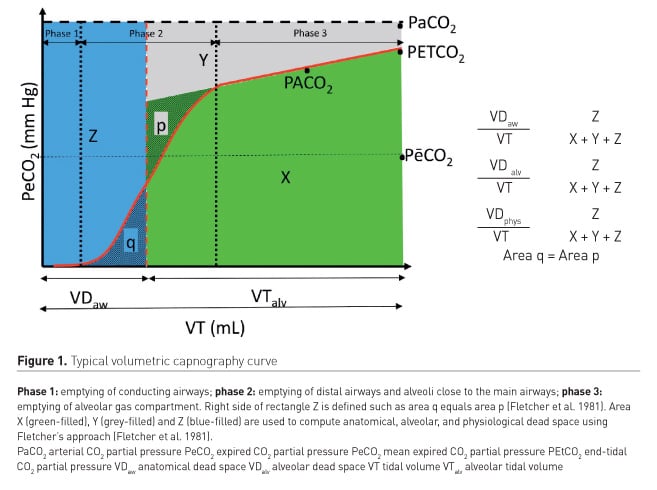
Advances in monitoring expired CO2 in critically ill patients
Reviews the potential uses and pitfalls of capnography in critically ill patients, especially for haemodynamic and respiratory monitoring.
Expired CO2 can be easily monitored in the intensive care unit (ICU), especially in patients under invasive mechanical ventilation, using infrared measurement by sampling mainstream expiratory flow using an in-line chamber, or sidestream expiratory flow (by contin...
阅读全文
0℃
 2019年03月27日
Blood biomarker can identify infection-related disease progression
In settings such as the emergency department (ED), early assessment of the potential for further disease progression is vital. An early identification of infection severity is helpful in initiating appropriate treatment strategies. However, currently there is a lack of validated tools to assess risk of further disease progression in patients presenting to the ED with a suspected infection.
A new ...
阅读全文
0℃
 2019年03月23日
Imaging and intensive care medicine
An evolving partnership
A major evolution is underway involving critical care and imaging.
The intensive care patient population is changing. Increasingly intensive care units (ICUs) are treating older patients, with more comorbidities, and variable prognosis, at a time when family expectations are different and often with higher expectations of recovery. Life support technology is increasingly sophisticated, surgery is minima...
阅读全文
0℃
 2019年03月21日
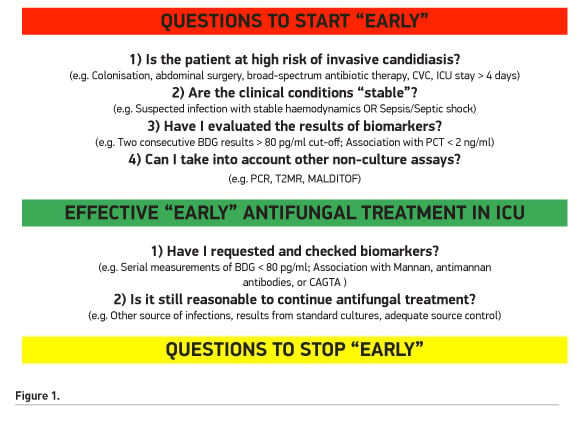
Antifungal treatment in the ICU
Best practice in managing fungal infections
Invasive candidiasis: Every milligram of antifungal counts! Think Aspergillus!
Invasive fungal infections (IFIs) are a major cause of morbidity and mortality in critically ill patients. Almost 80% of IFIs are due to Candida spp., which are the third most common isolated microorganisms in the intensive care unit (ICU) (Kett et al. 2011; Bassetti et al. 2017). Although the incidence of inva...
阅读全文
0℃
 2019年03月18日
Risk of sepsis: does DNA matter?
A new analysis has identified several genetic variants that could influence one's susceptibility to sepsis, a life-threatening condition. This study provides a novel insight that may affect personalised targeted treatment in the future clinical management of sepsis. Variants are alterations in nucleotide base pairs located within a gene or noncoding portion of the genome. In sepsis, the focus has been on understanding the impac...
阅读全文